TRENDING

Sunday, 4 October 2026
----------------------
23 Rabi' Al-Thani 1448 AH
The US and Iran offer contradictory narratives on ongoing talks, revealing a high-stakes power struggle over global energy routes and regional influence. Ordinary citizens bear the hidden costs of this diplomatic deception.
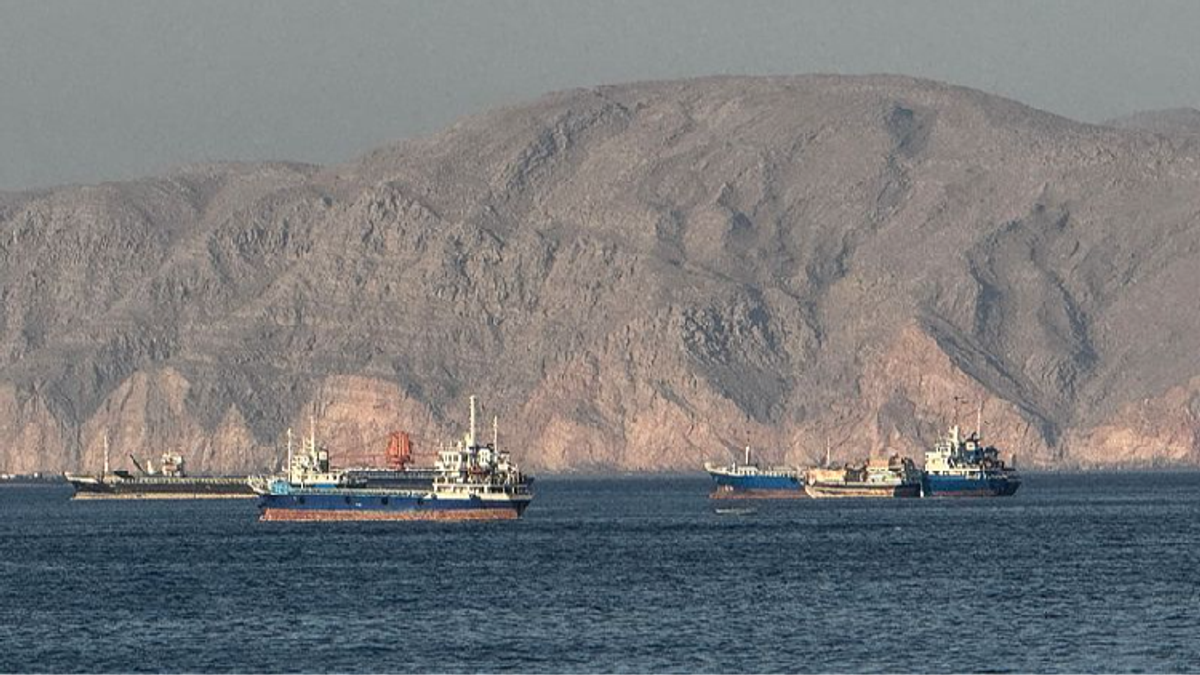
A stark contradiction has emerged between Washington and Tehran regarding the status of their bilateral engagement. While US President Donald Trump publicly asserted that talks with Iran are "going on right now" and represent Tehran's "last chance" for a deal to end a five-month conflict, Iranian Foreign Ministry spokesperson Esmail Baghaei unequivocally denied any direct or indirect negotiations with the US. Baghaei stated that Iran's only ongoing discussions are with Oman, focused on the critical management of the Strait of Hormuz. This public disagreement follows Trump's earlier decision to cancel military strikes and his subsequent announcement of renewed talks, the details of which remain unspecified.
The public disagreement over whether "talks" are happening is less about factual reporting and more about a calculated power play by both Washington and Tehran. For the United States, insisting on ongoing negotiations serves multiple strategic objectives. It projects an image of diplomatic responsibility and a commitment to de-escalation, even while maintaining significant pressure. Crucially, it signals that the US believes it still dictates the pace and trajectory of events, preventing itself from being sidelined in discussions vital to global energy security, particularly concerning the Strait of Hormuz. This narrative also aims to portray Iran as inconsistent, quietly seeking a deal while publicly denying it, thereby increasing internal and external pressure on the Iranian government.
Iran, on the other hand, uses its denial of US talks to assert sovereignty and build regional leverage. By focusing solely on negotiations with Oman and potentially other regional mediators regarding the Strait of Hormuz, Tehran aims to forge a new regional consensus for managing the strategic waterway—one that explicitly excludes US participation. This strategy seeks to establish a new regional order for passage through the strait, thereby generating collective regional pressure on the US and constraining Washington's room for maneuver. Both sides are engaged in a high-stakes psychological battle, using the notion of "talks" as a tool to shape perceptions, rally support, and gain a strategic advantage in a broader contest for regional influence and control over global energy arteries. The underlying "five-month war" mentioned by Trump is a testament to this ongoing, multifaceted struggle, encompassing economic sanctions, proxy conflicts, and military posturing, all aimed at altering the balance of power.
While governments posture and experts analyze strategic moves, the most immediate and profound impact of this "talking while fighting" stalemate falls squarely on ordinary citizens. In Iran, the prolonged period of international isolation, coupled with the threat of military confrontation and the existing "five-month war" (which for many Iranians translates to sustained economic hardship), means a constant state of anxiety. Sanctions, whether direct or indirect, ripple through the economy, affecting everything from food prices to access to medicines and essential goods. The uncertainty surrounding negotiations or potential escalation discourages investment, stifles economic growth, and limits opportunities for a population already bearing the brunt of geopolitical tensions.
Beyond Iran, the high-stakes maneuvering in the Strait of Hormuz creates global economic instability. As a critical chokepoint for a significant portion of the world's oil supply, any perceived threat to its passage can trigger spikes in oil prices, impacting consumers and industries worldwide. For the shipping industry, heightened tensions translate to increased insurance premiums, rerouting costs, and potential dangers for crews navigating the volatile waters. The human cost here is not just about direct conflict, but the insidious erosion of economic stability, the constant fear of escalation, and the quiet suffering of populations caught between the strategic ambitions of powerful states.
What both the US and Iranian governments are carefully downplaying or omitting in their public statements is the true depth of their strategic objectives and the inherent dangers of their rhetorical gamesmanship. The US narrative of "responsibility" and "commitment to a political resolution" often overshadows its unwavering intent to maintain dominant oversight over global energy routes and to prevent any challenge to its regional security architecture. The "last chance" ultimatum, while framed as a diplomatic opening, is fundamentally a threat, designed to compel submission rather than foster genuine dialogue among equals. Washington is not just seeking "talks"; it is seeking capitulation to its terms.
Similarly, Iran's steadfast denial of US talks, while strategically sound from its perspective, downplays its own ambition to fundamentally reshape the regional security landscape and diminish US influence. Tehran isn't merely seeking "safe routes" through the Strait of Hormuz; it aims to establish a new order where regional powers, not external ones, dictate terms. Both sides are using the ambiguity of "talks" to gain leverage, mask their maximalist positions, and avoid accountability for the ongoing economic and security pressures they exert. The "five-month war" is a convenient, vague term that allows both sides to acknowledge conflict without detailing its true scope, human toll, or the specific actions they are taking to perpetuate it. The real story is a fundamental clash over who controls the critical arteries of global commerce and power, with diplomacy serving as just one, often deceptive, front.
As this strategic stalemate continues, several key indicators will reveal the true trajectory of US-Iran relations. Observers should closely watch the progress, or lack thereof, in Iran's ongoing negotiations with Oman regarding the Strait of Hormuz. Any concrete agreement that attempts to establish a regional management mechanism without US involvement would signal a significant shift in Tehran's diplomatic strategy and potentially escalate tensions with Washington. Conversely, if these regional talks falter, it could push Iran back towards direct, albeit reluctant, engagement with the US.
Further US rhetoric and actions, particularly regarding sanctions enforcement or military posture in the Gulf, will also be critical. Any perceived softening or hardening of Washington's stance could either open a narrow window for de-escalation or provoke further Iranian defiance. Finally, the internal political dynamics within both the US (especially with an election cycle looming) and Iran will play a crucial role. Leaders on both sides must balance external pressure with domestic political survival, meaning their public statements and actions will continue to be heavily influenced by internal considerations. The "talking while fighting" pattern is likely to persist, making any genuine breakthrough a slow, arduous process, if it happens at all.
Source referenced: CGTN
This brief was synthesized by our Editorial Engine and reviewed by The Ground Narrative team.