TRENDING

Sunday, 25 October 2026
----------------------
14 Jumada Al-Awwal 1448 AH
South Africa is deploying mobile and modular science laboratories to address a critical infrastructure gap in public schools, significantly boosting student performance and national skill development. This initiative is a strategic move to enhance human capital, drive economic diversification, and foster social equity across the nation.
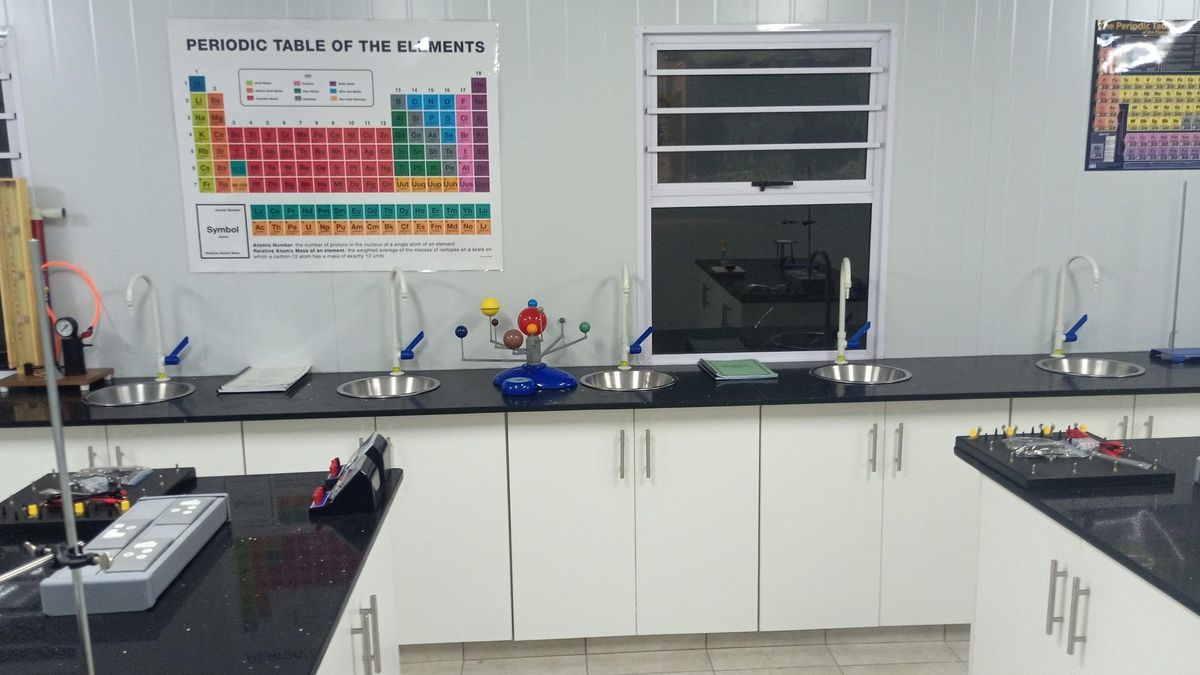
South Africa's persistent challenge in science education, marked by a severe lack of laboratory infrastructure, is now seeing a transformative intervention through the deployment of mobile and modular science laboratories. This initiative, spearheaded by companies like Kusile Labs & Technology, is directly addressing a critical gap that has long hindered student performance and national skill development, with profound implications for the nation's economic future and social stability.
For years, the majority of South African public schools have operated without essential science laboratories, forcing students to learn complex concepts solely from textbooks. This infrastructural deficit is stark, with Department of Basic Education data indicating that only about one in five public schools possesses a science lab, and three-quarters lack a library. This disparity is particularly acute in poorer provinces such as Limpopo and the Eastern Cape, exacerbating educational inequalities. Despite the government's prioritization of improving mathematics and physical sciences results to address critical skill shortages in the economy, national pass rates have shown only marginal improvement, with mathematics results even declining in some periods. The goal is to cultivate a workforce capable of supporting economic growth and innovation, yet progress has been slow due to these foundational educational gaps.
Responding to this deep-seated problem, the introduction of mobile and modular science laboratories offers a pragmatic and rapid solution. Companies like Kusile Labs & Technology design and assemble these units, which can be either wheeled between classrooms or constructed on-site from prefabricated parts within weeks, a stark contrast to the years typically required for conventional laboratory construction. These labs are generally funded by corporate sponsors, allowing for targeted interventions in schools that lack the space or financial resources for traditional facilities. This innovative approach also streamlines regulatory processes, accelerating deployment.
The direct impact on students has been profound. Testimonials from learners like Benjamin Ndlovu, Zamahlubi Sefoloko, and Abenathi Mkhize highlight a significant shift from rote memorization to experiential learning. The ability to conduct experiments firsthand has not only deepened their understanding of scientific principles but also boosted their confidence and motivated them towards STEM careers. Teachers, such as Velile Njobe, confirm increased student engagement, improved questioning, and enhanced skill development. The results are tangible: Simanyene High School, for instance, saw its physical sciences matric pass rate skyrocket from 37.5% in 2020 to 100% in 2025 following the installation of a mobile lab. Pine Ridge Combined School has experienced similar steady gains since 2022, demonstrating the efficacy of practical learning resources.
Beyond immediate academic improvements, this initiative carries significant geopolitical and socio-economic weight for South Africa. By fostering a generation proficient in science and technology, the country is actively investing in its human capital, a fundamental driver of long-term economic growth and global competitiveness. Addressing the shortage of technical and scientific skills is crucial for diversifying South Africa's economy, reducing its reliance on traditional sectors, and positioning it as a knowledge-based economy capable of innovation. Furthermore, the program contributes to social equity by providing quality educational resources to underserved communities, potentially mitigating socio-economic disparities that have historical roots, dating back to events like the Soweto Uprising, which underscored the fight for equitable education.
An additional benefit of this approach is its contribution to alleviating South Africa's severe youth unemployment crisis, which stood at 60.9% for 15- to 24-year-olds in early 2026. Kusile Labs & Technology actively hires and trains young people from local communities to assist with laboratory installations, providing valuable skills and employment opportunities. This localized development model not only builds essential infrastructure but also empowers communities directly, fostering economic inclusion.
The modular and mobile laboratory model represents an innovative, scalable, and relatively rapid solution to a widespread educational challenge in developing nations. Its ability to circumvent lengthy regulatory processes and adapt to diverse school environments makes it a compelling blueprint for other countries grappling with similar infrastructure deficits. While Simanyene and Pine Ridge are success stories, they are part of a much larger, ongoing national project to ensure equitable access to quality science education for millions of South African learners, a goal critical for the nation's future prosperity and stability in a rapidly evolving global landscape.
Source referenced: CGTN
This brief was synthesized by our Editorial Engine and reviewed by The Ground Narrative team.