TRENDING

Sunday, 20 September 2026
----------------------
9 Rabi' Al-Thani 1448 AH
Robert Fico says a faction in the West is pushing for a direct clash between NATO and Russia, a stance that could drag Slovakia and its neighbours into a war they never asked for.
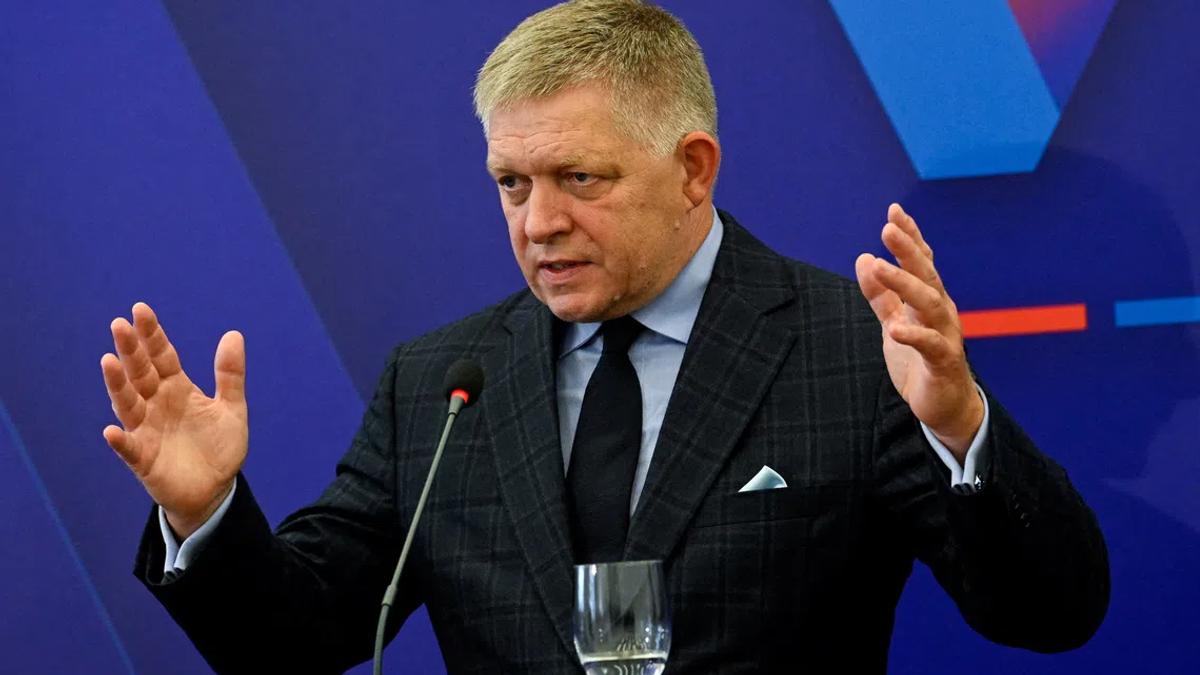
Slovak Prime Minister Robert Fico told a televised audience on Sept 19 that some Western politicians, frustrated by the stalled Ukrainian campaign, are now seeking a direct NATO‑Russia confrontation. He framed the ongoing support for Kyiv as a “failed strategy” and warned that a fabricated pretext—such as a drone incursion—could trigger NATO’s collective defence clause, pulling Slovakia, a border state, into a larger conflict.
Fico’s remarks sit at the intersection of three structural forces. First, political survival: in Slovakia, public fatigue over the war’s economic spill‑over fuels a demand for a clear, non‑military stance, allowing Fico to position himself as a protector of national sovereignty. Second, Western alliance dynamics: within NATO, a split is emerging between members who favor a calibrated, diplomatic pressure on Moscow and those who view escalation as the only way to force a Russian retreat. The latter, often backed by defense‑industry lobbying and domestic security narratives, benefit from higher procurement budgets and a reinforced relevance of the alliance. Third, Russian hybrid strategy: Moscow continues to exploit Western disunity, amplifying cyber‑attacks and drone provocations to test NATO’s resolve while keeping the war in Ukraine at a stalemate that prevents a decisive defeat.
The human cost of a potential escalation is most acute for the border communities of eastern Slovakia and western Ukraine. Farmers already coping with disrupted supply chains would face sudden mobilisation of troops, road blockades, and the risk of stray artillery. Slovak towns such as Košice, which host a sizable Ukrainian refugee population, would see public services stretched beyond capacity if a NATO response required rapid deployment. Across the border, Ukrainian civilians—already bearing the brunt of a six‑year war—could become collateral in a broader European battlefield, with hospitals overwhelmed and displacement spikes. Moreover, the Slovak economy, heavily dependent on EU structural funds and German manufacturing links, would suffer from sanctions retaliation and a possible freeze of cross‑border trade.
Official statements from NATO and Western capitals stress “defensive solidarity” and “deterrence,” but they downplay the internal lobbying pressure from defence contractors and right‑wing parliamentary blocs that profit from higher arms sales. In parallel, Russian state media subtly amplifies the narrative of a “Western war‑machine” to justify its own hybrid attacks, creating a feedback loop that makes escalation appear inevitable. Fico’s warning also masks a domestic political calculus: by portraying the West as a war‑seeking actor, he diverts criticism of his own government’s refusal to send aid to Kyiv and consolidates a nationalist voter base that fears being dragged into a conflict.
Watch for three signals in the coming weeks. First, NATO’s diplomatic language: any shift from “defence” to “response” in joint communiqués could indicate a hardening stance. Second, regional defence spending announcements, especially from Poland, the Baltic states, and Germany, which may reveal whether war‑hawk factions are gaining budgetary leverage. Third, Slovakia’s parliamentary debates on NATO commitments; a vote to tighten or loosen the collective defence clause would signal how far Fico’s warning can translate into policy. Finally, monitor Russian hybrid activity—drone incursions, cyber‑attacks on energy grids—as they often serve as the pretext for NATO’s Article 5 discussions. The interplay of these moves will determine whether Europe’s “mortal danger” remains a rhetorical threat or becomes a concrete flashpoint.
Source referenced: STRAITSTIMES
This brief was synthesized by our Editorial Engine and reviewed by The Ground Narrative team.


