TRENDING

Friday, 16 October 2026
----------------------
5 Jumada Al-Awwal 1448 AH
The Shangri-La Dialogue in Singapore underscored a deteriorating security landscape in the Asia-Pacific, marked by increased military spending and a complex interplay of US-China rivalry and regional conflicts. Nations are rearming and forging new security partnerships, reflecting a strategic pivot towards deterrence and collective defense.
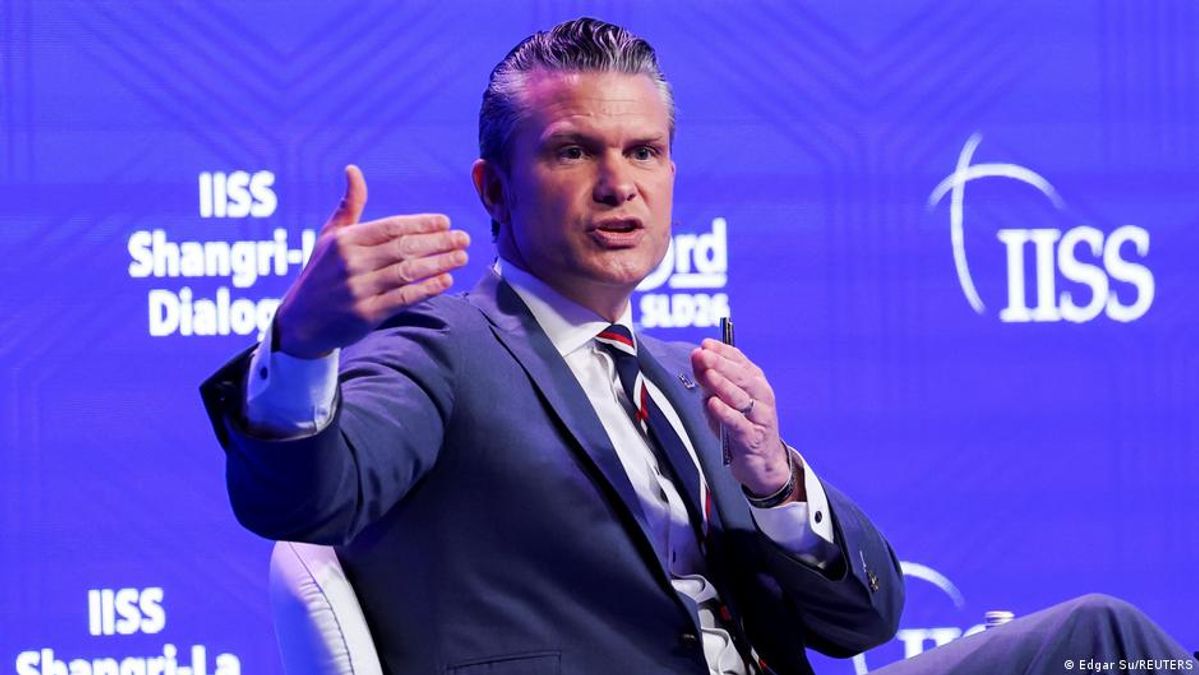
TheThe Shangri-La Dialogue (SLD), hosted annually by the London-based International Institute for Strategic Studies (IISS) in Singapore, recently convened defense ministers, military officials, and security experts to address the escalating security challenges across the Asia-Pacific. The conference served as a critical platform for assessing the region's trajectory, revealing a consensus on a deteriorating security environment and a pronounced shift towards rearmament and the formation of multi-layered security partnerships.
The overarching sentiment at the SLD was that the Asia-Pacific is entering a period of heightened volatility. Singaporean Prime Minister Lawrence Wong articulated this, stating the region faces "storm after storm." This assessment is underpinned by a series of recent conflicts and persistent flashpoints. The past year saw a brief war between India and Pakistan, the conclusion of a conflict between Thailand and Cambodia, and renewed intensity in clashes between Pakistan and Afghanistan, including Pakistani airstrikes. The civil war in Myanmar continues to destabilize its borders, while tensions in the South China Sea remain a constant source of concern. Above all, the escalating strategic rivalry between the United States and China, particularly Beijing's rapidly expanding military capabilities, dominated discussions, fundamentally altering the regional balance of power.
IISS Senior Fellow Evan A. Laksmana summarized the grim reality: "Regional states — whether major, middle or small ones — cannot escape this worsening security environment." Vietnamese President To Lam, in his keynote address, emphasized the need to manage competition within a legal framework to ensure a sustainable regional order, linking security inextricably to development. Australian Deputy Prime Minister Richard Marles echoed this, asserting that prosperity and human development are crucial contributors to stability and peace.
Despite calls for development as a pathway to security, the primary response articulated at the SLD to the deteriorating situation was rearmament. Data from the Stockholm International Peace Research Institute (SIPRI) indicates that military spending in the Asia-Pacific surged by 8.1% in 2025, reaching an estimated $681 billion. US Defense Secretary Pete Hegseth, in a highly anticipated speech, underscored this trend, announcing that the United States would soon commit $1.5 trillion to defense and urging US allies in Asia to significantly increase their own security investments. Hegseth argued that a favorable balance of power necessitates "capable allies with real military strength, real industrial capacity, and real political resolve," suggesting that the region's security has disproportionately relied on American military power.
Hegseth specifically commended South Korea, the Philippines, Australia, Singapore, Malaysia, Thailand, Vietnam, and India for understanding that "peace can only be secured through strength." This stance highlights a strategic shift by the US, encouraging allies to assume greater responsibility for regional security, thereby distributing the burden and enhancing collective deterrence. The German delegation, represented by State Secretary for Defense Nils Hilmer, acknowledged similar capacity challenges to Europe but noted Germany's increased defense funding post-constitutional amendment. However, the International Committee of the Red Cross President Mirjana Spoljaric offered a sobering counterpoint, warning that "massive flow of weapons, the massive production of weapons, and the massive investments in defense will eventually create human loss and material loss," urging consideration of the human cost of war from the outset.
Taiwan, a perennial flashpoint in the US-China dynamic, featured prominently in the background of discussions, though notably, Hegseth did not explicitly mention it in his speech this year. This marks a significant departure from his 2025 address, where he issued stark warnings about a potential Chinese attack on Taiwan. The shift in US rhetoric follows a mid-May meeting between President Donald Trump and President Xi Jinping, where both leaders agreed on a "constructive relationship and strategic stability" to guide future ties. Hegseth adopted this precise phrasing, emphasizing a shared understanding that a Pacific dominated by any single hegemon would destabilize the regional balance of power.
Former Chinese Vice Foreign Minister Cui Tiankai expressed satisfaction with this new vision, advocating for its translation into reality, which, from Beijing's perspective, includes halting US arms deliveries to Taiwan. The fate of a $14 billion arms package for Taiwan, approved by Congress but put on hold by President Trump in May, remains uncertain, with Hegseth deferring the decision to the US president. This development signals a potential recalibration in US-China relations regarding Taiwan, moving towards a framework of managed competition rather than overt confrontation, though the long-term implications for Taiwan's security remain to be seen.
While the US remains an indispensable security guarantor in the Asia-Pacific, as noted by veteran diplomat Bilahari Kausikan, the SLD highlighted the emergence of new, multi-layered security partnerships. Kausikan emphasized that no other power can balance China without American backing, just as Europe relies on the US to deter Russia. However, he also stressed the agency of small and middle powers to work together according to their interests.
Japan, for instance, is actively forging closer ties with Australia, the Philippines, India, New Zealand, Singapore, and others, aiming to create networks of like-minded partners to increase the strategic complexity for China. Philippine Defense Minister Gilberto Teodoro Jr. affirmed this trend, noting a growing convergence of partners for deterrence, including Canada and France, alongside traditional allies. Germany is also expanding its engagement, participating in large-scale maritime military exercises like RIMPAC in the Pacific, signaling a broader international commitment to regional security beyond mere dialogue. These evolving security architectures underscore a collective effort to enhance deterrence, share responsibilities, and maintain a stable balance of power in an increasingly complex and contested region. The shift reflects a recognition that while the US remains central, a distributed and networked approach is essential for long-term regional stability. The conference concluded with a clear message: the Asia-Pacific is actively adapting to a new geopolitical reality, characterized by both heightened risks and intensified efforts to secure peace through strength and strategic cooperation.
Source referenced: DW
This brief was synthesized by our Editorial Engine and reviewed by The Ground Narrative team.