TRENDING

Monday, 5 October 2026
----------------------
24 Rabi' Al-Thani 1448 AH
A new Saudi-led axis has emerged in the Middle East, comprising Saudi Arabia, Qatar, Pakistan, Turkey, and Egypt, with the goal of containing the Iranian threat and regaining influence in countries dominated by Iranian proxies or allies.
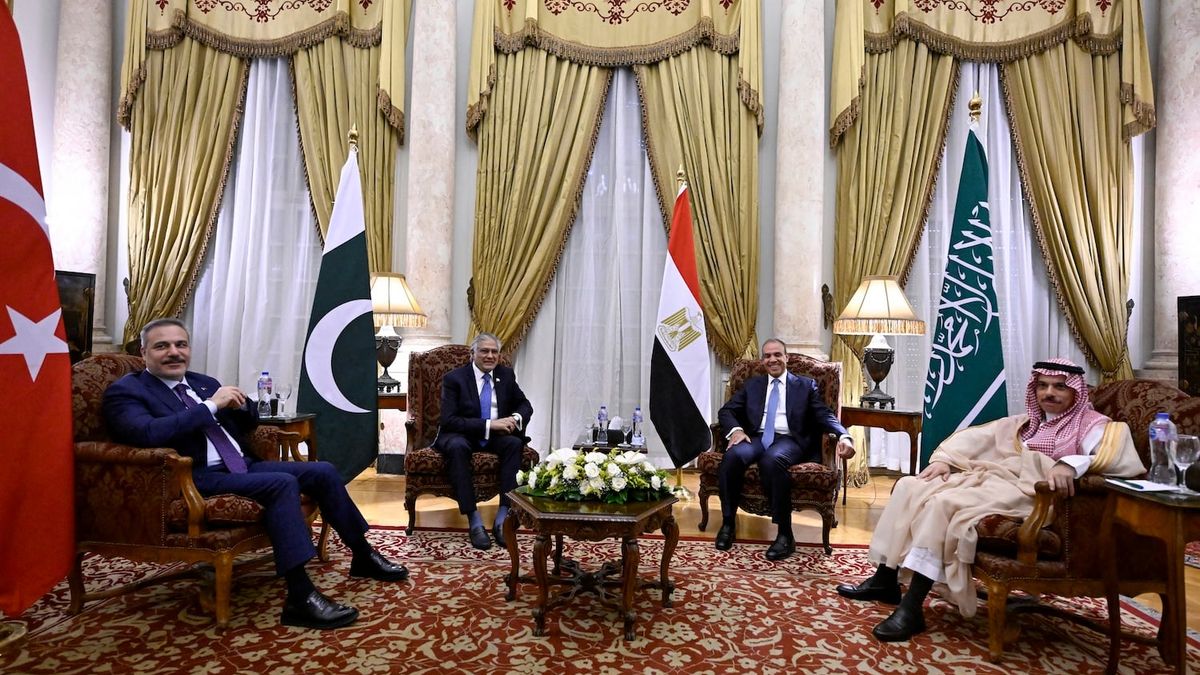
The Middle East has witnessed a significant shift in the regional dynamics with the emergence of a new Saudi-led axis. This grouping, comprising Saudi Arabia, Qatar, Pakistan, Turkey, and Egypt, has been formed in response to the Iran war, which has inflicted substantial pain on Persian Gulf states. The new axis is defined by two primary goals: containing the Iranian threat and regaining influence in countries dominated by Iranian proxies or allies.
The Saudi-led axis is driven by a desire to counter the growing influence of Iran in the region. Saudi Arabia, in particular, has been shaken by the Iran war, which has led to a significant decline in its sense of security. The kingdom has responded by strengthening its Red Sea infrastructure and carrying out numerous strikes against Iran. The UAE, on the other hand, has taken a more cautious approach, preferring to normalize relations with Israel and reduce its dependence on the Strait of Hormuz.
The emergence of the Saudi-led axis has significant regional implications. The grouping has been formed outside the Gulf Cooperation Council (GCC), which has been unable to unify on Iran. The UAE's decision to improve its logistics and reduce dependence on the Strait of Hormuz to zero is a clear indication of its desire to distance itself from the Saudi-led axis. The Emirati commitment to the Abraham Accords has also weathered the recent conflicts in Gaza and Lebanon, whereas Saudi Arabia has found it difficult to pursue normalization in such an atmosphere.
The Saudi-led axis has the potential to reshape the regional dynamics in the Middle East. The grouping's primary goal of containing the Iranian threat is likely to lead to increased tensions between Iran and its neighbors. The UAE's decision to improve its logistics and reduce dependence on the Strait of Hormuz to zero is a clear indication of its desire to distance itself from the Saudi-led axis. The Emirati commitment to the Abraham Accords has also weathered the recent conflicts in Gaza and Lebanon, whereas Saudi Arabia has found it difficult to pursue normalization in such an atmosphere.
The emergence of the Saudi-led axis marks a significant shift in the regional dynamics in the Middle East. The grouping's primary goal of containing the Iranian threat is likely to lead to increased tensions between Iran and its neighbors. The UAE's decision to improve its logistics and reduce dependence on the Strait of Hormuz to zero is a clear indication of its desire to distance itself from the Saudi-led axis. The Emirati commitment to the Abraham Accords has also weathered the recent conflicts in Gaza and Lebanon, whereas Saudi Arabia has found it difficult to pursue normalization in such an atmosphere.
Editor's Note: The analysis is based on publicly available information and may not reflect the full complexity of the situation.
Source referenced: FOREIGNPOLICY
This brief was synthesized by our Editorial Engine and reviewed by The Ground Narrative team.


