TRENDING

Thursday, 15 October 2026
----------------------
4 Jumada Al-Awwal 1448 AH
Russia launched a significant ballistic missile attack on Kyiv, resulting in civilian casualties, in what appears to be a direct retaliation for recent strikes on Moscow warehouses. This latest exchange marks a dangerous escalation in the ongoing air war, raising concerns about regional stability and the increasing human toll.
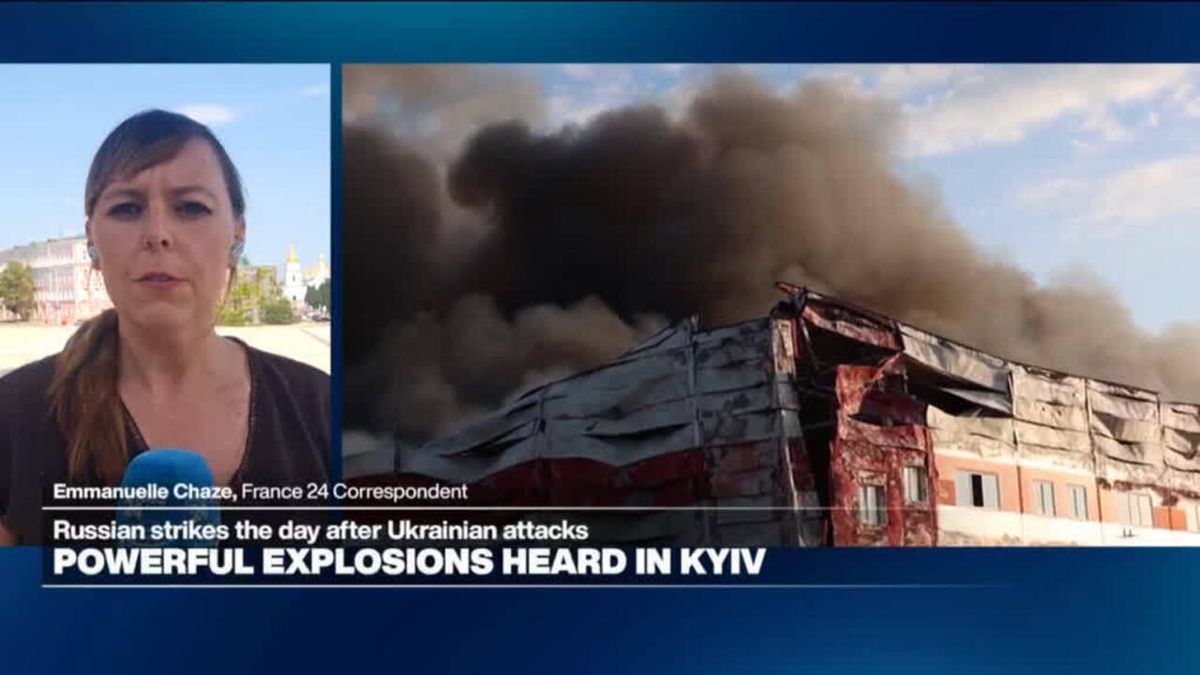
On Sunday, July 19, 2026, Russia launched a substantial ballistic missile attack against the Ukrainian capital, Kyiv, resulting in at least one fatality and 16 injuries among the civilian population. This latest barrage, involving two dozen ballistic missiles, represents a significant intensification of the aerial conflict and is widely understood as a retaliatory measure following a recent attack on warehouses in Moscow.
The strikes on Kyiv underscore a dangerous and accelerating cycle of tit-for-tat attacks that characterize the current phase of the conflict. The targeting of civilian areas, even if infrastructure is the primary aim, inevitably leads to human casualties and exacerbates the humanitarian crisis. The phrase "ever-escalating air war" used in initial reports accurately captures the trajectory of this conflict, where both sides increasingly employ long-range strike capabilities against targets deep within enemy territory.
Russia's decision to deploy a large number of ballistic missiles against Kyiv, a high-value political and symbolic target, serves multiple strategic objectives. Primarily, it is a clear demonstration of Moscow's resolve to respond forcefully to perceived provocations, particularly attacks on its own capital region. By striking Kyiv, Russia aims to project strength, deter further Ukrainian incursions into Russian territory, and potentially degrade Ukraine's military and logistical capabilities, even if the immediate targets are not explicitly military.
The attack on Moscow warehouses, which preceded the Kyiv strikes, highlights Ukraine's evolving strategy to bring the realities of the conflict closer to the Russian populace and disrupt logistical chains supporting the Russian war effort. While Ukraine rarely officially claims responsibility for such attacks, their occurrence within Russia's borders serves to challenge the Kremlin's narrative of a distant, contained conflict and may aim to exert domestic pressure on the Russian leadership.
This exchange of strikes illustrates a critical dynamic: each action by one side often triggers a proportional, or sometimes disproportionate, reaction from the other. This creates a feedback loop of escalation, making de-escalation or a diplomatic resolution increasingly difficult. The use of ballistic missiles, known for their speed and destructive power, further amplifies the perceived severity of these attacks.
The civilian casualties and damage to urban infrastructure in Kyiv are a stark reminder of the devastating human cost of this protracted conflict. The increasing civilian toll on both sides, as noted by observers, raises serious concerns about adherence to international humanitarian law and the protection of non-combatants. For the millions residing in Kyiv, the overnight strikes represent not only a physical threat but also a profound psychological burden, disrupting daily life and fostering a pervasive sense of insecurity.
Internationally, these escalating attacks are likely to intensify calls for enhanced air defense systems for Ukraine from its Western allies. The ability of Russia to launch such a significant missile barrage underscores the ongoing challenge of protecting Ukrainian cities from aerial threats. Furthermore, the continued targeting of urban centers could galvanize further diplomatic condemnation and potentially lead to additional sanctions or military aid packages aimed at bolstering Ukraine's defensive capabilities.
The latest missile exchange suggests that the conflict is far from a stalemate; rather, it is evolving into a more destructive phase characterized by long-range strikes. This trend has significant implications for regional stability, as the conflict's geographical scope effectively expands through these aerial engagements. The direct targeting of capital cities, even if in retaliation, carries a symbolic weight that can further entrench animosity and reduce the already slim prospects for meaningful peace negotiations.
As both sides demonstrate a willingness to escalate their use of long-range weaponry, the risk of miscalculation or unintended consequences grows. The international community remains challenged to find effective mechanisms to de-escalate the conflict and protect civilian lives, while simultaneously addressing the underlying geopolitical tensions that fuel this devastating air war. The events of July 19, 2026, serve as a grim indicator of the conflict's enduring intensity and its profound impact on both the immediate belligerents and the broader international order.
Source referenced: FRANCE24
This brief was synthesized by our Editorial Engine and reviewed by The Ground Narrative team.


