TRENDING

Friday, 16 October 2026
----------------------
5 Jumada Al-Awwal 1448 AH
Russia's latest missile and drone strikes on Ukraine mark a significant escalation in Moscow's aerial campaign, raising concerns about the conflict's future trajectory and regional implications.
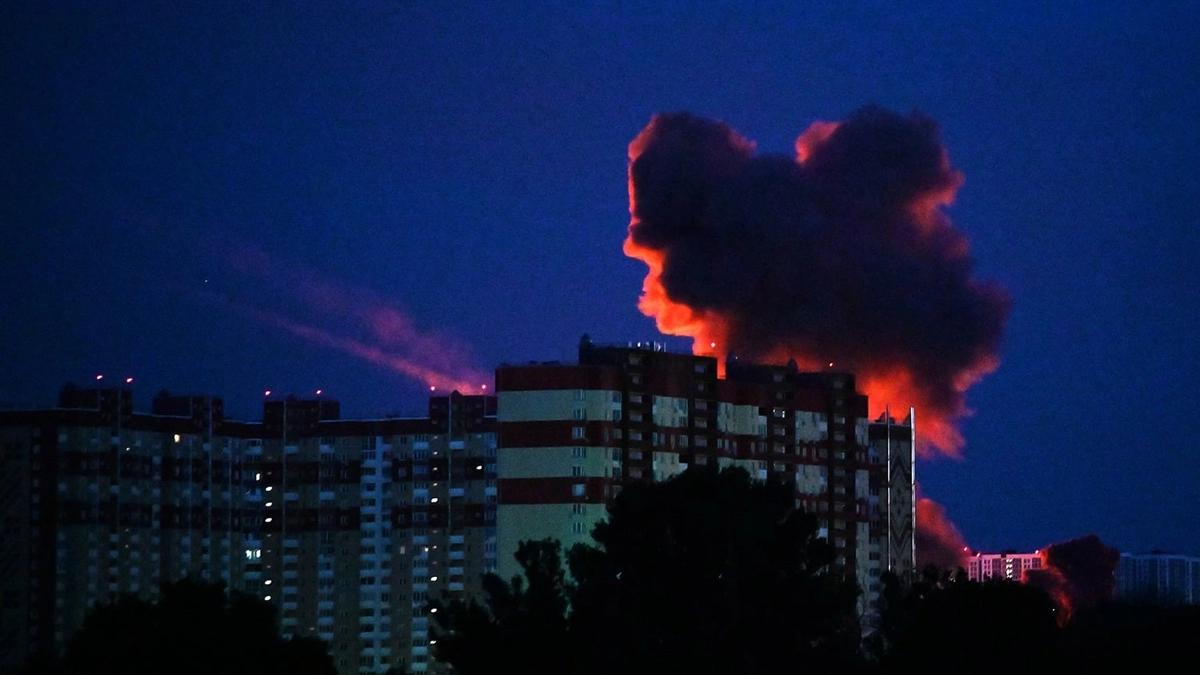
Russia's latest missile and drone strikes on Ukraine, which targeted Kyiv and other major cities, mark a significant escalation in Moscow's aerial campaign. The attack, which killed at least 22 people and injured nearly 140 others, is the third heavy assault in less than a month and has raised concerns about the conflict's future trajectory and regional implications.
Moscow's decision to launch a massive aerial operation against Ukraine is likely driven by several strategic motivations. Firstly, Russia is seeking to take advantage of Ukraine's shortage of U.S.-provided air defense systems, which has left Kyiv struggling to intercept Russian missiles. By launching a large-scale attack, Moscow aims to demonstrate its military capabilities and create a sense of vulnerability among Ukraine's leadership.
Secondly, Russia is attempting to shift the narrative of the conflict, portraying Ukraine as a vulnerable and weak state that requires international protection. This narrative is likely aimed at undermining Ukraine's international support and creating divisions among its Western allies.
The escalation of Russia's aerial campaign has significant regional implications. Firstly, it has raised concerns about the conflict's potential spread to other parts of Europe. If Ukraine is unable to defend itself against Russian aggression, it may lead to a wider conflict involving other European countries.
Secondly, the escalation has implications for the ongoing peace talks between Israel and Hezbollah. The Israeli military's decision to resume targeting southern Lebanon's suburbs has raised tensions in the region, and the conflict's potential spread to other parts of the Middle East.
The future consequences of Russia's escalation are uncertain, but several possible outcomes are worth considering. Firstly, if Ukraine is unable to defend itself against Russian aggression, it may lead to a wider conflict involving other European countries. This could have significant implications for regional stability and global security.
Secondly, the escalation has implications for the ongoing peace talks between Israel and Hezbollah. If the conflict spreads to other parts of the Middle East, it could lead to a wider regional conflict.
The international community has a critical role to play in addressing the escalating conflict in Ukraine. Firstly, Western countries must provide Ukraine with the necessary military and economic support to defend itself against Russian aggression.
Secondly, the international community must work to prevent the conflict's potential spread to other parts of Europe and the Middle East. This requires a coordinated effort to address the root causes of the conflict and promote regional stability.
Russia's escalation of its aerial campaign in Ukraine marks a significant turning point in the conflict. The strategic motivations behind Moscow's decision are complex and multifaceted, but the regional implications are clear. The international community must work together to address the conflict's potential spread and promote regional stability.
Editor's Note: The analysis is based on publicly available information and may not reflect the full complexity of the situation.
Source referenced: FOREIGNPOLICY
This brief was synthesized by our Editorial Engine and reviewed by The Ground Narrative team.