TRENDING

Friday, 16 October 2026
----------------------
5 Jumada Al-Awwal 1448 AH
A documentary highlights China's family doctor program, showcasing village doctors who provide essential healthcare to remote communities. This initiative aims to prevent serious illness from driving vulnerable rural families back into poverty.
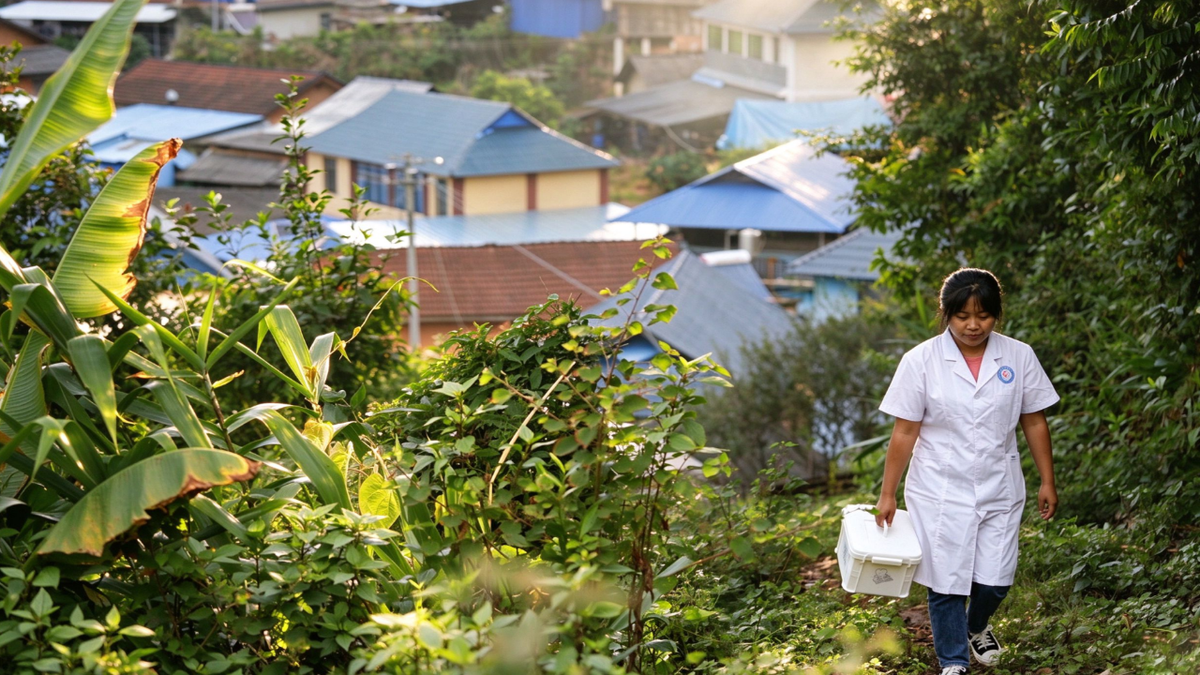
A recent CGTN documentary brought into focus the critical role of village doctors within China's national healthcare strategy. The film centered on Zhong Liping, a young medical professional who returned to her home village of Yanyin in remote southwest China. There, she serves nearly 2,000 residents, many of them elderly and from ethnic minority groups (Lahu, Hani, Dai), providing chronic disease management and essential care under China's family doctor program, a nationwide initiative launched in 2016 specifically designed to extend healthcare services into underserved rural communities and prevent illness from causing financial ruin.
China's approach to rural healthcare is a direct reflection of its centralized state power and the Chinese Communist Party's (CCP) overarching goals of social stability and economic development. The family doctor program is not merely a public health initiative; it is a strategic political instrument designed to address deep-seated inequalities and reinforce the state's legitimacy.
For decades, China's rapid, export-led economic growth prioritized urban centers, leading to a stark disparity in resources, including healthcare, between cities and the vast countryside. This program represents a deliberate, top-down effort by Beijing to rebalance this equation. By extending basic medical services to the remotest villages, the state aims to mitigate social grievances, reduce the pressure on overstretched urban hospitals, and ensure a baseline level of welfare for all citizens, regardless of location.
The program is explicitly linked to the CCP's ambitious poverty alleviation campaign, which declared an end to extreme poverty by 2020. Serious illness is a leading cause of families falling into or relapsing into poverty. By providing accessible and affordable healthcare, the state directly intervenes to protect household incomes and prevent catastrophic medical expenses from undoing years of economic progress. This serves to validate the CCP's governance model and its commitment to
Launched nationwide in 2016, China's family doctor program aims to extend basic healthcare services, including chronic disease management and elderly care, into remote rural communities. It assigns village doctors to residents, focusing on preventative care and reducing the financial burden of illness.
Serious illness is a leading cause of families falling into or relapsing into poverty in rural China. By providing accessible and affordable healthcare, the program directly protects household incomes from catastrophic medical expenses, thereby supporting the government's broader poverty alleviation efforts and social stability.
Key challenges include retaining qualified medical professionals in remote areas, ensuring the quality and scope of care can match urban standards, and managing the healthcare needs of a rapidly aging rural population. The vast scale of the country and diverse local needs also present significant logistical and resource allocation hurdles.
Source referenced: CGTN
This brief was synthesized by our Editorial Engine and reviewed by The Ground Narrative team.