TRENDING

Friday, 16 October 2026
----------------------
5 Jumada Al-Awwal 1448 AH
China will host the 2026 Global Governance Forum in Xiongan, a showcase of its soft‑power ambitions. The event reshapes diplomatic calculations while ordinary citizens bear hidden costs.
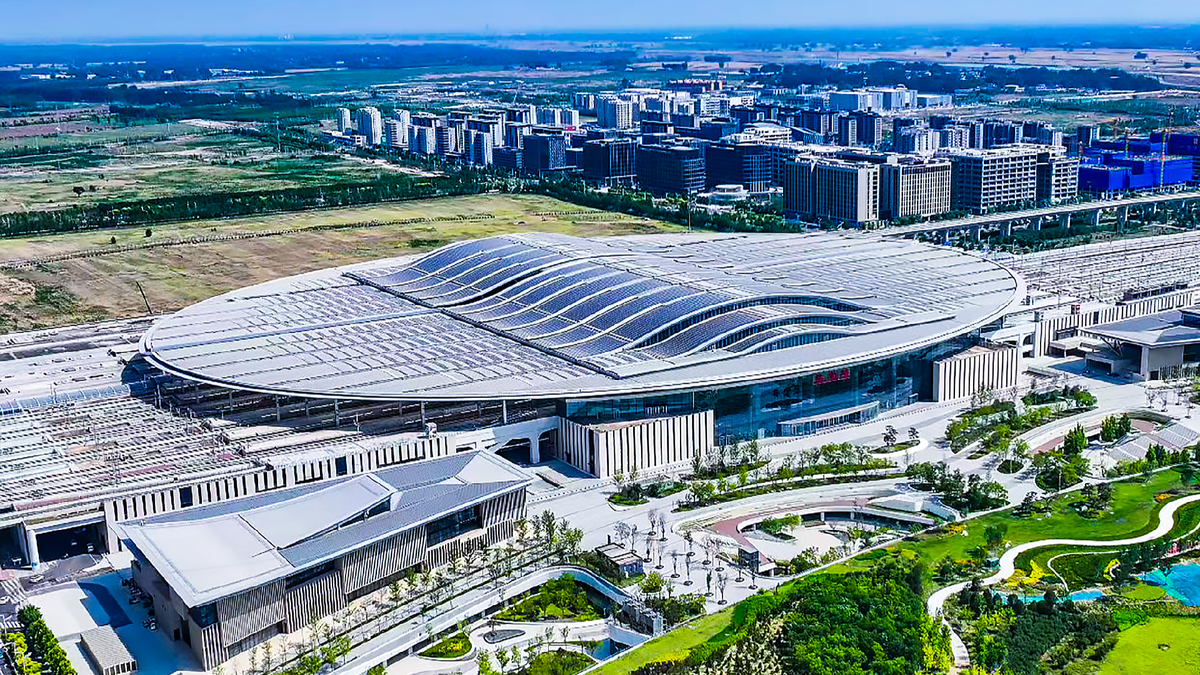
China’s People's Institute of Foreign Affairs announced that the 2026 Global Governance Forum will be held from October 23‑25 in Xiongan New Area, Hebei Province. The three‑day gathering is billed as a platform for multilateral dialogue on issues ranging from climate policy to digital standards. Invitations have been extended to senior officials, think‑tank scholars, and business leaders from more than 70 countries, though the final participant list remains opaque.
By staging the forum in Xiongan, a city built from scratch to embody China’s vision of a modern, sustainable metropolis, Beijing signals that it can manufacture not only infrastructure but also the rules of global interaction. The venue itself becomes a diplomatic prop, reinforcing the narrative that China is the architect of a new order.
Domestically, the forum offers the Communist Party a rallying point to demonstrate competence in delivering large‑scale projects and hosting international elites. Internationally, it provides a counterweight to Western‑led summits such as the G20, allowing China to set agendas on trade, technology, and security without the constraints of traditional Western institutions.
The timing aligns with the latest phase of the Belt and Road Initiative, where Beijing seeks to convert infrastructure loans into political influence. By inviting business delegations, the forum creates a pipeline for Chinese firms to secure contracts in participating countries, turning economic outreach into a lever for diplomatic concessions.
While the public narrative stresses cooperation, security analysts note that Xiongan sits just outside Beijing, within a region heavily militarized for the protection of the capital. Hosting foreign delegations there allows China to monitor discussions closely, gather intelligence, and showcase its ability to project power in the hinterland.
The rapid construction of Xiongan has already displaced thousands of rural households. Residents received compensation packages that many describe as insufficient, forcing families to relocate to overcrowded satellite towns where jobs are scarce and public services lag behind.
The influx of international delegates creates a surge in demand for hospitality workers, translators, and security personnel. Most of these jobs are low‑paid, temporary contracts lacking social benefits, leaving workers vulnerable once the forum concludes.
Building a new city on previously agricultural land required extensive land reclamation, water diversion, and the erection of high‑rise structures. Local NGOs report rising air and water pollution levels, threatening the health of nearby villages that rely on farming and fishing for their livelihoods.
Resources funneled into the forum—security personnel, high‑speed rail upgrades, and media infrastructure—could have been allocated to improve schools, hospitals, and public transport for the broader Hebei population. The prioritization of a high‑profile event over basic services deepens existing regional inequalities.
Official statements emphasize “global consensus” and “shared destiny,” yet the agenda omits any substantive discussion of human rights concerns tied to China’s policies in Xinjiang or Hong Kong. By framing the forum as a neutral ground, Beijing sidesteps scrutiny of its own governance record.
While the roster lists think‑tank scholars and diplomats, many of the invited business leaders are executives from state‑owned enterprises. Their presence signals that commercial interests are intertwined with policy outcomes, a fact downplayed in press releases that portray the event as purely academic.
Unlike many Western conferences, the forum does not allocate slots for NGOs or independent journalists. This exclusion curtails dissenting voices and ensures that the public narrative remains tightly controlled by the host government.
The forum’s digital platform will host live‑streamed panels and real‑time translation services. Security experts warn that such infrastructure can be repurposed for mass data collection on foreign participants, providing Beijing with valuable intelligence on policy positions and negotiation tactics.
The immediate aftermath will reveal whether the forum produces concrete joint statements or remains a symbolic exercise. Key indicators to monitor include: any shift in trade negotiations involving Belt and Road partners; the inclusion of Xiongan in future multilateral summit itineraries; and domestic reactions in Hebei regarding compensation disputes. Over the longer term, watch for patterns of increased Chinese influence in standard‑setting bodies for emerging technologies, as well as any grassroots mobilization in displaced communities demanding redress. The forum’s success, or lack thereof, will shape how Beijing leverages soft power to complement its hard‑power posture in the coming decade.
The forum is presented as a platform for multilateral dialogue on issues like climate and digital standards, but it also serves China’s goals of showcasing soft power, advancing economic interests, and reinforcing its diplomatic narrative.
Construction has displaced thousands of residents, strained local ecosystems, and redirected public resources toward the event, leaving many families with inadequate compensation and limited access to services.
Source referenced: CGTN
This brief was synthesized by our Editorial Engine and reviewed by The Ground Narrative team.