TRENDING

Saturday, 3 October 2026
----------------------
22 Rabi' Al-Thani 1448 AH
As Houthi attacks escalate in the Red Sea and target Saudi infrastructure, the world watches oil prices climb. But beneath the surface of this strategic power play, ordinary Yemenis face the intensifying human cost of a conflict orchestrated by distant powers.
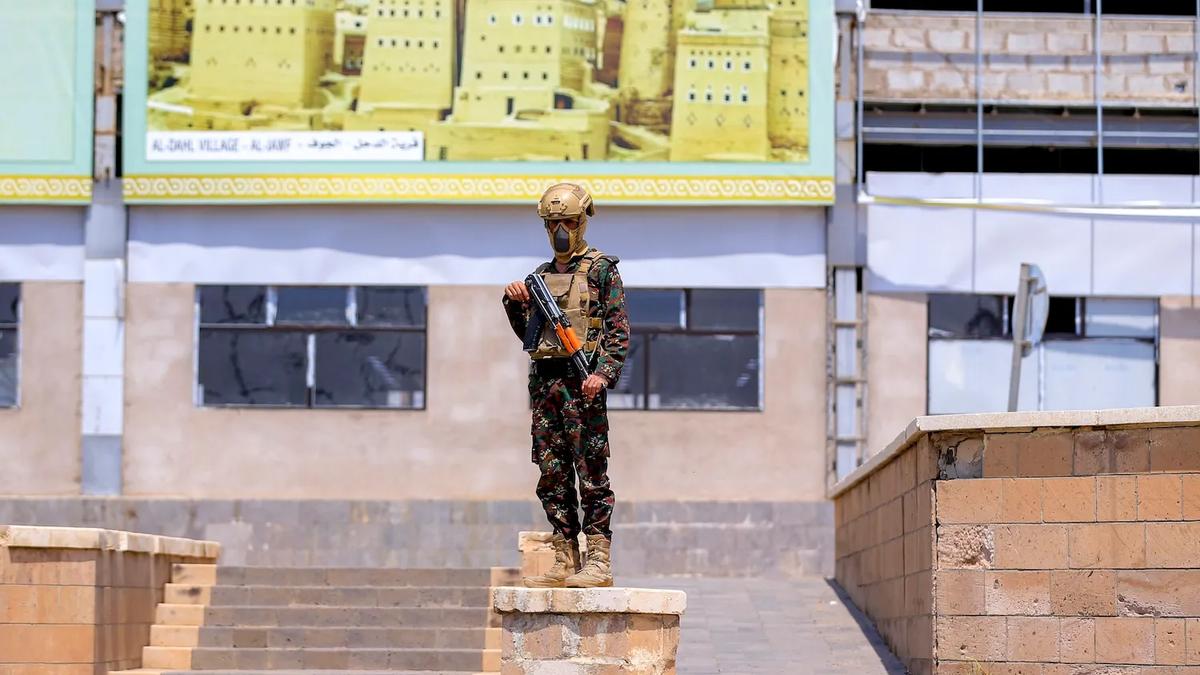
Recent weeks have seen a significant escalation in the Red Sea, with Houthi forces launching a series of attacks targeting Saudi Arabia's Abha airport and critical Saudi Aramco facilities. These actions, coupled with threats to shipping lanes at the Bab el-Mandeb strait, follow a provocative incident where an Iranian aircraft defied Saudi inspection mechanisms at Sanaa airport, leading to the runway being cratered by Saudi-backed Yemeni government forces. The immediate global impact was palpable, with Brent crude prices surging above $100 a barrel for the first time since the broader regional conflict began.
This latest surge in activity is a calculated demonstration of Iran's strategy to project power through proxies at crucial global chokepoints. With the White House insisting on the openness of the Strait of Hormuz, Tehran has activated the Houthis at Bab el-Mandeb, effectively opening a second front to exert pressure. This is further amplified by coordinated Iraqi militia drone strikes on major Saudi energy facilities, creating a unified axis operation designed to squeeze Riyadh and induce global economic panic. For the Houthis, who have perfected the art of asymmetric warfare over a decade, the tactical cost of launching drones and anti-ship missiles is negligible compared to the disproportionate economic and security burdens they impose on Riyadh and Washington. This strategy stretches U.S. air defenses and forces global markets to price in the threat, regardless of whether a full blockade is executed. Saudi Arabia, despite its recent efforts towards regional detente and consolidation of power within Yemen, finds itself trapped in a difficult position, forced to consider either costly military escalation or concessions that could empower its adversaries.
While global attention fixates on oil prices and strategic maneuvers, the most profound and immediate costs are borne by the Yemeni people. The recent Houthi attack on a Yemeni government camp, resulting in at least 30 soldiers dead, underscores the brutal reality of an intensifying civil war. Beyond the front lines, ordinary Yemenis endure the consequences of forced recruitment drives, increased local taxation by Houthi authorities, and a deepening humanitarian crisis exacerbated by the withdrawal of major relief organizations following the arrests of aid workers on espionage charges. The conflict's prolongation, fueled by external power plays and internal Houthi struggles, means continued suffering, displacement, and a lack of basic necessities for millions who have no say in the geopolitical chess game unfolding around them.
Powerful actors are carefully crafting narratives to serve their immediate interests. The Houthis, for instance, meticulously frame their actions as responses to local civil war grievances—demanding public salary payments, open ports, and expanded flight access from Sanaa airport. This framing serves two critical purposes: it attempts to shield them from direct U.S. military retaliation by adhering to the spirit of past ceasefires with Washington, and it aims to force Riyadh into an isolated bilateral deal, decoupling their actions from Tehran's wider regional agenda. What is omitted is that these actions are, in fact, the execution of Iranian instructions, aligning perfectly with Tehran's broader regional strategy. Iran, in turn, maintains plausible deniability, leveraging its proxies to achieve strategic objectives without direct engagement. Meanwhile, the Houthis' internal pressures—waning political appeal, worsening tensions with northern tribal groups, and reliance on conscription and fear—are rarely highlighted, yet they are a significant driver for their willingness to escalate externally. For the international community, the focus often remains on the immediate economic shockwaves, inadvertently downplaying the grinding human cost in Yemen itself.
Moving forward, several critical developments bear watching. Saudi Arabia's response will be pivotal: will it be compelled to escalate its involvement in a ground war, or will it seek a diplomatic off-ramp that risks legitimizing and funding Houthi control? The internal stability of the Houthi movement, currently under pressure from its own populace, will determine its capacity to sustain this high-stakes strategy. Iran's calculus, particularly its intent to exploit perceived U.S. vulnerabilities before upcoming elections, will dictate the pace and intensity of proxy actions across the region. Finally, the global economic fallout, particularly in shipping insurance markets and oil prices, will continue to ripple, affecting consumers far beyond the Red Sea. The immediate future of Yemen's already devastated population hangs precariously in the balance of these power dynamics.
Source referenced: FOREIGNPOLICY
This brief was synthesized by our Editorial Engine and reviewed by The Ground Narrative team.