TRENDING

Tuesday, 6 October 2026
----------------------
25 Rabi' Al-Thani 1448 AH
The UN Security Council is poised to vote on renewing sanctions against Sudan, revealing deep divisions among global powers over expanding a critical arms embargo. This decision comes as the brutal conflict between the Sudanese Armed Forces and the Rapid Support Forces continues to devastate the nation.
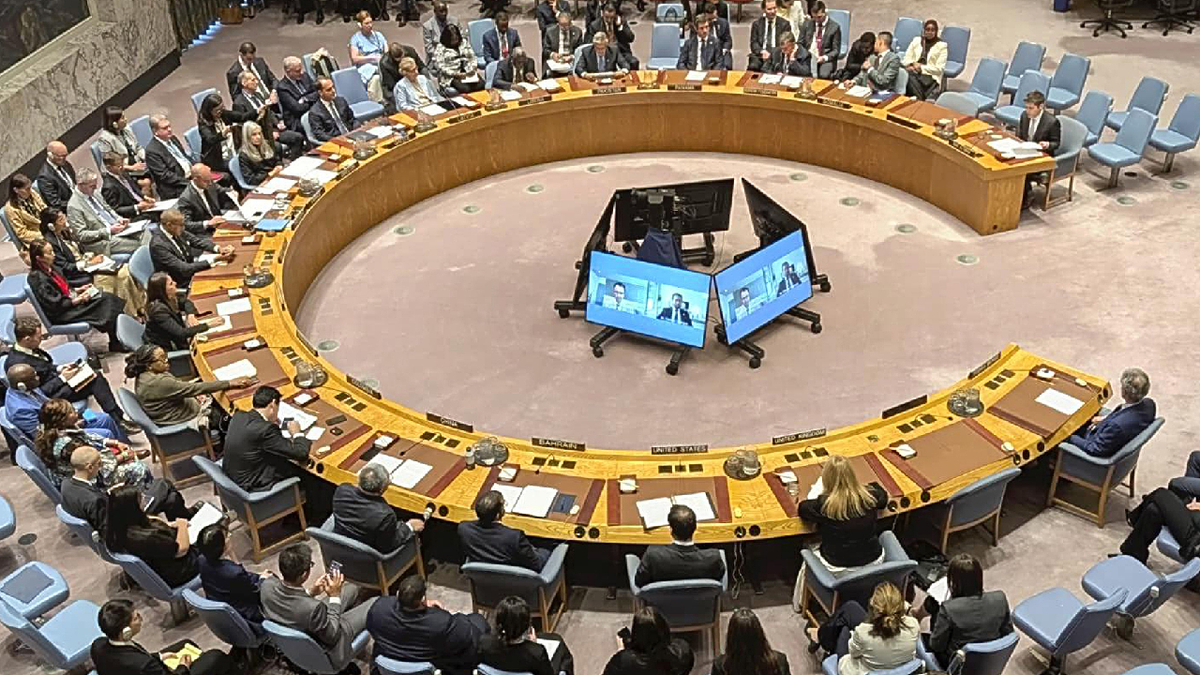
The UN Security Council is scheduled to vote on October 8, 2026, on the renewal of existing sanctions against Sudan. This vote follows a period of intense disagreement among member states, particularly concerning a United States proposal to broaden the scope of an arms embargo beyond its current focus on Darfur to cover the entire country. While an earlier resolution (2828) in September unanimously extended the existing measures, a consensus on the US-backed expansion proved elusive, highlighting significant geopolitical fault lines as the conflict between the Sudanese Armed Forces (SAF) and the Rapid Support Forces (RSF) rages on, causing widespread humanitarian suffering.
The upcoming UN Security Council vote on Sudan is less about the immediate humanitarian crisis and more about the intricate dance of global power and national interests. The existing sanctions, established in 2005 under Resolution 1591, primarily target Darfur and include travel bans and asset freezes on individuals involved in the conflict. The United States' push to expand the arms embargo nationwide reflects a desire to exert greater pressure on both the SAF and RSF, aiming to curb their access to weaponry and force them towards a negotiated settlement. However, this proposal has met with significant resistance, revealing the complex web of alliances, economic interests, and geopolitical rivalries that often paralyze effective international action.
At the heart of the division are the permanent members of the Security Council – primarily Russia and China, who often view US-led initiatives with skepticism, fearing they could be used to destabilize regimes or expand Western influence. For Russia, any expansion of an arms embargo could be seen as setting a precedent that might be applied to other conflict zones where it has vested interests or supplies weaponry. China, while often emphasizing non-interference, is a significant economic partner to many African nations, including Sudan, and might be wary of measures that could disrupt its strategic investments or create instability that impacts its commercial ties. Both countries have historically been cautious of broad sanctions, often preferring a more limited approach that does not grant one side a decisive advantage, or that protects their own arms export markets.
Furthermore, the internal dynamics of Sudan's conflict are deeply intertwined with regional power plays. Various neighboring countries and external actors have tacitly or overtly supported either the SAF or the RSF, viewing the conflict through the lens of their own security and economic interests. An expanded arms embargo, if strictly enforced, could disrupt these supply lines, but it also risks tilting the balance of power in unpredictable ways, potentially exacerbating the conflict or creating new regional proxy battlegrounds. The SAF, as the traditional state army, relies on a network of international suppliers, while the RSF, a paramilitary force, has cultivated its own diverse procurement channels, often through illicit networks or states willing to overlook international norms. Disarming one without effectively disarming the other is a complex and politically charged endeavor.
For the SAF and RSF, the conflict is a brutal struggle for control over Sudan's vast resources, including gold mines, agricultural land, and strategic ports. It is also a fight for political legitimacy and survival. Both factions are heavily armed and deeply entrenched, with commanders who have built personal fortunes and power bases through years of conflict. Sanctions, while intended to weaken them, can also be perceived as an external interference that galvanizes nationalist sentiment and hardens their resolve, making them less willing to compromise. The debate within the Security Council thus becomes a proxy for these larger geopolitical struggles, where the fate of Sudan's civilians is often secondary to the strategic calculations of powerful states.
While diplomats in New York debate the nuances of sanctions resolutions, the people of Sudan endure an unimaginable humanitarian catastrophe. The ongoing conflict between the SAF and RSF has shattered the lives of millions, pushing the nation to the brink of collapse. The immediate and most visible cost is the sheer scale of displacement; millions have been forced from their homes, seeking refuge within Sudan or in neighboring countries, creating one of the world's largest internal displacement crises.
In cities like El Obeid in North Kordofan, where fighting continues, civilians are trapped, facing indiscriminate violence, including drone attacks that claim innocent lives. Basic services have collapsed. Water shortages are rampant, forcing families to rely on unsafe sources, leading to outbreaks of cholera and other waterborne diseases. Healthcare infrastructure has been decimated, with hospitals destroyed, looted, or overwhelmed by war casualties, leaving countless without access to medical care for even treatable conditions. Food security has plummeted, with agricultural production disrupted and supply chains broken, pushing millions into acute hunger and famine-like conditions. Children, in particular, are bearing the brunt, suffering from severe malnutrition, lack of education, and the psychological trauma of war.
The conflict has not only claimed lives but has also systematically dismantled the social fabric of Sudan. Communities that once coexisted peacefully are now fractured by ethnic and tribal divisions exploited by the warring factions. Women and girls face heightened risks of gender-based violence, including sexual assault, as a weapon of war and a consequence of lawlessness. The destruction of homes, schools, and markets means that even if the fighting were to stop tomorrow, the path to recovery would be long and arduous, requiring massive investment and sustained peacebuilding efforts. A generation of Sudanese youth is growing up knowing only conflict, with their education interrupted and their futures uncertain, creating a long-term human capital crisis that will hinder the nation's development for decades.
The human cost extends beyond Sudan's borders. The influx of refugees strains the resources of already fragile neighboring states like Chad, South Sudan, and Egypt, creating new humanitarian challenges and potential for regional destabilization. These countries, often grappling with their own internal issues, are ill-equipped to handle such massive population movements, leading to increased competition for resources and potential social unrest in host communities. The conflict also creates fertile ground for illicit trade, arms trafficking, and the proliferation of armed groups, further eroding stability across the Sahel and Horn of Africa regions.
What governments and official statements often downplay or omit in the Sudan UN sanctions debate is the fundamental ineffectiveness of piecemeal sanctions in the face of deeply entrenched, externally supported conflicts, and the real reasons behind the Security Council's divisions.
The existing sanctions, primarily focused on Darfur, have done little to prevent the current nationwide conflagration. While they aimed to curb specific actors and entities, the reality is that both the SAF and RSF have continued to acquire weapons through various channels, including state-to-state deals, illicit arms markets, and the repurposing of existing stockpiles. The notion that an expanded arms embargo, without robust enforcement mechanisms and a unified international front, will suddenly halt the fighting is a dangerous oversimplification. The Security Council's inability to agree on a broader embargo suggests a lack of political will to truly choke off the supply lines to *both* sides, implying that some powerful actors benefit from, or at least tolerate, the continued flow of arms to their preferred proxies.
The
The existing UN sanctions against Sudan, established in 2005, include an arms embargo specifically for the Darfur region, along with travel bans and asset freezes targeting individuals and entities involved in that conflict. These measures have been repeatedly renewed by the Security Council.
Divisions stem from a US proposal to expand the arms embargo nationwide, beyond Darfur. Key members like Russia and China often resist broad sanctions, fearing they could destabilize the region, impact their strategic interests, or set precedents for other conflicts. The debate reflects broader geopolitical rivalries and national interests.
The conflict has led to millions displaced, severe water shortages, disease outbreaks, and widespread civilian casualties from drone attacks. Basic services have collapsed, food insecurity is rampant, and the social fabric of the nation is being systematically destroyed, creating a long-term humanitarian crisis.
Source referenced: CGTN
This brief was synthesized by our Editorial Engine and reviewed by The Ground Narrative team.