TRENDING

Monday, 21 September 2026
----------------------
10 Rabi' Al-Thani 1448 AH
At a New York forum, Qatar’s prime minister called for a regional security pact with Iran, arguing the Gulf can’t return to pre‑war normalcy without it. The proposal reveals shifting power calculations and a hidden human toll across the Gulf’s conflicted neighborhoods.
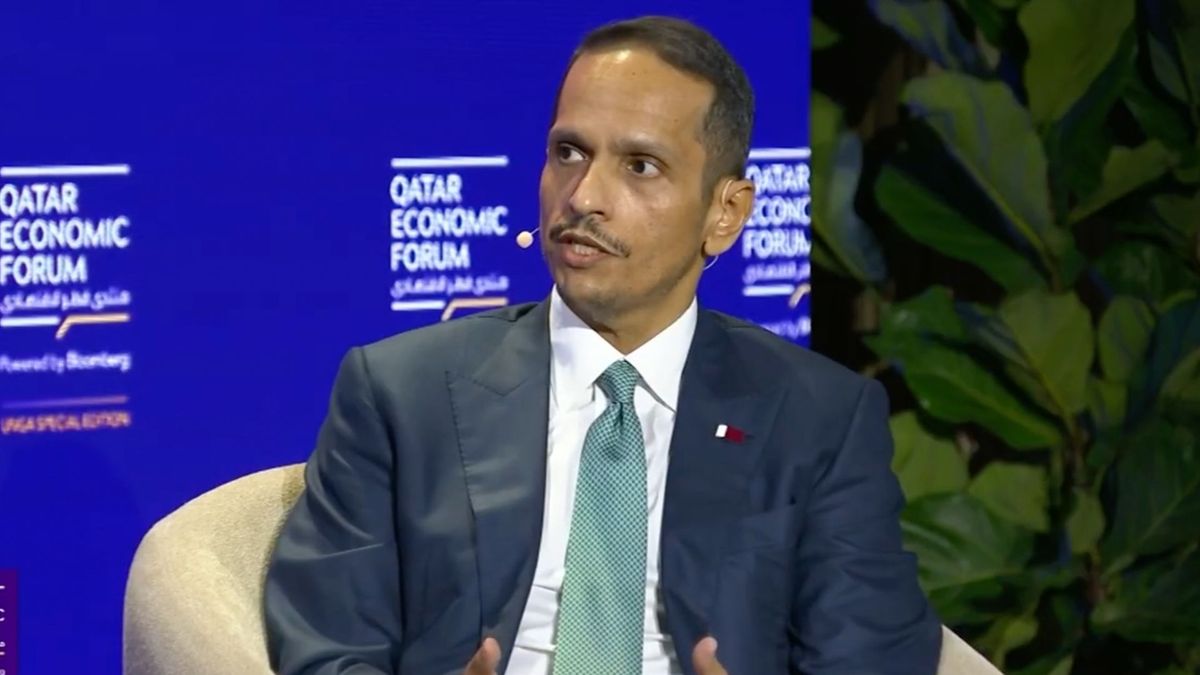
Qatar’s Prime Minister Sheikh Mohammed bin Abdulrahman Al Thani told Bloomberg at the Qatar Economic Forum in New York that the Gulf will not look like it did before the recent war unless a security framework guarantees that no state poses a threat to another. He urged the Gulf Cooperation Council (GCC) to include Iran in a formal arrangement that would manage rivalries and stabilize the region.
Qatar occupies a narrow diplomatic sweet spot. It hosts the U.S. Al Udeid airbase, runs a lucrative LNG export sector, and has cultivated a reputation as a mediator between Tehran and Washington. By championing a Gulf‑Iran security pact, Doha seeks to preserve its role as the region’s go‑between while hedging against a possible U.S. pull‑back after the war in Gaza and the lingering U.S.‑Iran stalemate.
For Iran, inclusion in a Gulf framework would break its diplomatic isolation, legitimize its regional influence, and provide a platform to negotiate sanctions relief without conceding on its core strategic interests, such as its ballistic‑missile program and support for allied militias. The GCC, especially Saudi Arabia and the United Arab Emirates, faces a paradox: they want to contain Iran’s reach but also need to prevent a security vacuum that could invite external powers, notably China or Russia, to fill the gap.
Economic incentives are equally decisive. Qatar’s LNG revenues depend on stable shipping lanes through the Strait of Hormuz and the Gulf’s maritime routes. A security pact that reduces the risk of naval skirmishes protects those commercial arteries. Meanwhile, the United States, still the region’s primary security guarantor, benefits from a GCC‑Iran dialogue that could lower the cost of maintaining a massive forward‑deployed force.
The proposal glosses over the everyday realities of populations living under the shadow of conflict. In Yemen, a war that has dragged on for a decade continues to claim lives, displace millions, and cripple the economy. In Gaza, the humanitarian crisis deepens as blockades tighten. Migrant workers from South Asia, who make up the bulk of the Gulf’s labor force, endure low wages, restricted movement, and limited legal protections—conditions that would persist regardless of high‑level security talks.
Moreover, small‑scale fishermen and coastal communities in Iran’s Bushehr province and Saudi’s Eastern Province rely on calm seas for their livelihoods. Any escalation or misstep in the security framework could instantly jeopardize their income, turning diplomatic rhetoric into a matter of daily survival.
Official statements emphasize “mutual security” while sidestepping the domestic political calculations that drive each actor. Qatar’s leadership is keen to showcase diplomatic relevance ahead of its 2027 World Cup bid, using the framework as a soft‑power showcase. The United States, meanwhile, is downplaying its own strategic fatigue; a Gulf‑Iran pact would allow Washington to shift resources toward the Indo‑Pacific without abandoning its Gulf allies.
Iran’s internal pressures—ranging from a deteriorating economy under sanctions to public unrest over water scarcity—are also muted. A security deal could be framed domestically as a victory for the regime, deflecting criticism about economic mismanagement. Finally, the GCC’s internal fissures, especially the lingering mistrust after the 2017 Qatar diplomatic crisis, are brushed aside in the call for unity, even as member states quietly hedge their positions.
Watch for three immediate signals: (1) U.S.–Iran back‑channel talks that may surface in the coming weeks, indicating whether Washington is willing to endorse a GCC‑Iran framework; (2) Saudi Arabia’s public stance, which will reveal whether Riyadh can reconcile its anti‑Iran narrative with a pragmatic security arrangement; and (3) Qatar’s diplomatic outreach to other Gulf states, especially Oman and Kuwait, whose participation could tip the balance toward a viable pact. A shift in any of these variables could either cement a new regional security architecture or reinforce the status quo of mutual suspicion.
If the framework materializes, the next layer of analysis will need to assess how it reshapes energy markets, the U.S. military footprint, and the lived conditions of the Gulf’s most vulnerable communities.
Source referenced: ALJAZEERA
This brief was synthesized by our Editorial Engine and reviewed by The Ground Narrative team.