TRENDING

Tuesday, 3 November 2026
----------------------
23 Jumada Al-Awwal 1448 AH
A recent G20 foreign ministers' meeting concluded without a joint communique, a stark indicator of deepening global divisions. This diplomatic breakdown signals a challenging path forward for international cooperation.
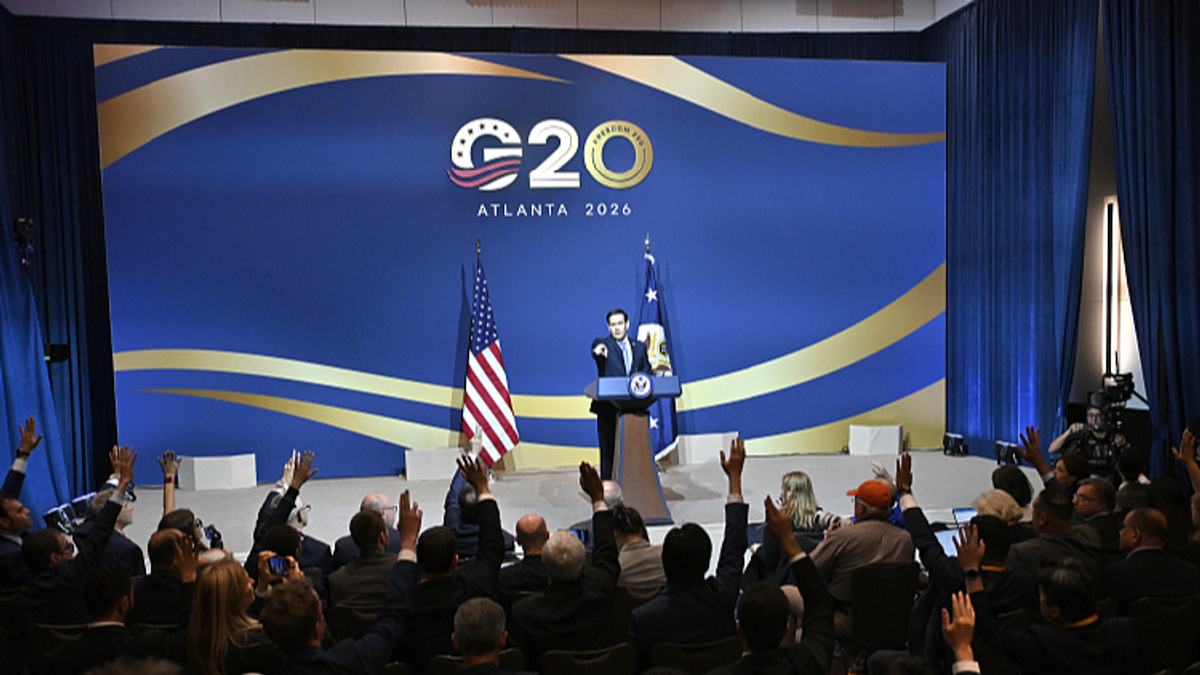
In late October 2026, the Group of 20 (G20) foreign ministers convened in Atlanta, United States, for a two-day meeting that concluded without the customary joint communique. This failure to reach a consensus statement underscored profound disagreements among the world's leading economies on critical global issues. Key points of contention included the ongoing Ukraine crisis, the escalating US-Iran conflict, and contentious US tariff policies. The meeting, chaired by US Secretary of State Marco Rubio, also saw the symbolic cancellation of the traditional group photo of foreign ministers, reportedly due to objections from several European countries, Australia, and Canada against posing with Russian Foreign Minister Sergei Lavrov. Further highlighting the divisions, the United States notably did not invite South Africa, which held the G20 presidency the previous year, sparking additional discord among members.
The inability of the G20 foreign ministers to issue a joint statement is not merely a diplomatic formality; it is a stark reflection of a fractured global power landscape where competing interests and ideological divides now overshadow the imperative for collective action. The United States, as host, attempted to steer the agenda towards issues like freedom of navigation in critical waterways such as the Strait of Hormuz and the Black Sea, as well as the security of critical mineral supply chains and food security. These priorities clearly align with Washington's strategic interests in maintaining global trade routes and securing resources vital for its economy and defense. However, the cancellation of the group photo, intended to isolate Russia, inadvertently exposed the lack of unity within the broader G20 itself, as members struggled to balance their individual relationships with Moscow against pressure from Washington.
China's position, articulated by Vice Foreign Minister Ma Zhaoxu, presented a counter-narrative, emphasizing the lagging global development agenda and advocating for its Global Security Initiative. This initiative, promoting a vision of common, comprehensive, cooperative, and sustainable security, is a direct challenge to the Western-centric security frameworks. Beijing's call for the G20 to ease regional tensions, address root causes of conflict, and strengthen global security governance positions China as a responsible global actor, appealing to nations wary of unilateral interventions and seeking alternative models of international cooperation. Its emphasis on energy security and stable supply chains also reflects China's own economic vulnerabilities and its desire to shape global economic governance.
The deep divisions over the Ukraine crisis continue to polarize the group, with some nations firmly condemning Russia's actions and others, particularly from the Global South, adopting a more neutral stance, prioritizing economic stability over geopolitical alignment. The US-Iran conflict adds another layer of complexity, with the prospect of further military action by the United States post-midterm elections raising concerns about regional instability and its impact on global energy markets. US tariff policies, a long-standing point of contention, further underscore the economic nationalism that often undermines multilateral cooperation. The decision by US President Donald Trump to invite Russian President Vladimir Putin to the upcoming Leaders' Summit in Miami, despite the foreign ministers' discord, reveals a complex interplay of domestic political calculations and an attempt to project a willingness for dialogue, even as the diplomatic foundations appear to crumble.
When the world's most powerful economies fail to find common ground, the consequences ripple outwards, directly impacting the lives of ordinary citizens far from the diplomatic chambers. The most immediate and tangible human cost is the sharp increase in global fuel costs. This translates directly into higher prices at the pump for commuters, increased transportation costs for goods, and ultimately, more expensive food and consumer products on store shelves. Families already struggling with inflation find their purchasing power further eroded, leading to difficult choices between essential needs.
The heightened uncertainty in global trade resulting from unresolved disputes and tariff policies directly threatens livelihoods. Businesses, from small importers to large manufacturers, face unpredictable supply chains and fluctuating costs, making planning and investment difficult. This instability can lead to job losses, reduced wages, and a general slowdown in economic growth, particularly in export-dependent economies. Workers in industries reliant on global trade, such as manufacturing, logistics, and agriculture, bear the brunt of these disruptions, facing insecure employment and diminished economic prospects.
Divisions over the Ukraine crisis and the security of waterways like the Black Sea have profound implications for global food security. Ukraine is a major exporter of grain, and disruptions to its exports disproportionately affect vulnerable populations in Africa and the Middle East who rely on these imports to stave off hunger. The failure of G20 ministers to agree on measures to ensure stable food supplies means that millions could face increased food insecurity, malnutrition, and even famine, transforming geopolitical disagreements into humanitarian crises.
The escalating US-Iran conflict carries the potential for devastating human costs. A military escalation in the Middle East would not only disrupt global energy supplies but, more critically, would endanger civilian lives, lead to mass displacement, and exacerbate existing humanitarian crises in the region. Ordinary people in Iran and neighboring countries live under the constant shadow of potential conflict, facing the threat of violence, economic collapse, and the loss of their homes and communities. The human toll of such a conflict, measured in lives lost, injuries sustained, and futures shattered, would be immense and long-lasting.
The official narrative surrounding the G20 meeting often emphasizes the
The meeting failed due to deep divisions over the Ukraine crisis, the US-Iran conflict, and US tariff policies. Participants could not reach consensus on major global geopolitical and economic security issues, leading to the absence of a unified statement.
Key disagreements centered on how to address the Ukraine crisis and the US-Iran conflict, with some members also expressing concerns over US tariff policies. These issues contributed to sharply higher global fuel costs and heightened uncertainty in global trade.
The human costs include higher global fuel and food prices, increased economic uncertainty leading to job insecurity, and the potential for regional conflicts like the US-Iran dispute to escalate, causing displacement and humanitarian crises. This also erodes public trust in global institutions.
Editor's Note: Analysis is based on the provided raw intelligence, applying The Ground Narrative's editorial doctrine to explain power mechanics and human costs.
Source referenced: CGTN
This brief was synthesized by our Editorial Engine and reviewed by The Ground Narrative team.


