TRENDING

Tuesday, 27 October 2026
----------------------
16 Jumada Al-Awwal 1448 AH
As the war in Ukraine enters its most critical phase, Russian President Vladimir Putin's strategic motivations and the implications for the West are examined through the lens of autocratic logic and regime survival.
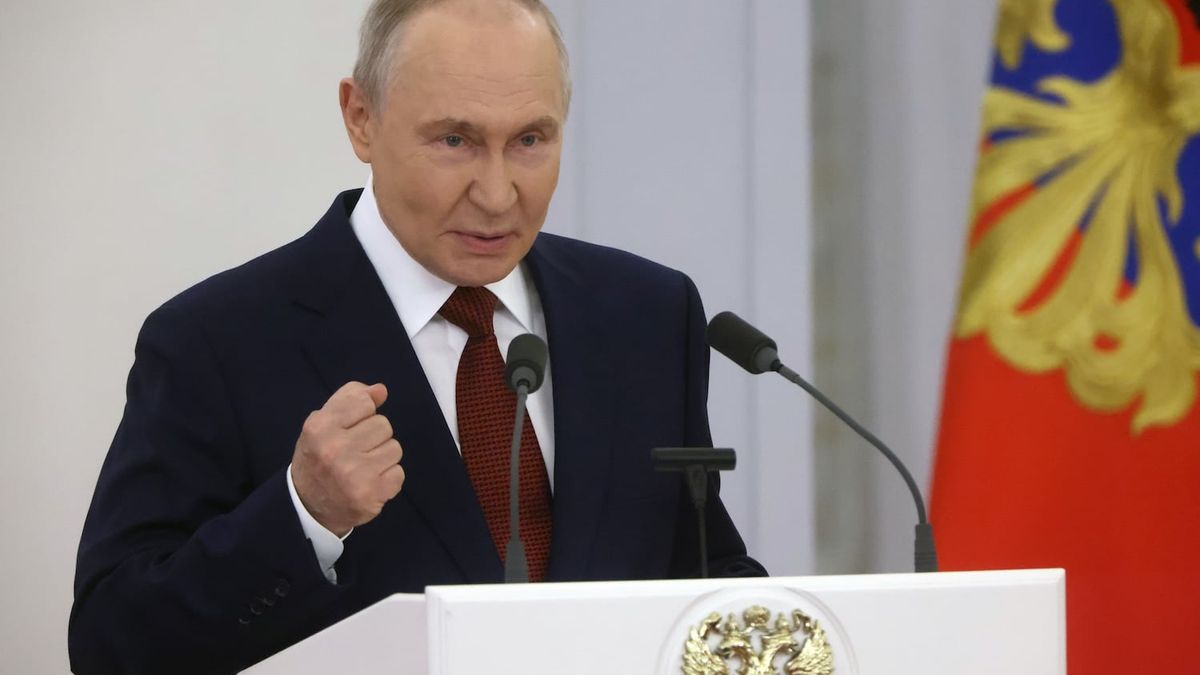
The war in Ukraine has been ongoing for four years, with the West assuming that enough conventional pressure on the battlefield will eventually force Russian President Vladimir Putin toward a negotiated off-ramp. However, this assumption is a mistake, as it projects a particular strategic logic onto a leader who is not playing by it. Putin's war is not governed by rational international relations or conventional military strategy; it is governed by the political theory of autocracy and regime survival.
Autocrats stay in power only as long as the coalition of elites around them believes they can still deliver what elite loyalty is based on: revenue, security, or victory. When that belief breaks, the elites who sustain autocrats move against them. This is evident in the cases of Slobodan Milosevic, Leopoldo Galtieri, and Omar al-Bashir, where their respective coalitions drew the conclusion that their leaders were no longer viable within a short period.
Putin adheres to this political logic, not the West's. He does not see an off-ramp but a dead end. With none of his military or political objectives met, Putin cannot enter genuine negotiations without risking his regime. Forcing a reckoning is therefore no easy task. Autocratic regimes are engineered to absorb costs that would collapse any comparable Western government.
The Ukrainian long-range drones' campaign against Russian oil refineries has caused a fuel crisis without precedent for a top-three oil producer. More than 90 percent of Russian regions are now rationing oil and diesel, and domestic gasoline output is running about one third below demand. This campaign fractures the Kremlin along both axes of the autocratic-coalition dynamic, directly impacting the revenue that buys the inner circle's loyalty and demanding an immediate, resource-heavy internal security response to contain any spark of civil unrest.
Putin will continue to escalate with the capabilities available to him until the political cost of aggression finally exceeds the political cost of bargaining. The tools available to him are narrow: ballistic strikes, infrastructure war, and hybrid war. The strikes on Kyiv in early July were among the year's deadliest, with the July 2 attack alone leading to more than 30 civilian deaths. Timed on the eve of the Ankara summit, they read as a signal of domestic control as much as an attack on Kyiv.
The West needs to recognize that in personalist autocracies, pressure hardens a regime before it weakens one. The strategic challenge for the West is to generate crises across multiple fronts long enough for the coalition that keeps Putin in power to conclude that continued war poses the greater threat to its survival. Only then will negotiation become politically tenable.
The war in Ukraine has entered its most critical phase, with Putin's regime facing unprecedented pressure. The West needs to adapt its strategy to recognize the autocratic logic of regime survival and the implications for Putin's actions. By generating crises across multiple fronts and widening the pressure, the West can create an environment where negotiation becomes politically tenable. Until then, Putin will continue to escalate, driven by the logic of regime survival.
Editor's Note: The analysis is based on the understanding of autocratic logic and regime survival, which is a widely accepted concept in the field of international relations.
Source referenced: FOREIGNPOLICY
This brief was synthesized by our Editorial Engine and reviewed by The Ground Narrative team.