TRENDING

Tuesday, 27 October 2026
----------------------
16 Jumada Al-Awwal 1448 AH
Polish Prime Minister Donald Tusk has issued a stark warning against rising xenophobic attacks on Ukrainians, asserting that such acts directly undermine Poland's national interests and inadvertently aid Russia. The call comes amidst a significant increase in hate crimes and growing public hostility, threatening the crucial strategic alliance between Warsaw and Kyiv.
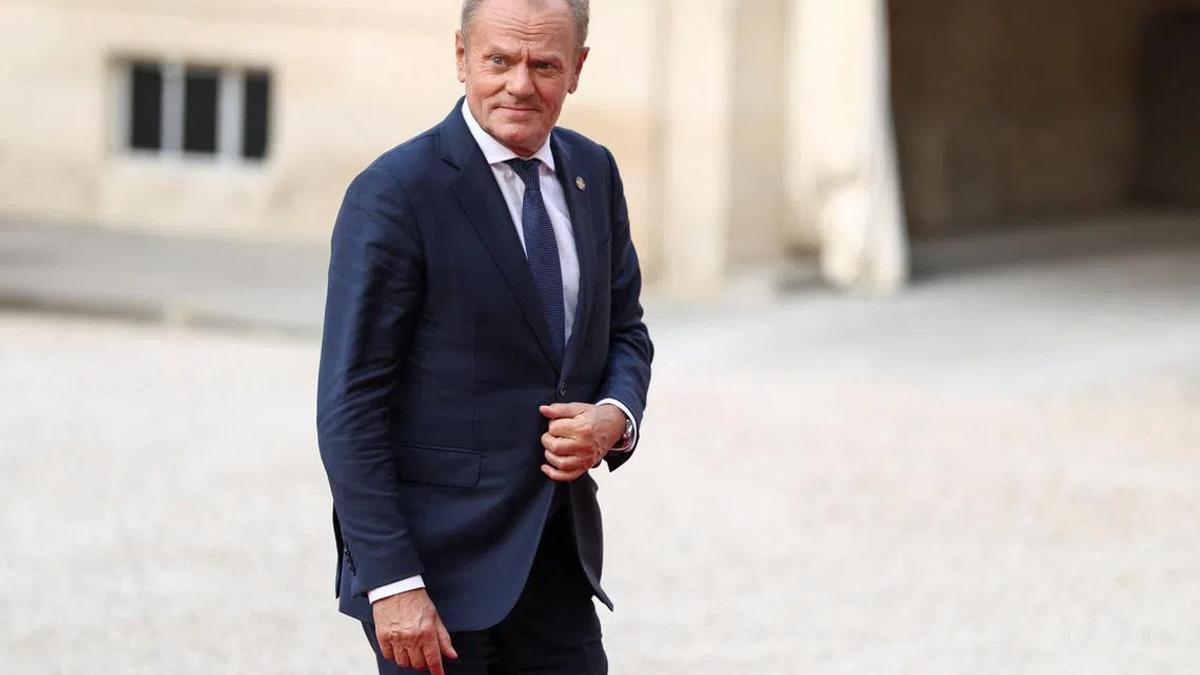
Polish Prime Minister Donald Tusk recently issued a forceful condemnation of xenophobic attacks targeting Ukrainians within Poland, emphasizing that such actions directly contravene Poland's national interests. Speaking on July 28, 2026, Tusk explicitly stated that those committing these "vile acts" are "working against Poland, in favour of Russia and in favour of Polish and Ukrainian nationalism." This intervention highlights a growing internal challenge to the otherwise robust strategic partnership between Warsaw and Kyiv, a critical bulwark against Russian aggression.
The Prime Minister's remarks followed a series of high-profile hate crimes, including a widely circulated social media video depicting three Poles assaulting a Ukrainian man and his girlfriend in Wroclaw. This incident, which led to two arrests, is part of a disturbing trend. Polish daily *Rzeczpospolita* reported a 30% increase in hate crime reports against Ukrainians in the first half of 2026, totaling 180 incidents. Other documented cases include the assault of a Polish man defending a Ukrainian boy in Poznan, verbal abuse against Ukrainian girls in Bielsko-Biala, and an attack on two Ukrainian teenagers in Legnica. Ukraine's Ambassador to Poland, Vasyl Bodnar, has publicly denounced these incidents as unacceptable, calling for justice for the victims.
The surge in public hostility towards Ukrainians in Poland marks a significant shift from the initial outpouring of sympathy that followed Russia's full-scale invasion in February 2022. While Poland has been a staunch supporter of Ukraine's war effort, hosting millions of refugees and providing substantial military and humanitarian aid, the initial wave of solidarity has gradually given way to what Tusk's administration identifies as "weariness with refugees." This phenomenon, common in host nations experiencing prolonged refugee crises, can be exploited by nationalist sentiments and contribute to social friction.
Beyond the immediate challenges of refugee integration, deeper historical grievances continue to strain Polish-Ukrainian relations. A particularly contentious issue revolves around Ukraine's decision to name an army unit after a group of World War Two nationalist insurgents. These groups, while admired in Ukraine for their fight against Nazi and Soviet forces, are reviled in Poland for their alleged participation in massacres of Poles during the war. This historical dispute recently escalated when Polish President Karol Nawrocki stripped Ukrainian President Volodymyr Zelenskyy of Poland's top honour in June, underscoring the profound and unresolved nature of these historical wounds.
Tusk's direct linkage of xenophobic acts to Russian interests is a critical geopolitical framing. By fostering internal divisions and undermining social cohesion between Poles and Ukrainians, these incidents inadvertently serve Moscow's strategic objectives. Russia has historically sought to exploit ethnic and historical tensions within its neighboring states and the broader European Union to destabilize the region, weaken alliances, and divert attention from its own aggressive actions. A fractured Polish-Ukrainian relationship, particularly at the societal level, could diminish the effectiveness of the anti-Russian coalition and complicate future diplomatic and military cooperation.
Poland's unwavering support for Ukraine is a cornerstone of its foreign policy and national security strategy, positioning Warsaw as a key frontline state in the defense of Eastern Europe. The erosion of public support for Ukrainians, fueled by xenophobia and historical disputes, risks weakening this strategic alignment. It could also embolden populist and nationalist elements within Poland, potentially impacting domestic political stability and Poland's standing within the European Union and NATO.
The challenge for both Warsaw and Kyiv is to manage these complex internal and historical dynamics without compromising their vital strategic partnership. Tusk's strong condemnation signals a clear intent from the Polish government to counter xenophobia and protect the integrity of its alliance with Ukraine. However, addressing the root causes of public weariness and reconciling deeply entrenched historical narratives will require sustained diplomatic efforts, public education campaigns, and robust law enforcement against hate crimes.
Ultimately, the ability of Poland and Ukraine to overcome these internal and historical frictions will be crucial not only for their bilateral relations but also for the broader security architecture of Eastern Europe. The ongoing conflict with Russia necessitates a united front, and any internal discord risks being exploited by external adversaries, making the call for an end to hate crimes a matter of profound geopolitical significance.
Source referenced: STRAITSTIMES
This brief was synthesized by our Editorial Engine and reviewed by The Ground Narrative team.