TRENDING

Tuesday, 6 October 2026
----------------------
25 Rabi' Al-Thani 1448 AH
The impeachment trial of Philippine Vice President Sara Duterte marks a critical juncture in the nation's political landscape, reflecting a deepening power struggle with President Marcos Jr. Concurrently, Myanmar revives a controversial Chinese-backed dam, and border tensions persist between Cambodia and Thailand, underscoring regional instability.
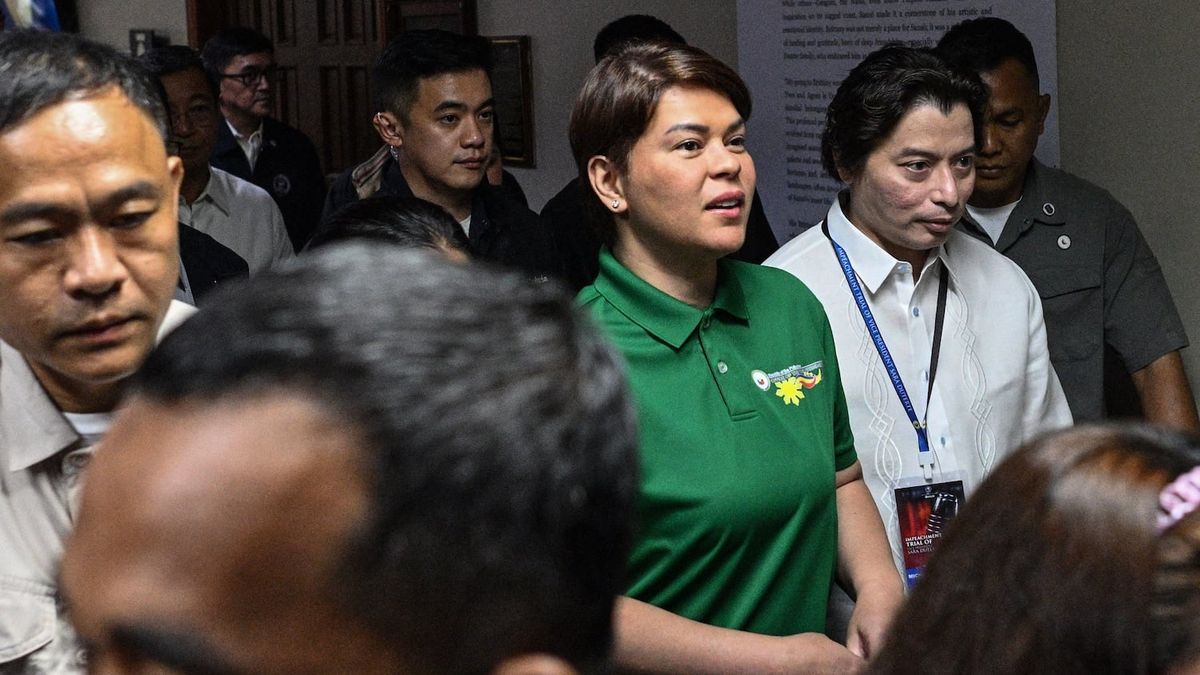
The Philippines is currently gripped by the impeachment trial of Vice President Sara Duterte, which commenced on July 7, 2026, in Manila. This event is not merely a legal proceeding but a significant political development, widely perceived as the latest escalation in the power struggle between the Marcos and Duterte dynasties. Vice President Duterte faces serious allegations, including misappropriation of public funds, unexplained wealth, bribery of public officials, and, notably, threatening to assassinate President Ferdinand Marcos Jr., his wife, and the Speaker of the House of Representatives. These charges stem primarily from alleged graft within the Department of Education and a controversial 2024 speech.
The trial's geopolitical significance lies in its potential to reshape the Philippines' political future and, by extension, its strategic alignment. Sara Duterte, daughter of former President Rodrigo Duterte, is a leading contender for the 2028 presidential election. A conviction would bar her from holding public office, effectively removing a formidable political rival to President Marcos Jr. The proceedings are unfolding amidst a backdrop of intense political maneuvering, with several pro-Duterte senators facing corruption charges and arrests, raising concerns about political pressure tactics aimed at influencing the trial's outcome. While Senator Francis "Chiz" Escudero, overseeing the trial, has affirmed the two-thirds Senate vote requirement for conviction, the arrests of key Duterte allies, such as Senators Rodante Marcoleta and Jose "Jinggoy" Estrada, and the outstanding International Criminal Court (ICC) warrant for Senator Ronald "Bato" dela Rosa, highlight the high stakes involved.
This internal political strife has broader implications for the Philippines' foreign policy. President Marcos Jr. has notably pivoted the country closer to the United States, particularly concerning the South China Sea disputes, a departure from his predecessor's more China-friendly stance. The weakening of the Duterte political bloc could consolidate Marcos Jr.'s position, potentially reinforcing the Philippines' strategic partnership with the U.S. and its allies in the Indo-Pacific. Conversely, the deep cynicism surrounding the trial, with both sides invoking historical grievances and accusations of corruption, underscores the fragility of democratic institutions and the enduring influence of dynastic politics in the archipelago nation. The ongoing ICC trial of former President Rodrigo Duterte for alleged extrajudicial killings during his 'war on drugs' further complicates the political landscape, adding another layer of pressure on the Duterte family.
In Myanmar, the military junta is moving to revive the controversial Chinese-backed Myitsone Dam project, a significant geopolitical and economic development. The project, initially suspended in 2011 due to widespread public opposition over environmental concerns and the disproportionate share of power slated for China, is now being pushed forward with an estimated cost exceeding $11.5 billion. This revival, following a visit by junta leader Min Aung Hlaing to China, signals Myanmar's increasing reliance on Beijing amidst international isolation and sanctions following the 2021 coup.
From a geopolitical perspective, the Myitsone Dam represents a critical component of China's Belt and Road Initiative (BRI) and its strategic energy security objectives. The dam's completion would provide China with substantial hydroelectric power and deepen its economic and political leverage over Myanmar. For the junta, the project offers a lifeline of foreign investment and a means to project political power, particularly in the contested Kachin State, where the dam is located and where the Kachin Independence Army (KIA) operates. The junta's assertion that new technology will mitigate environmental impacts and that Myanmar will receive a revised share of power aims to address past criticisms, though skepticism remains high. Downstream nations, including Laos, Thailand, Cambodia, and Vietnam, are likely to view this development with anxiety, given existing water management challenges caused by Chinese dams on the upper Mekong River.
Regional stability in Southeast Asia also faces challenges from persistent border disputes, as evidenced by an incident on July 8, 2026, where four Cambodian soldiers were injured by an explosion during a patrol in Oddar Meanchey province, a historical flashpoint with Thailand. The Cambodian Defense Ministry reported that the explosion occurred shortly after their patrol encountered a Thai unit, while Thailand's Defense Ministry denied involvement, suggesting the possibility of an unmapped landmine.
This incident, despite a ceasefire between the two nations, highlights the enduring complexities of border demarcation and the potential for localized conflicts to escalate. The presence of an ASEAN observer team has, thus far, failed to fully clarify or resolve the underlying tensions. Such incidents underscore the fragility of peace in areas with unresolved territorial claims and the need for robust diplomatic mechanisms to prevent minor clashes from destabilizing broader regional relations. While not a major international crisis, it serves as a reminder of the numerous localized flashpoints that can impact regional security and cooperation within ASEAN.
Source referenced: FOREIGNPOLICY
This brief was synthesized by our Editorial Engine and reviewed by The Ground Narrative team.


