TRENDING

Tuesday, 6 October 2026
----------------------
25 Rabi' Al-Thani 1448 AH
The funeral procession for Iran's slain Supreme Leader, Ayatollah Ali Khamenei, through Iraq's holy cities underscores Tehran's enduring regional influence and the deep sectarian ties binding the 'Axis of Resistance'. This event, marked by anti-Western chants and high-level participation, highlights escalating geopolitical tensions and the complex interplay of religion and power in the Middle East.
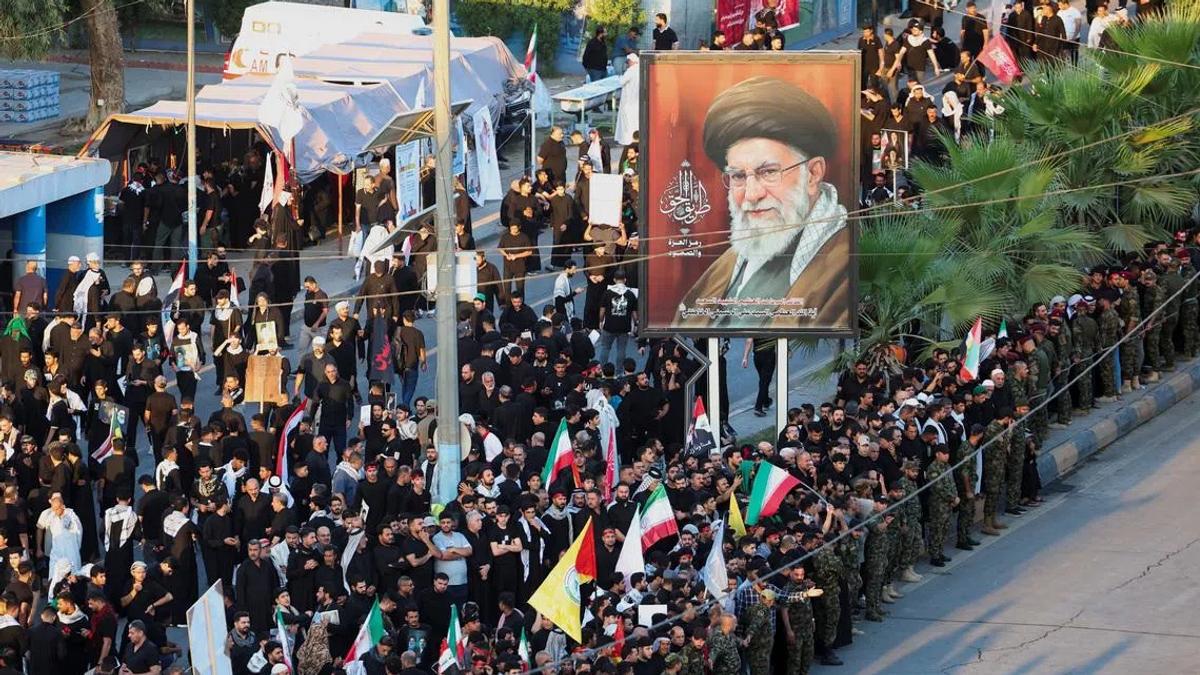
On July 8, 2026, the funeral procession for Iran's slain Supreme Leader, Ayatollah Ali Khamenei, traversed the holy Shi'ite cities of Najaf and Karbala in Iraq, drawing thousands of mourners and high-level officials from both nations. This extraordinary event, part of a six-day mourning period, transcended a mere religious ceremony, evolving into a potent geopolitical display of Iran's enduring influence, the solidarity of its regional allies, and the deep-seated anti-Western sentiment prevalent within the 'Axis of Resistance'. The procession, which saw Khamenei's coffin transported on a large truck through streets lined with fervent crowds, served as a powerful symbolic act with profound implications for regional stability and international relations.
The procession's journey began with the arrival of Ayatollah Khamenei's coffin at Najaf's international airport on the evening of July 7. Who attended included Iraqi Prime Minister Ali al-Zaidi, senior Iraqi officials, and prominent religious figures, alongside Iranian President Masoud Pezeshkian and Islamic Revolutionary Guard Corps (IRGC) commanders. What unfolded was a massive public demonstration, with mourners carrying portraits of the late leader, chanting slogans like "Death to America" and "Death to Israel," and displaying a mix of Iraqi and Iranian flags alongside banners of powerful Iran-backed Iraqi militias. When this occurred was July 7-8, 2026, as part of a longer six-day funeral. Where the procession took place was primarily Najaf, a city of immense religious significance as the burial place of Imam Ali, before continuing to Karbala, another revered Shi'ite shrine city, prior to the coffin's return to Iran for burial. Why this cross-border procession was deemed necessary stems from Khamenei's dual role as a political and religious leader, whose authority resonated deeply with Shi'ite communities beyond Iran's borders, particularly in Iraq. The decision to route the procession through Iraq was a deliberate strategic choice to underscore Iran's regional reach and the ideological unity of its allies. How it was executed involved meticulous logistical planning, official receptions, and the mobilization of thousands of supporters, demonstrating the organizational capacity of both the Iranian state and its allied networks in Iraq.
The presence of Khamenei's funeral procession in Iraq vividly illustrates the depth of Iran's political and religious influence within its western neighbor. Since the 2003 invasion of Iraq, Tehran has meticulously cultivated extensive networks among Iraq's Shi'ite majority, fostering strong ties with political parties, religious institutions, and powerful paramilitary groups. The participation of Iraqi Prime Minister al-Zaidi and other senior officials in the reception for Khamenei's coffin underscores the significant political leverage Iran wields within the Iraqi state apparatus. Furthermore, the visible presence of banners from Iran-backed Iraqi militias among the mourners highlights the enduring power of these non-state actors, which often operate with a degree of autonomy from the central Iraqi government but remain ideologically aligned with Tehran. This public display of solidarity serves to reinforce the narrative of a unified Shi'ite axis, challenging notions of Iraqi sovereignty and demonstrating the limitations of external efforts to diminish Iran's regional footprint.
The chants of "Death to America" and "Death to Israel" during the procession were not merely expressions of grief but powerful reaffirmations of the core ideological tenets of the Iranian revolution and its 'Axis of Resistance' strategy. These slogans, central to Iran's foreign policy, signal a continued commitment to confronting what Tehran perceives as hegemonic Western and Israeli influence in the Middle East. The fact that these chants resonated through Iraqi streets, alongside the display of Iranian and militia flags, sends a clear message about the shared ideological front that Iran seeks to project across the region. The term "slain" leader, as used in the reporting, adds a layer of profound geopolitical significance, implying a violent death that could potentially escalate regional tensions dramatically. While the article does not elaborate on the circumstances of his death, the use of this term suggests a context of heightened animosity and potential for retaliatory actions, further destabilizing an already volatile Middle East. This event, therefore, serves as a stark reminder of the ongoing ideological struggle and the potential for increased confrontation, particularly against a backdrop of escalating regional incidents, such as reports of tankers being hit in the Strait of Hormuz.
The death of Ayatollah Ali Khamenei marks a pivotal moment for Iran and the broader Middle East. The funeral procession in Iraq, while a testament to his religious stature and Iran's regional power, also sets the stage for a potentially turbulent period. The succession process within Iran, now underway, will be closely watched for its implications on domestic policy and regional posture. Internationally, the public display of anti-Western sentiment and the consolidation of the 'Axis of Resistance' in Iraq signal a continuation, if not an intensification, of Iran's confrontational foreign policy. For Iraq, the event underscores the persistent challenge of balancing national sovereignty with the powerful influence of its larger neighbor and the internal dynamics of its own Shi'ite political and paramilitary landscape. The geopolitical reverberations of this funeral are likely to shape regional stability for years to come, reinforcing existing alliances and deepening existing fault lines in the Middle East.
Editor's Note: The provided article explicitly states 'slain Iranian leader, Ayatollah Ali Khamenei' but offers no details regarding the circumstances of his death. This analysis proceeds with the term 'slain' as reported, acknowledging the significant geopolitical implications this would entail, while noting the absence of further information on the cause of death.
Source referenced: STRAITSTIMES
This brief was synthesized by our Editorial Engine and reviewed by The Ground Narrative team.


