TRENDING

Monday, 5 October 2026
----------------------
24 Rabi' Al-Thani 1448 AH
A pivotal NATO summit in Ankara saw US President Trump push for increased European defense spending while signaling a significant thaw in US-Turkey relations, including potential F-35 sales and sanction lifts. The talks also addressed the stalled Ukraine war, rising Middle East tensions, and Syria's diplomatic re-engagement, highlighting a complex geopolitical landscape.
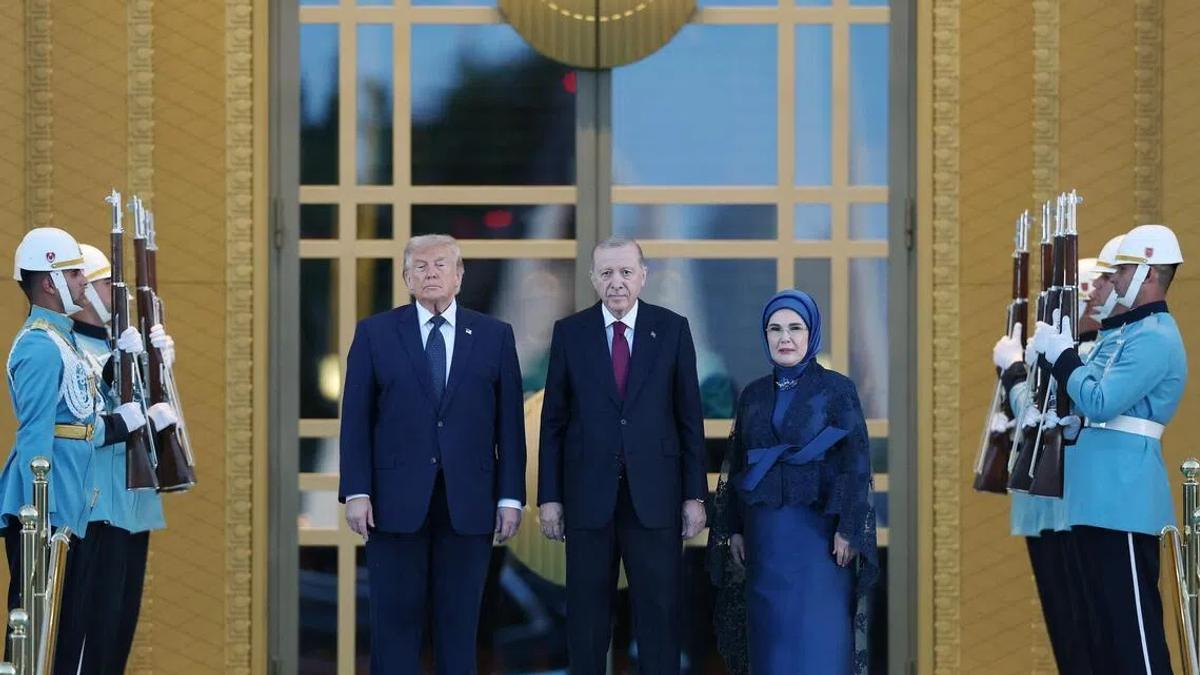
In early July 2026, the Turkish capital of Ankara hosted a critical NATO summit, bringing together US President Donald Trump, NATO chief Mark Rutte, and leaders from across the transatlantic alliance. The gathering unfolded against a backdrop of escalating Middle East tensions, persistent conflict in Ukraine, and long-standing debates over defense burden-sharing, making it a crucial barometer for the future direction of NATO and global security.
The central theme of the summit, as articulated by NATO chief Mark Rutte, was the imperative for European and Canadian allies to increase their defense spending to match that of the United States. This demand, a consistent point of contention for President Trump, underscored anxieties within the alliance regarding Washington's long-term commitment. Rutte, while affirming the US's dedication to NATO, acknowledged the fairness of Trump's expectation for allies to "equalise their spending." In a significant development, NATO published figures indicating an 11 percent rise in core European defense spending in 2026, reaching US$634 billion. This increase, coupled with pledges of tens of billions in new arms contracts, was presented as a "big win for the American President," signaling a concerted effort by allies to demonstrate their commitment and avert further confrontation with Washington. The move reflects a strategic adaptation by European nations to take greater responsibility for their own defense, particularly in the face of perceived Russian threats and an evolving US foreign policy posture.
A notable shift at the summit was the marked improvement in relations between the United States and Turkey. President Trump, upon his arrival in Ankara on July 7, offered effusive praise for Turkish President Recep Tayyip Erdogan, highlighting their "chemistry." This contrasted sharply with his often-critical stance towards European allies. Crucially, Trump indicated a willingness to reconsider the sale of F-35 fighter jets to Turkey and to lift existing US sanctions. Turkey had been expelled from the F-35 program in 2019 following its acquisition of a Russian S-400 air defense system, leading to a significant deterioration in bilateral ties and hampering Turkish defense projects. The potential reversal of these punitive measures represents a major diplomatic victory for Ankara and could significantly strengthen NATO's southern flank, though it also raises questions about the alliance's stance on members acquiring non-NATO defense systems. This rapprochement underscores the transactional nature of Trump's foreign policy and Turkey's strategic importance in regional geopolitics.
The ongoing war in Ukraine remained a critical agenda item, with stalled peace efforts prompting renewed diplomatic engagement. President Trump, who had spoken with Russian President Vladimir Putin before the summit, expressed his belief that both sides desired a resolution to the conflict. He was scheduled to meet with Ukrainian President Volodymyr Zelensky on the sidelines of the summit, with a follow-up conversation with Putin anticipated. Concurrently, Europe and Canada pledged to maintain substantial military support for Ukraine, committing €70 billion annually for both 2026 and 2027. This dual approach—potential US-led mediation alongside sustained European military aid—highlights the complex international strategy aimed at ending the conflict. Beyond Ukraine, Trump also held talks with Syrian President Ahmed al-Sharaa, signaling an effort to rebuild Syria's international image following years of civil war. This meeting, occurring a day after French President Emmanuel Macron's landmark visit to Damascus, suggests a coordinated, albeit cautious, re-engagement with Syria by Western powers, despite recent bomb attacks in the Syrian capital.
The summit's proceedings were overshadowed by fresh tensions in the Middle East, with US forces launching extensive strikes on Iran following attacks on ships in the Strait of Hormuz, which triggered retaliatory actions against American bases in the Gulf. This volatile regional backdrop underscored the urgency of alliance cohesion and defense readiness. Furthermore, President Trump's reiteration of his controversial stance that Greenland "should be controlled by the United States" drew a swift and firm rejection from Danish Prime Minister Mette Frederiksen, serving as a reminder of the unconventional diplomatic challenges that can arise during such high-level gatherings.
The Ankara NATO summit in July 2026 served as a critical juncture for the transatlantic alliance. While significant progress was made in addressing President Trump's demands for increased European defense spending and in mending strained US-Turkey relations, underlying tensions regarding US commitment and broader geopolitical challenges persist. The summit's outcomes reflect a dynamic and often unpredictable international landscape, where traditional alliances are being redefined by shifting power dynamics, regional conflicts, and evolving diplomatic approaches. The ability of NATO to navigate these complexities will be crucial for maintaining global stability in the years ahead.
Source referenced: STRAITSTIMES
This brief was synthesized by our Editorial Engine and reviewed by The Ground Narrative team.


