TRENDING

Wednesday, 7 October 2026
----------------------
26 Rabi' Al-Thani 1448 AH
A three‑way mutual defense agreement between Pakistan, Saudi Arabia and Turkey was activated after a wave of Houthi strikes. The move promises a dramatic shift in Gulf security while exposing ordinary people to new risks.
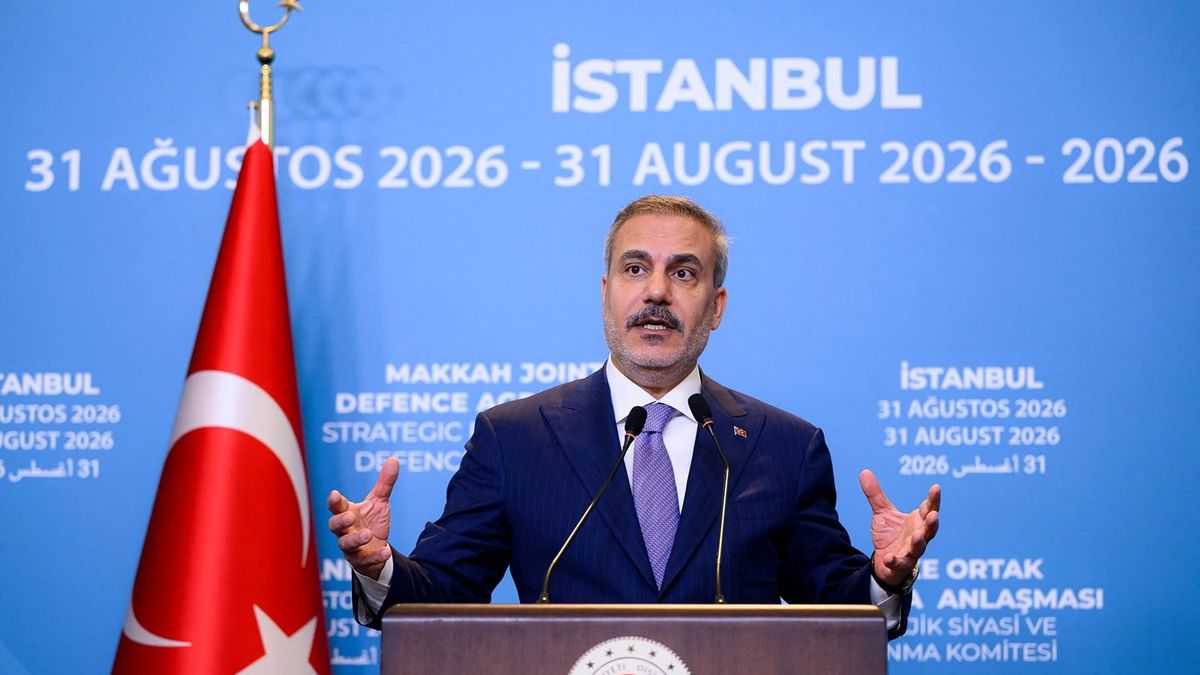
On 6 October 2026 the trilateral Mecca Joint Defense Agreement was formally invoked for the first time. The pact obliges Pakistan, Saudi Arabia and Turkey to treat any armed attack on one member as an attack on all, and it immediately called for the rapid deployment of troops and assets to Saudi territory. The trigger was a series of Houthi missile and drone attacks on Saudi infrastructure, including the Petro Rabigh refinery and an alleged strike on King Khalid International Airport. While the Houthis have not publicly responded, Saudi‑led coalition forces launched a counter‑offensive to retake the Bab el‑Mandeb strait, and the three signatories issued a joint statement pledging “immediate practical implementation” of collective defence commitments.
The activation of the pact injects Turkey's NATO‑backed military capacity and Pakistan's nuclear‑armed stature into the Gulf theatre. Combined, the three states field roughly 1.4 million active personnel, 3,400 aircraft, 6,000 tanks and over 340 naval platforms. This numerical boost alters the calculus for the Iran‑backed Houthis, who have relied on asymmetrical tactics and the perception of Saudi vulnerability.
For Saudi Arabia, invoking the agreement signals resolve to domestic constituencies that demand protection of the holy cities and oil infrastructure. The kingdom’s leadership also seeks to demonstrate that it can marshal external allies without appearing dependent on the United States, reinforcing its image of sovereign strength.
Both Pakistan and Turkey stand to gain economically from deeper security ties with the Gulf. Saudi investment flows, defence contracts, and energy‑related trade are vital to their balance‑of‑payments. Deploying troops, however, entails logistical costs and the risk of entanglement in a protracted conflict that could disrupt oil shipments through the Red Sea, affecting global markets.
The pact operates alongside existing NATO structures, yet it is deliberately framed as a Sunni‑majority coalition, subtly countering Iranian influence. Iran watches the development closely, aware that a coordinated Sunni front could constrain its proxy networks in Yemen and the wider Persian Gulf.
The most immediate victims are Saudi residents near the Red Sea coast and major urban centres. Houthi strikes have already damaged oil facilities, causing temporary power outages and contaminating water supplies. The prospect of foreign troops on Saudi soil raises the risk of collateral damage in any expanded kinetic operations.
Yemen’s civilian death toll has surged as the conflict intensifies. The Saudi‑backed coalition’s counter‑offensive, now potentially reinforced by Turkey and Pakistan, could lead to higher civilian casualties, displacement, and further humanitarian aid blockages in an already fragile country.
Deploying troops abroad places Pakistani and Turkish servicemen in a hostile environment far from home. Their families face the anxiety of extended deployments, while the militaries must allocate resources that could otherwise address internal security challenges, such as insurgencies in Balochistan or Kurdish regions.
Higher security spending may divert funds from social programs in all three nations. In Pakistan, where inflation already strains low‑income households, increased defence outlays could exacerbate food price pressures. In Turkey, the government’s recent economic turbulence means additional military commitments risk inflaming public discontent.
Official statements from Riyadh, Ankara and Islamabad emphasize “deterrence” and “supporting roles,” deliberately avoiding language that acknowledges a possible widening of the war. By framing the deployment as a rapid, limited response, they seek to keep oil markets stable and prevent panic among investors.
Pakistan is the only nuclear‑armed Muslim-majority state, yet the joint statement makes no reference to its nuclear capability. Analysts suspect that the mere presence of a nuclear‑armed ally is intended as a covert deterrent to deeper Iranian involvement, a nuance omitted from public messaging.
Major defence contractors in Turkey and Pakistan stand to secure lucrative contracts for aircraft, drones and naval vessels. Their lobbying efforts have been largely invisible, but the timing of the pact aligns with pending procurement cycles for next‑generation fighter jets and missile systems.
International coverage has largely framed the story around the Houthi attacks on holy sites, sidelining the humanitarian crisis in Yemen and the potential for civilian harm from foreign troop deployments. This narrative serves the interests of the three governments by portraying them as protectors rather than participants in a widening war.
- Escalation patterns: Monitor whether Turkish and Pakistani forces conduct joint exercises or actual combat operations in Saudi territory, which would signal a shift from deterrence to active engagement.
- Iranian response: Watch for diplomatic protests, proxy activity escalation, or direct missile drills that could indicate Tehran’s calculation of the new security balance.
- Economic indicators: Track oil price volatility and Saudi oil export volumes; a sudden dip could reflect successful Houthi disruption or a broader market reaction to the pact.
- Parliamentary ratifications: The Turkish parliament’s pending vote on the pact will reveal domestic political constraints and could affect the speed of troop deployment.
- Humanitarian access: Observe UN and NGO reports on civilian casualties and displacement in Yemen, as any surge may pressure the coalition to reconsider its strategy.
By keeping an eye on these variables, ordinary citizens can gauge whether the pact remains a defensive shield or becomes a catalyst for deeper regional conflict.
It is a trilateral treaty that obliges Pakistan, Saudi Arabia and Turkey to treat any armed attack on one member as an attack on all, allowing for rapid deployment of troops and military assets.
The involvement of Pakistani and Turkish forces could intensify the Saudi‑backed coalition’s operations, potentially raising civilian casualties and displacement while also deterring further Houthi attacks.
Source referenced: FOREIGNPOLICY
This brief was synthesized by our Editorial Engine and reviewed by The Ground Narrative team.