TRENDING

Tuesday, 10 November 2026
----------------------
30 Jumada Al-Awwal 1448 AH
Nvidia CEO Jensen Huang's admitted affair with an alleged Chinese intelligence asset has ignited a national security crisis. This incident reveals the deep vulnerabilities in the global race for AI supremacy and the complex interplay of personal lives, corporate power, and state interests.
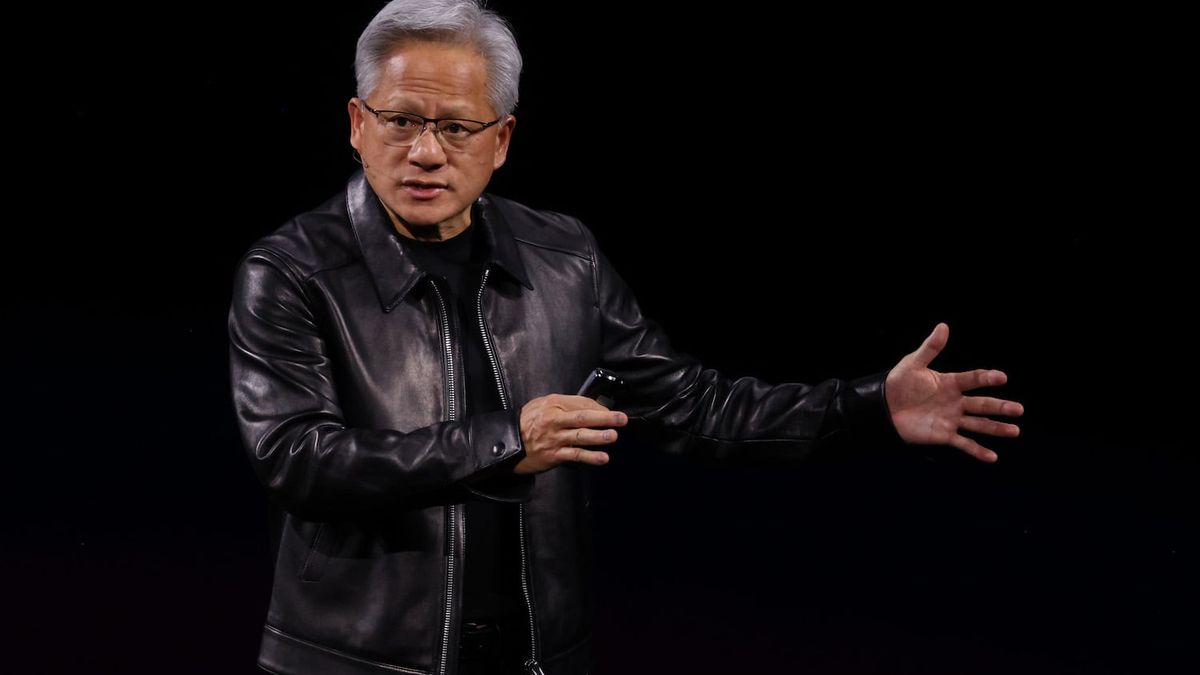
Nvidia CEO Jensen Huang recently confirmed a personal relationship with Alice Huang, an executive at Megaspeed, whom U.S. intelligence alleges is a Chinese intelligence asset. This places Nvidia, the leading producer of advanced AI semiconductor chips crucial for U.S. national security, at the center of a geopolitical storm. The alleged spy's mission was reportedly to gather information on Jensen Huang and facilitate Chinese access to Nvidia's restricted high-end chips, prompting internal and congressional investigations.
The alleged affair involving Jensen Huang exposes the intricate, often covert, power dynamics driving global technological competition, particularly in artificial intelligence. This incident is fundamentally about information control and strategic leverage in the high-stakes world of advanced technology.
Nvidia's advanced Graphics Processing Units (GPUs) are the bedrock of modern AI, essential for everything from sophisticated language models to critical military applications. The United States has strategically used this dominance, imposing stringent export controls since 2022 to deny China access to these cutting-edge chips. This policy aims to slow China's AI development, preserving America's technological and military edge. The U.S. government's ability to control chip distribution grants it immense power, creating a critical vulnerability for China's technological ambitions. Beijing, viewing this as an existential threat, is driven to seek alternative access, including through intelligence operations.
The alleged recruitment of Alice Huang by China's Ministry of State Security (MSS) exemplifies a classic intelligence strategy: exploiting personal vulnerabilities for strategic gain. In an era where corporate secrets are national secrets, the private lives of key executives become potential avenues for influence. Jensen Huang's close ties to President Donald Trump and his successful lobbying for relaxed chip export restrictions illustrate how individual influence can directly impact national policy and economic flows. Trump's reported awareness of the intelligence a year prior, coupled with his public defense of Huang, reveals a complex interplay between personal loyalty, political expediency, and national security.
Nvidia's market valuation, exceeding $4 trillion, signifies its immense strategic importance. The company's stock drop post-scandal highlights how rapidly market confidence can erode when national security intersects with corporate governance. This financial volatility pressures both Nvidia's board and U.S. policymakers to manage the fallout delicately. For China, illicit access to Nvidia's technology offers a significant shortcut, potentially saving billions in R&D and years of development, thereby circumventing U.S. export controls. The "25 percent cut" the U.S. government received from some relaxed chip sales to China underscores the transactional nature of this competition.
This incident also strains international business relationships and alliances. Megaspeed, a Singapore-based company, now faces intense scrutiny, with its denials of illicit chip transfers clashing with U.S. intelligence allegations. This places Singapore, a key U.S. partner, in a difficult position, caught between major power competition and its own economic interests. The scandal forces companies in sensitive sectors to reassess supply chains and partnerships, adding geopolitical risk to business decisions. The broader implication is a further fragmentation of the global technology ecosystem.
While the public narrative often centers on powerful figures and economic figures, the repercussions of this high-stakes technological competition disproportionately affect ordinary individuals. The alleged Nvidia CEO spy scandal highlights the human toll of a deepening tech cold war.
Over 42,000 Nvidia employees now face uncertainty, as their CEO is embroiled in a national security scandal. Beyond reputational damage, concerns arise about the company's stability, stock performance, and potential government oversight. For these highly skilled engineers and researchers, their livelihoods are intrinsically linked to a company under intense geopolitical pressure. Similarly, employees at Megaspeed in Singapore face suspicion, with their company's reputation and future partnerships jeopardized by allegations of aiding foreign intelligence. The global talent pool in AI and semiconductors may experience increased scrutiny, leading to more restrictive hiring and reduced international collaboration, impacting career opportunities and mobility.
A significant, yet less tangible, cost is the erosion of public trust across the Pacific. In the United States, the incident fuels anxiety about foreign espionage and the vulnerability of critical national assets, raising questions about intelligence effectiveness and political judgment. This translates into public insecurity regarding the integrity of national technological infrastructure and data privacy. In China, official denials, despite U.S. intelligence claims, reinforce a narrative of external aggression and unfair targeting, deepening nationalist sentiments and the divide between the two powers. Citizens in both nations are exposed to narratives that portray the other as a threat, hindering mutual understanding and cooperation.
The long-term human cost also impacts the pace and direction of global innovation. When national security dominates, the free flow of ideas, talent, and technology is curtailed. Export controls, heightened corporate scrutiny, and a climate of suspicion can stifle the collaborative environment essential for groundbreaking advancements. Researchers and developers in sensitive fields like AI may find their work constrained by national borders and political allegiances, rather than driven by pure scientific inquiry. This could slow the development of technologies crucial for addressing global challenges, from climate change to public health, ultimately impeding human progress and well-being.
In the aftermath of the Nvidia CEO spy scandal, powerful actors are carefully constructing narratives, downplaying inconvenient truths, and omitting details that complicate their public positions. The true implications often reside in what remains unsaid, revealing deeper motivations and systemic vulnerabilities.
The most significant omission from Washington's official discourse is the extent of its own intelligence failures and political compromises. President Trump was reportedly aware of the intelligence concerning Jensen Huang's relationship with Alice Huang a full year before public disclosure. His decision not to act, followed by his public defense of Huang, raises serious questions about the prioritization of political relationships over national security warnings. This suggests a systemic vulnerability where intelligence assessments can be sidelined for political expediency or personal ties. The narrative of a "very high-quality person" who "suffered greatly" deflects from potential lapses in judgment at the highest government levels. Furthermore, Huang's successful lobbying to relax some chip export restrictions to China, with the U.S. government receiving a 25 percent cut, highlights a transactional approach to national security.
China's immediate and absolute denial of the allegations, labeling them "purely unsubstantiated and directed at smearing China," is a predictable response. What is omitted is the well-documented history of the Ministry of State Security (MSS) engaging in corporate espionage and exploiting personal vulnerabilities to acquire technological advantages. Beijing's narrative aims to portray itself as a victim of U.S. aggression and unfair targeting, rather than acknowledging its own aggressive intelligence tactics. By denying involvement, China seeks to maintain plausible deniability, avoid international condemnation, and continue its intelligence operations without acknowledging ethical or legal boundaries. The deliberate silence around the specific activities of Alice Huang and Megaspeed is designed to prevent any official confirmation.
Nvidia's board and Jensen Huang's statements emphasize cooperation and commitment to national security. However, what is downplayed is the inherent tension between a global corporation's profit motives and its role as a national champion. Nvidia has long navigated the complex challenge of selling advanced technology to the crucial Chinese market amidst tightening U.S. export controls. Huang's earlier assertion that the relationship between Nvidia and Megaspeed was "normal and not unusual" now appears questionable. The company's internal investigation, while necessary, will face immense pressure to protect its image and CEO, potentially limiting the transparency of its findings. Nvidia's unspoken challenge is how to maintain global market leadership and innovation while also being a reliable custodian of U.S. national security, especially when these interests conflict with lucrative market opportunities.
The Nvidia CEO spy scandal is poised to have lasting repercussions on global technology, national security, and international relations. Several key developments will indicate the true scope of its impact.
The immediate focus will be on the thoroughness and transparency of the Nvidia board's independent investigation and Jensen Huang's testimony before U.S. congressional committees. Watch for any findings suggesting negligence, deliberate concealment, or further compromises of sensitive technology, which would significantly impact Huang's leadership and Nvidia's future. The U.S. Commerce Department's previous inquiries into Megaspeed for alleged chip smuggling will likely be re-examined. The outcomes of these investigations will determine legal and political consequences for all involved.
The upcoming APEC summit in Shenzhen, featuring President Trump and President Xi Jinping, will be a critical stage. While Trump stated he won't raise the Huang case, he anticipates Xi might. Observe the leaders' interactions, official statements, and any subtle cues regarding the incident. Will it become an unspoken point of contention or a bargaining chip in broader trade and technology negotiations? Trump's public support for Huang could be tested if more damaging information emerges, potentially leading to a more cautious White House stance. Huang's presence or absence at this summit, where he previously attended as a key U.S. tech CEO, will also be a telling indicator of his political standing.
This scandal will undoubtedly accelerate technological decoupling between the United States and China. Watch for new U.S. legislative proposals aimed at tightening export controls, increasing scrutiny of tech executives' foreign ties, and reinforcing supply chain security. China, in response, will intensify efforts toward semiconductor self-sufficiency, investing more heavily in indigenous chip development to lessen reliance on U.S. technology. This trajectory points towards a more fragmented global tech ecosystem, with distinct U.S.-aligned and China-aligned technology stacks. The long-term impact on global innovation and technology costs will be substantial.
Finally, observe how other major tech companies react. This incident serves as a stark warning about the espionage risks inherent in global operations, especially in critical sectors. Expect increased investment in internal security protocols, more rigorous background checks for executives, and a re-evaluation of partnerships in high-risk regions. Companies will be compelled to balance access to lucrative markets with the imperative of protecting intellectual property and national security interests. The scandal could usher in an era of heightened corporate vigilance and a more insular approach to global technology development.
Nvidia CEO Jensen Huang admitted to an affair with Alice Huang, an executive at Megaspeed, who U.S. intelligence alleges is a Chinese spy. The spy's objective was reportedly to gain information on Huang and access Nvidia's restricted AI chips.
Nvidia is the world's leading producer of advanced AI chips, critical for U.S. technological and military dominance. The alleged espionage highlights vulnerabilities in U.S. efforts to control sensitive technology and prevent its transfer to rival nations like China.
President Trump, despite reportedly knowing about the intelligence for a year, publicly defended Huang. U.S. lawmakers have called for Huang to testify, and investigations are underway to determine the extent of any national security compromise.
Source referenced: FOREIGNPOLICY
This brief was synthesized by our Editorial Engine and reviewed by The Ground Narrative team.