TRENDING

Sunday, 20 September 2026
----------------------
9 Rabi' Al-Thani 1448 AH
Ukraine launched its largest-ever drone attack on Moscow during Russia's parliamentary election, damaging an oil refinery and killing civilians. This strike highlights the war's evolving nature and its direct impact on civilian populations far from traditional battlefields.
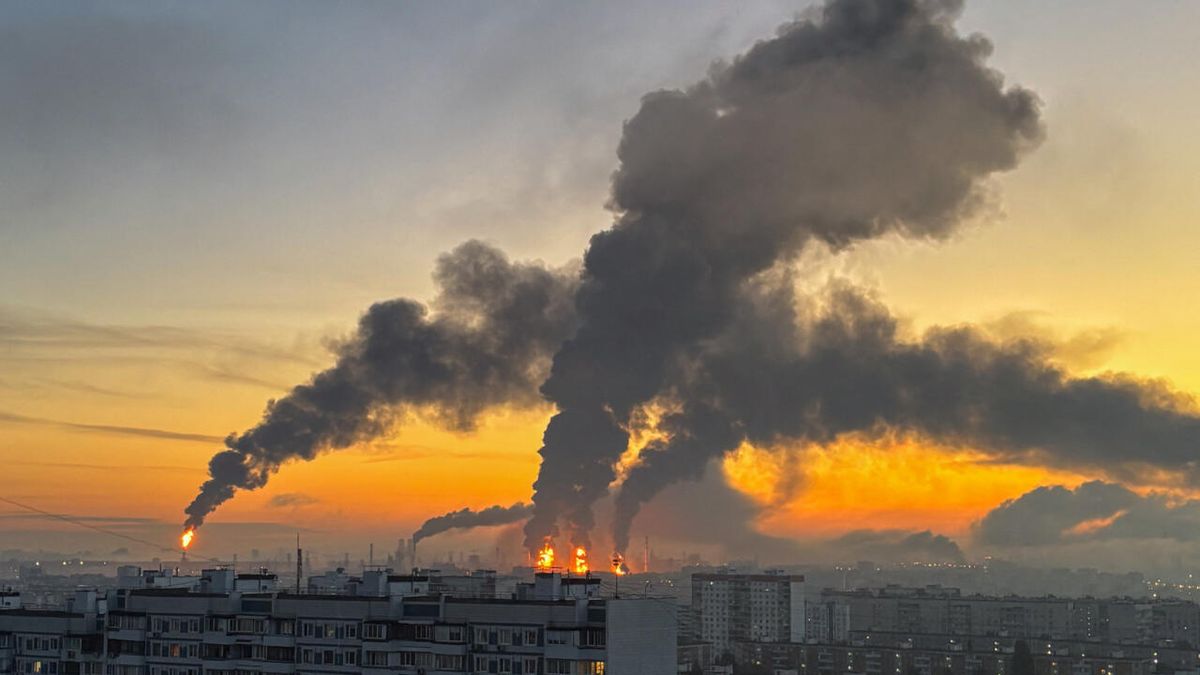
On the final day of Russia's parliamentary election, Ukraine executed what Moscow's mayor described as the "largest ever" drone assault on the Russian capital. The attack resulted in two civilian deaths, damaged a major oil refinery, and hit residential buildings. Simultaneously, Russian forces continued their own drone and missile strikes on Ukraine, including an attack in the Kyiv region that killed a mother and her two young children.
This large-scale drone attack by Ukraine serves multiple strategic objectives. First, it aims to disrupt the narrative of stability and control that the Kremlin seeks to project, especially during a tightly managed election designed to legitimize President Putin's extended rule and the ongoing war. By striking deep into Russian territory, including its capital, Kyiv demonstrates its capacity to inflict costs directly on the perceived heart of Russian power, challenging the Kremlin's ability to protect its own citizens. The targeting of an oil refinery underscores an intent to impact Russia's economic and military logistical capabilities. For Ukraine, these attacks are also a critical message to its Western allies, signaling its continued resolve and capacity to fight, even as aid flows fluctuate. For Russia, the attacks provide an opportunity to rally domestic support, framing the strikes as desperate acts of terrorism by Ukraine, aimed at undermining a democratic process. This narrative reinforces the justification for its "special military operation" and the need for national unity against an external threat.
The most immediate and tragic cost of these escalating strikes is borne by civilians on both sides. In Moscow, two people were killed, and residential buildings were damaged, bringing the direct consequences of the war to ordinary Russian citizens. For years, the war has been a distant reality for many in Russia's major cities, but these drone attacks shatter that illusion, introducing fear and insecurity. Meanwhile, in Ukraine, the suffering is a daily reality, exemplified by the Russian drone attack that killed a mother and her two three-year-old children in the Kyiv region. These are not military targets; they are families caught in a conflict where the lines between combatant and non-combatant blur. The economic cost also looms large, with critical infrastructure like oil refineries becoming targets, threatening supply chains and livelihoods. The psychological toll on populations living under constant threat, whether from incoming drones or retaliatory strikes, is immense and often overlooked in official statements focused on military gains or political narratives.
What is consistently downplayed or omitted by powerful actors is the normalization of civilian targeting in this protracted conflict. While both sides condemn attacks on their own civilians, they often frame their own strikes as legitimate military responses, even when they result in civilian casualties. Russia, for instance, emphasizes its successful interception rates for Ukrainian drones, deflecting from the fact that a significant number still penetrate defenses, causing damage and death. It also frames its parliamentary election as a genuine expression of public will, despite widespread reports of candidate suppression and lack of real opposition, using the drone attacks to solidify a 'us vs. them' narrative. Ukraine, while highlighting its right to self-defense, may also downplay the civilian impact of its strikes on Russian territory, focusing instead on the strategic message to the Kremlin. The larger untold story is how this tit-for-tat targeting of urban centers and infrastructure, far from the front lines, is fundamentally reshaping the nature of modern warfare, making entire populations direct participants in the conflict's brutal calculus.
Readers should watch for several key developments. Firstly, the immediate aftermath of the Russian election will reveal how the Kremlin leverages the drone attacks to further consolidate power and justify its war efforts. Will there be a significant escalation in Russian retaliatory strikes against Ukrainian cities and infrastructure? Secondly, observe the public reaction within Russia. While state media controls the narrative, repeated attacks on Moscow could slowly erode public complacency or even support for the war, particularly if the economic impact becomes more pronounced. Finally, the international response, particularly from Western allies, will be crucial. Will these attacks galvanize increased military aid to Ukraine, especially advanced air defense systems, or will they be seen as a dangerous escalation that warrants caution? The trajectory of this conflict is increasingly defined by its reach beyond the traditional battlefield, making every city a potential front line.
Source referenced: FRANCE24
This brief was synthesized by our Editorial Engine and reviewed by The Ground Narrative team.


