TRENDING

Monday, 5 October 2026
----------------------
24 Rabi' Al-Thani 1448 AH
Moldova's Prime Minister Alexandru Munteanu's unexpected resignation triggers government collapse, posing a significant challenge to President Maia Sandu's pro-European agenda and the nation's EU accession path amidst regional geopolitical complexities.
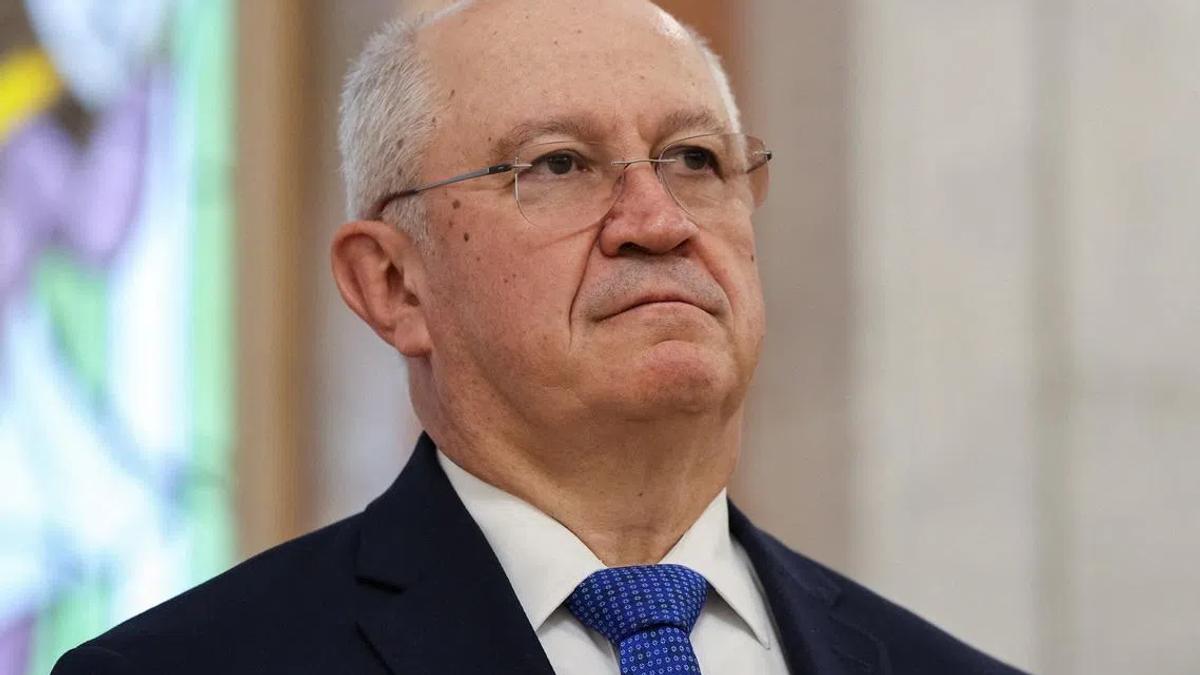
On July 3, 2026, Alexandru Munteanu, who had served as Moldova's Prime Minister since November 2025, announced his unexpected resignation. This decision automatically triggers the collapse of the entire government, plunging the small Eastern European nation into a period of political uncertainty. Munteanu, 62, cited an inability to continue his mandate "in accordance with my principles and convictions" in a post on X, offering no further detailed explanation for his abrupt departure.
This development presents a considerable challenge for President Maia Sandu and her ruling pro-European Party of Action and Solidarity (PAS), which secured a fresh mandate in the September 2025 parliamentary elections. The PAS government had been actively pursuing Moldova's ambition for European Union membership, a cornerstone of its foreign policy agenda. Munteanu, a former World Bank official, was appointed following this election, tasked with steering the country on its pro-EU course.
Moldova's political landscape has historically been characterized by a delicate balance between pro-European and pro-Russian factions. Nestled between EU member Romania and war-torn Ukraine, Moldova's strategic location makes it a critical player in the broader geopolitical dynamics of Eastern Europe. The country, with its Romanian-speaking majority and a significant Russian-speaking minority, has seen its political power oscillate for decades between those advocating for closer ties with the West and those seeking improved relations with Moscow.
The current pro-European government, led by President Sandu, has been a vocal proponent of EU integration, a path that gained significant momentum following Russia's full-scale invasion of Ukraine in February 2022. Moldova was granted EU candidate status in June 2022, a move that underscored its strategic importance to the European bloc and its commitment to democratic reforms. The resignation of the Prime Minister, however, introduces an element of instability that could potentially complicate or delay the reform processes necessary for EU accession.
Under Moldova's parliamentary procedure, President Sandu is now mandated to hold consultations with parliamentary groups before nominating a new candidate for prime minister. The speed and success with which a new government can be formed will be crucial for maintaining political stability and reassuring international partners. Any prolonged political vacuum or internal strife could be exploited by external actors seeking to undermine Moldova's pro-European trajectory.
Munteanu's vague explanation for his departure leaves room for speculation regarding potential internal disagreements within the ruling PAS party, policy disputes, or perhaps unforeseen pressures related to the demanding reform agenda required for EU integration. Regardless of the specific reasons, his resignation signals a period of introspection and potential realignment within the pro-European camp.
The political instability in Chisinau carries significant regional implications. For the European Union, a stable and pro-Western Moldova is vital for its eastern flank security and its broader enlargement policy. Any perceived weakening of Moldova's commitment to the EU path could be viewed with concern in Brussels, especially given the ongoing conflict in neighboring Ukraine and Russia's persistent efforts to maintain influence in its near abroad.
Conversely, for Russia, political turmoil in Moldova could present an opportunity to reassert its influence, potentially through supporting pro-Russian political forces or exacerbating existing internal divisions, particularly concerning the breakaway region of Transnistria. The stability of Moldova is thus intrinsically linked to the wider security architecture of Eastern Europe.
As President Sandu navigates this political crisis, her ability to swiftly appoint a new, effective government that can maintain the momentum of EU reforms will be paramount. The coming weeks will test the resilience of Moldova's democratic institutions and its unwavering commitment to its European future, under the watchful eyes of both its Western allies and its geopolitical rivals.
Source referenced: STRAITSTIMES
This brief was synthesized by our Editorial Engine and reviewed by The Ground Narrative team.


