TRENDING

Monday, 19 October 2026
----------------------
8 Jumada Al-Awwal 1448 AH
Indian Prime Minister Narendra Modi's push for decolonization at home is paradoxically accompanied by a strengthening of ties with the Anglo-Saxon world, driven by economic and geopolitical synergies.
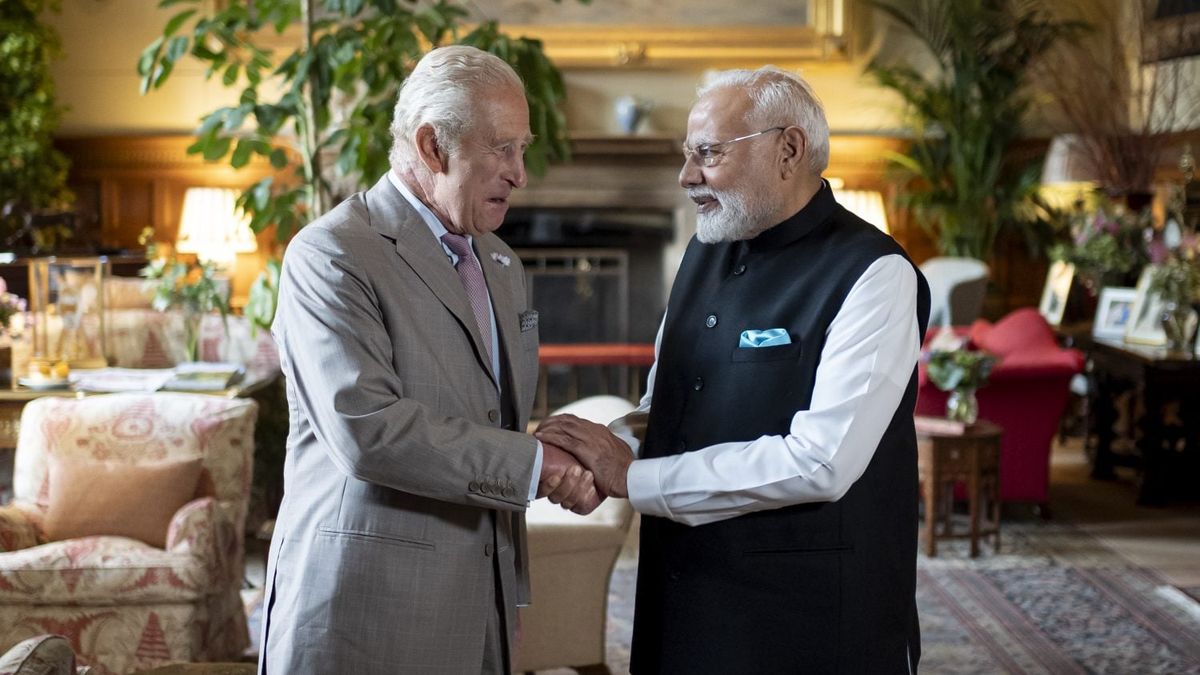
Indian Prime Minister Narendra Modi's rule since 2014 has been marked by a campaign to "decolonize" the Indian mind, a goal shared by his Bharatiya Janata Party (BJP). This effort aims to purge the deep linguistic, cultural, and intellectual inheritance from British rule and Western influence. However, this eagerness to discard the British Indian legacy has been accompanied by an impressive and successful push to transform relations with the Anglo-Saxon world: Australia, Canada, New Zealand, the United Kingdom, and the United States.
The BJP's decolonization agenda at home seeks to cut the remaining cultural ties, while the government is growing the political and economic partnerships with the English-speaking world. This paradox is rooted in the enduring bonds between postcolonial India and the English-speaking world, whose long-suppressed economic and geopolitical synergies are now coming back into play.
The Indian diaspora in the Anglo-Saxon world has been a key driver of this synergy. A recent British prime minister and U.S. vice president of Indian descent are mere reflections of the rise of the Indian diaspora in the world of Anglo-Saxon politics. This is matched by the unmissable rise of Indians in the world of academia, media, and business.
Modi has been at the forefront of reimagining the relationship with the Anglosphere. Addressing the U.S. Congress in June 2016, he declared that India had overcome "the hesitations of history" in engaging the United States. This was not an empty flourish: After coming to power, Modi pushed a reluctant Indian bureaucracy and political class to seize the emerging opportunities with Washington. He has since managed to stabilize the relationship through the turbulence of President Donald Trump's second term.
The India-U.K. free trade agreement, the most comprehensive trade pact that New Delhi has ever concluded, came into force on July 15. This was the product of unprecedented Indian political investment in the traditionally prickly ties with London. The agreement is a significant step towards deepening economic ties between the two nations.
The future of Indo-Anglo relations will be shaped by the complex interplay between decolonization and economic and geopolitical synergies. While the Indian domestic discourse is deliberately infused with anti-colonial themes, the Indian state is drawing closer to the successor states of the British Empire than at any point since independence. This paradox highlights the enduring bonds between postcolonial India and the English-speaking world.
Modi's Anglo paradox is a reflection of the complex and multifaceted nature of Indo-Anglo relations. As India continues to navigate its relationships with the Anglo-Saxon world, it is essential to understand the underlying drivers of this synergy and the implications for the future of Indo-Anglo relations.
Editor's Note: The analysis is based on publicly available information and may not reflect the full complexity of the issue.
Source referenced: FOREIGNPOLICY
This brief was synthesized by our Editorial Engine and reviewed by The Ground Narrative team.


