TRENDING

Monday, 19 October 2026
----------------------
8 Jumada Al-Awwal 1448 AH
Lebanese President Joseph Aoun visited Washington D.C. to secure U.S. support for the Lebanese army, aiming to disarm Hezbollah and pursue peace with Israel. The meeting, occurring amidst heightened U.S.-Iran tensions, signals a renewed American focus on Lebanon's stability and sovereignty.
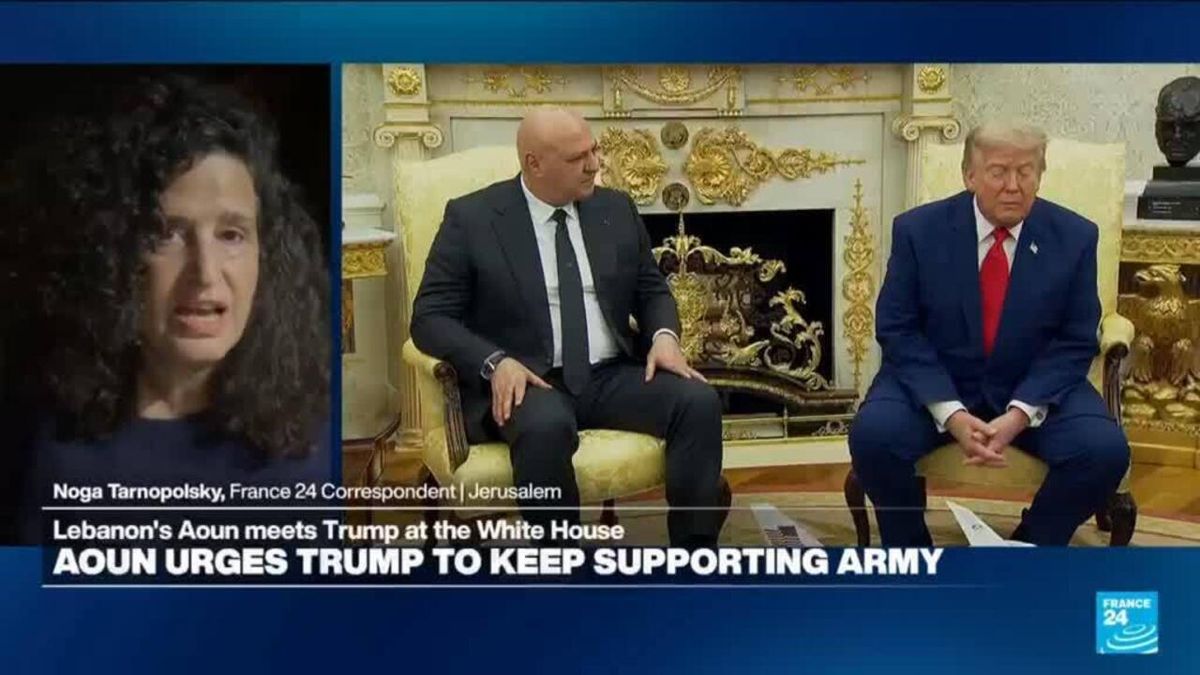
On July 21, 2026, Lebanese President Joseph Aoun visited Washington D.C., engaging with U.S. President Donald Trump in a meeting that underscored critical geopolitical shifts and enduring regional challenges. The primary objective of President Aoun's visit was to secure continued American support for the Lebanese army, a pivotal institution in maintaining the nation's fragile sovereignty and internal stability. This diplomatic overture occurred amidst a backdrop of escalating U.S.-Iran tensions and broader regional instability, lending significant weight to the discussions.
Lebanon's political landscape is characterized by a delicate balance of sectarian power and the formidable presence of non-state actors, most notably Hezbollah. President Aoun's plea for U.S. backing for the Lebanese Armed Forces (LAF) highlights the ongoing struggle to assert state authority over armed groups. The LAF is widely regarded as a unifying national institution, crucial for internal security and border defense. However, its operational capacity and influence are often challenged by Hezbollah, which maintains a significant military arsenal and political sway, largely due to its strategic alliance with Iran.
The stated goal of "disarming Hezbollah" is a monumental and deeply contentious undertaking. Hezbollah views its arms as essential for national defense against Israel and as a core component of its resistance ideology. Any serious attempt to disarm the group would likely face fierce internal opposition and could destabilize Lebanon's already precarious political order. President Aoun's public pursuit of this objective, with U.S. endorsement, signals a potential, albeit challenging, shift in Lebanon's internal power dynamics and its alignment in the broader regional struggle.
The U.S. commitment to "help Lebanon a lot," as pledged by President Trump, aligns with long-standing American foreign policy objectives in the Middle East. Washington has historically viewed a strong, sovereign Lebanese state, supported by a capable national army, as a bulwark against extremist groups and and a counterweight to Iranian influence. By bolstering the LAF, the U.S. aims to strengthen state institutions, thereby reducing the reliance on, and power of, non-state actors like Hezbollah.
This engagement can be interpreted as a component of a broader U.S. "containment strategy towards Iran," particularly given the article's mention of ongoing U.S.-Iran exchanges of strikes and heightened tensions in the Gulf. Empowering the Lebanese state to challenge Hezbollah's military dominance directly undermines a key pillar of Iran's regional projection of power. The White House meeting, therefore, serves as a diplomatic front in a wider geopolitical contest for influence in the Levant.
A particularly striking aspect of President Aoun's agenda was the pursuit of "a path to peace with Israel." Lebanon and Israel remain officially at war, with a history of conflict and unresolved border disputes. The notion of peace, or even significant de-escalation, is fraught with political and security complexities. The report that the meeting represented "a slap in the face" for Israeli Prime Minister Benjamin Netanyahu suggests a potential divergence in U.S. and Israeli approaches to regional stability or a U.S. initiative that bypasses traditional Israeli security concerns.
While Israel has a vested interest in a stable, non-hostile Lebanon, it views Hezbollah as a primary and immediate threat. Any peace initiative that does not fundamentally address Hezbollah's military capabilities would likely be met with skepticism in Jerusalem. The U.S. potentially facilitating direct engagement with Lebanon on peace, rather than exclusively through Israeli security channels, could be seen by Israel as undermining its strategic position or its preferred methods of managing the Lebanese border. The mention of "safe zones" being trialed in southern Lebanon as part of a deal indicates nascent, albeit fragile, efforts towards de-escalation, possibly laying groundwork for future arrangements.
The timing of this high-level diplomatic engagement is crucial, occurring as the Middle East grapples with a "cycle of enhanced risk" and direct military exchanges between the U.S. and Iran. The U.S. strategy in Lebanon, therefore, cannot be isolated from its wider regional posture, which includes efforts to secure shipping lanes, counter missile threats, and protect its personnel. The visit signals a renewed U.S. focus on Lebanon as a critical node in the regional security architecture.
The success of President Aoun's efforts to disarm Hezbollah and forge peace with Israel remains highly uncertain. Both objectives are deeply intertwined with Lebanon's internal political consensus, the regional balance of power, and the trajectory of U.S.-Iran relations. While U.S. support for the Lebanese army is a tangible step, the political will and capacity within Lebanon to confront Hezbollah's military wing are formidable challenges. The diplomatic push for peace with Israel, while potentially transformative, would require significant concessions and security guarantees from all parties, including a resolution to the status of Hezbollah's arms. This meeting, therefore, marks a significant diplomatic moment, signaling intensified U.S. engagement in Lebanon with profound implications for regional stability and the future of the Israeli-Lebanese relationship.
Source referenced: FRANCE24
This brief was synthesized by our Editorial Engine and reviewed by The Ground Narrative team.


