TRENDING

Monday, 5 October 2026
----------------------
24 Rabi' Al-Thani 1448 AH
Recent Israeli airstrikes in Beirut, following alleged Hezbollah rocket fire, have killed three people and critically endangered ongoing US-Iran peace negotiations. The incident highlights the volatile interplay between regional proxies and broader international diplomacy, with Lebanon caught in the crossfire.
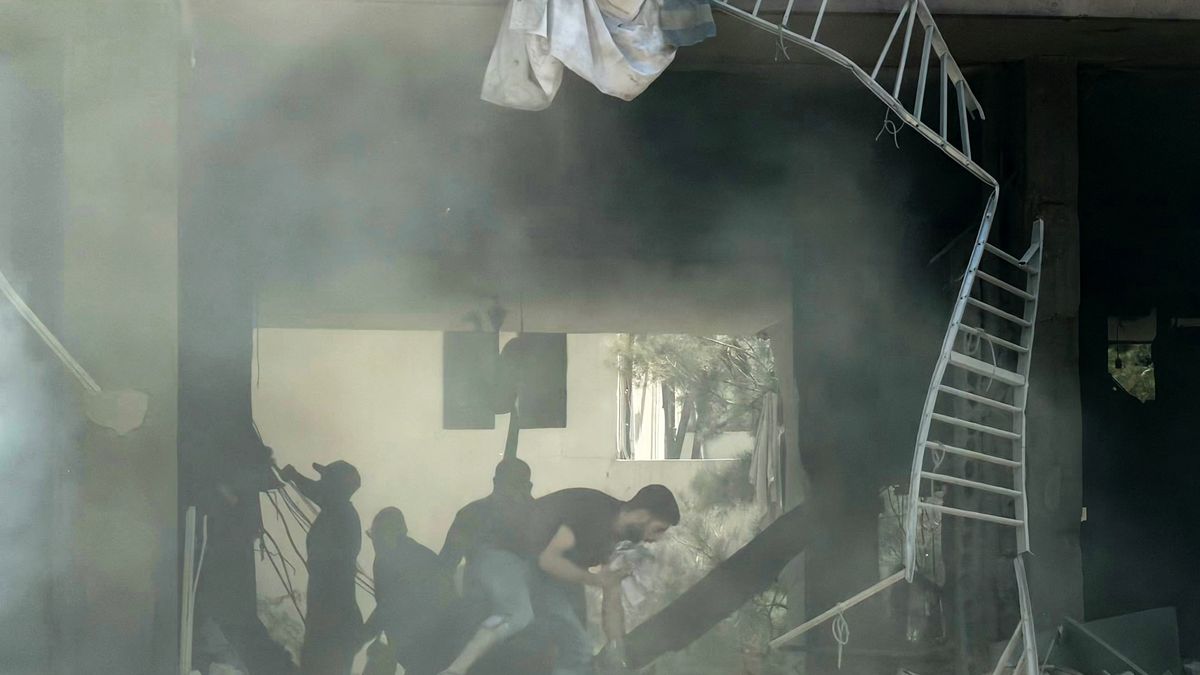
On June 14, 2026, the Israeli military launched airstrikes against targets in Beirut's southern suburbs, specifically the Dahiyeh district, resulting in the deaths of at least three individuals and six wounded. These strikes were reportedly a direct response to Hezbollah's alleged firing of three projectiles towards northern Israel, which Israel described as a "blatant ceasefire violation." This latest escalation has immediately cast a shadow over delicate, high-stakes negotiations between the United States and Iran, mediated by Pakistan and involving Qatari diplomatic efforts, aimed at securing a memorandum of understanding.
The timing and location of the Israeli operation are particularly significant. The Dahiyeh district is widely recognized as a stronghold for Hezbollah, a powerful Lebanese political party and militant group backed by Iran. For Tehran, attacks on southern Beirut have been explicitly designated as a "red line" during the ongoing US-Iran talks. A week prior to this incident, a similar Israeli strike in the Beirut suburbs prompted an Iranian missile response against Israel, leading to a stern warning from US President Donald Trump to Israeli Prime Minister Benjamin Netanyahu to exercise restraint.
The current US-Iran negotiations, which President Trump had optimistically suggested were on the verge of agreement, are now facing a severe test. Iranian officials have consistently emphasized that the situation in Lebanon is an "integral and central part" of any potential peace deal, asserting that the two cannot be separated. This linkage underscores Iran's strategic interest in protecting its regional influence and its proxy forces, particularly Hezbollah, which serves as a critical component of its regional deterrence strategy against Israel.
Israel's motivation for the strikes appears to be multifaceted: a direct response to perceived aggression from Hezbollah, a demonstration of its commitment to national security, and potentially an attempt to influence the terms or even the viability of the US-Iran agreement. Prime Minister Netanyahu's prior public statement on X (formerly Twitter), warning of strikes in Beirut if Hezbollah continued its fire, indicates a clear strategic calculus to deter further attacks and assert Israel's freedom of action, even amidst broader diplomatic overtures.
The immediate consequences of this escalation extend beyond the diplomatic realm to the civilian population of Lebanon. Earlier on the same day, Israel issued forced displacement orders for 29 towns in southern Lebanon, instructing residents to evacuate north of the Zahrani River. These orders, affecting communities in the Nabatieh and Sidon districts, highlight the severe humanitarian toll of the ongoing conflict. Nabatieh, once a bustling city, has reportedly suffered extensive destruction from previous Israeli airstrikes and now hosts one of the few remaining functional hospitals in the south.
Lebanon finds itself in a precarious position, frequently bearing the brunt of regional power struggles. The memory of a previous US-Iran temporary ceasefire in April, which was immediately followed by Lebanon's deadliest day of the conflict with over 350 casualties, fuels deep anxiety among its citizens. At that time, Israel reportedly clarified that Lebanon was not part of the agreement and subsequently intensified its strikes. This historical context suggests a pattern where broader diplomatic agreements between major powers may not necessarily translate into de-escalation or security for Lebanon, particularly if Israel perceives itself as excluded from or not bound by certain aspects of such deals.
The current crisis presents a critical juncture for regional stability and international diplomacy. Should the US-Iran negotiations collapse due to this escalation, it could lead to a significant increase in tensions across the Middle East, potentially triggering a wider conflict. The intricate web of alliances and rivalries, with Iran supporting Hezbollah and Israel maintaining its security posture, means that localized incidents can rapidly spiral into broader confrontations.
The challenge for international mediators and the United States will be to find a mechanism that addresses Israel's security concerns while respecting Iran's red lines and, crucially, safeguarding the sovereignty and civilian population of Lebanon. The incident underscores the inherent difficulty in achieving comprehensive peace in a region where multiple actors operate with distinct, often conflicting, strategic objectives and where the actions of proxies can profoundly impact the highest levels of international diplomacy. The coming days will reveal whether the fragile diplomatic bridge between Washington and Tehran can withstand the tremors of this renewed conflict on the Lebanese-Israeli border.
Source referenced: ALJAZEERA
This brief was synthesized by our Editorial Engine and reviewed by The Ground Narrative team.