TRENDING

Tuesday, 20 October 2026
----------------------
9 Jumada Al-Awwal 1448 AH
Japan's parliament has approved a revision to the country's imperial succession laws, allowing male members of former collateral branches of the imperial family to be readmitted through adoption, but maintaining the ban on female succession.
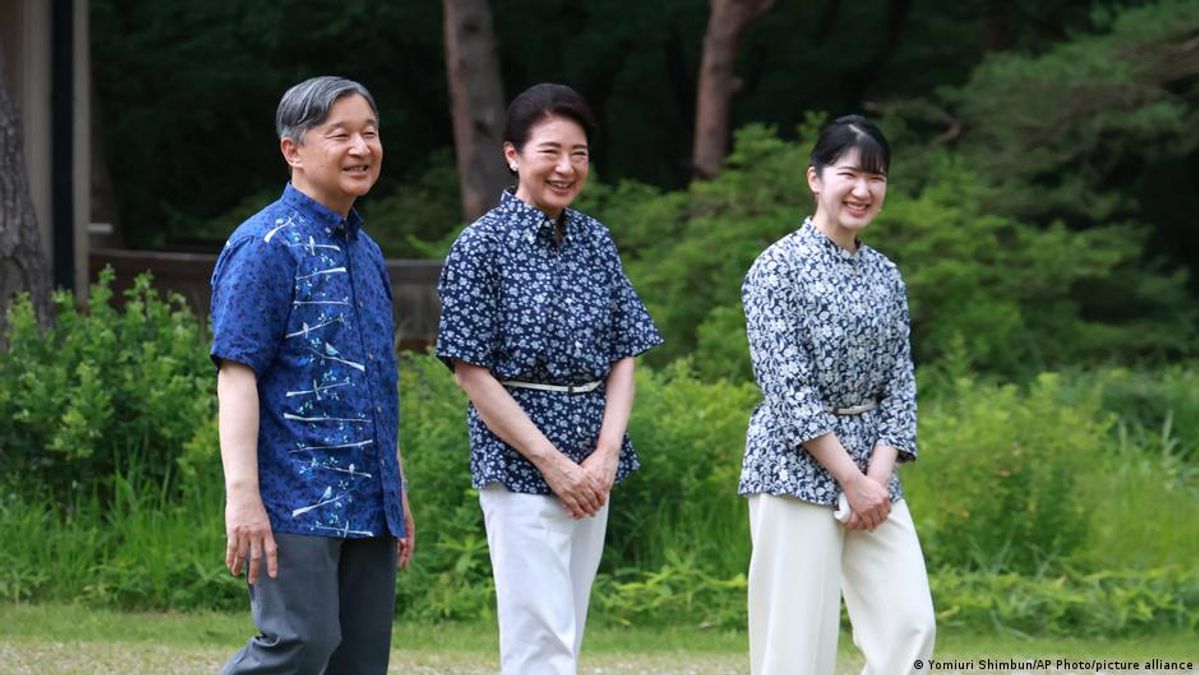
Japan's parliament has approved a revision to the country's imperial succession laws, sparking controversy over the country's treatment of women. The new law allows male members of former collateral branches of the imperial family to be readmitted through adoption, but maintains the ban on female succession.
The current imperial succession system in Japan is based on the principle of male-line succession, where only a paternal-lineage male can become emperor. This system has been in place since the Meiji period in the late 19th century. However, in recent years, there has been growing pressure to reform the system and allow for female succession.
The approval of the new law has significant implications for Japan's regional relationships. Japan's neighbors, particularly China and South Korea, have been watching the developments closely. China, in particular, has been critical of Japan's treatment of women and has used the issue as a tool to criticize Japan's human rights record.
The Japanese government's decision to approve the new law is likely driven by a desire to preserve the country's traditional values and institutions. The government has argued that the male-line succession system is essential to maintaining the imperial family's legitimacy and stability.
The approval of the new law is likely to have significant consequences for Japan's women's rights movement. The law's rejection of female succession will likely be seen as a setback for women's rights in Japan, and may embolden conservative forces in the country.
The approval of the new law is a step backwards for women's rights in Japan. The law's rejection of female succession is a clear indication that the Japanese government is not committed to promoting gender equality. The law's approval is also likely to have significant regional implications, particularly for Japan's relationships with China and South Korea.
The approval of the new law is a significant development in Japan's imperial succession system. While the law may be seen as a way to preserve traditional values and institutions, it is also a clear indication that the Japanese government is not committed to promoting gender equality. The law's approval is likely to have significant consequences for Japan's women's rights movement and regional relationships.
Editor's Note: The analysis is based on publicly available information and may not reflect the full complexity of the issue.
Source referenced: DW
This brief was synthesized by our Editorial Engine and reviewed by The Ground Narrative team.


