TRENDING

Tuesday, 22 September 2026
----------------------
11 Rabi' Al-Thani 1448 AH
Italy is actively working to de-escalate tensions with the United States following a public diplomatic spat between Prime Minister Giorgia Meloni and US President Donald Trump. The incident, triggered by Meloni's condemnation of the 'war in Iran' and defense of Pope Leo XIV, underscores the fragility of transatlantic relations and the strategic importance of the US-Italy alliance.
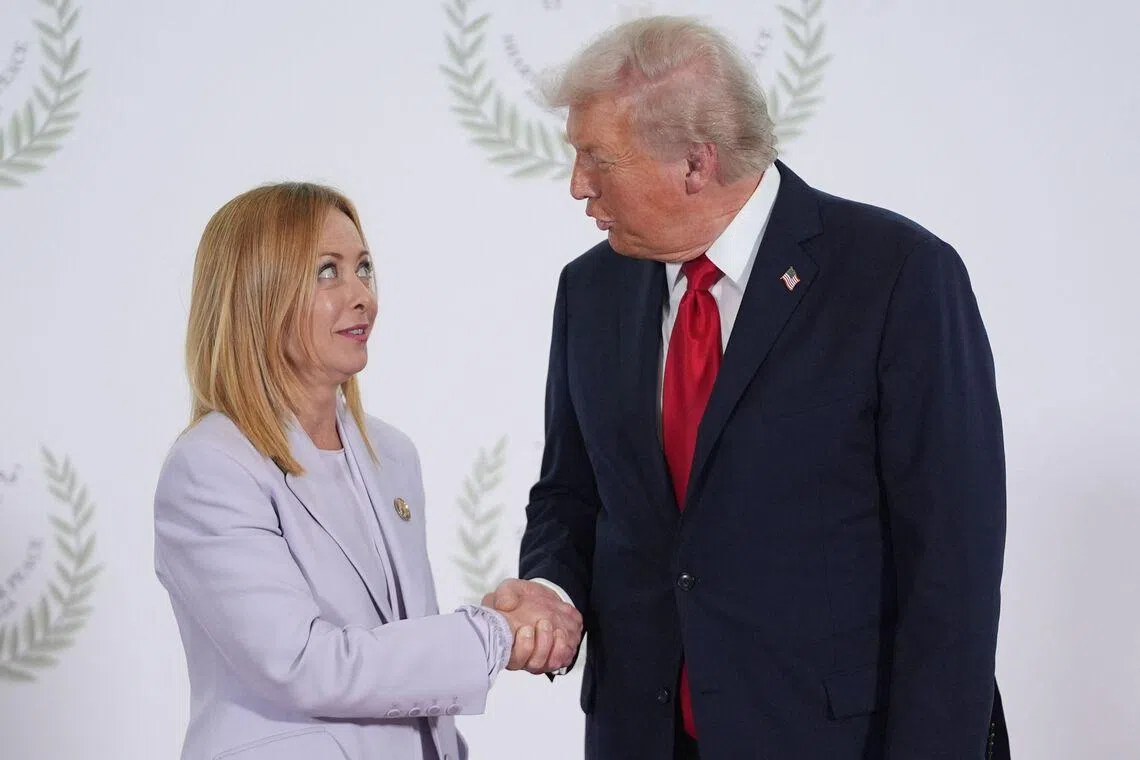
Italy's Foreign Minister Antonio Tajani and Prime Minister Giorgia Meloni have initiated a concerted diplomatic effort to mend relations with the United States, following a significant public spat between Meloni and US President Donald Trump. The incident, which saw leaders exchange sharp public criticisms, has underscored the delicate balance of transatlantic alliances and Italy's strategic imperative to maintain a strong partnership with Washington.
The acrimony, which began to escalate in April 2026, reached a peak with a series of public barbs exchanged between President Trump and Prime Minister Meloni. The genesis of the dispute appears rooted in Meloni's public condemnation of the 'war in Iran' and her defense of Pope Leo XIV against Trump's criticisms. These stances seemingly provoked a retaliatory response from President Trump, who publicly claimed Meloni had 'begged' for a picture with him at a Group of Seven (G7) summit – an assertion Meloni vehemently denied as 'totally made up.' Trump's continued pressure prompted Meloni to advise him to focus on his own domestic issues and popularity, further escalating the public confrontation.
For Italy, the alliance with the United States is not merely beneficial but, as Foreign Minister Tajani emphasized, 'indispensable.' This sentiment drives Rome's urgent push for de-escalation. Italy plays a crucial strategic role for the US in several key regions: the Mediterranean, Africa, and the Balkans. These areas are vital for counter-terrorism efforts, energy security, and regional stability, making Italy a pivotal partner for Washington's geopolitical interests. A significant rift could jeopardize this cooperation, potentially impacting US military presence in Italy or leading to economic repercussions, such as tariffs, though Tajani currently sees no indication of such measures.
Minister Tajani's cancellation of a planned business summit trip to Miami last week serves as a tangible indicator of the immediate diplomatic fallout. However, both Tajani and Meloni have stressed the importance of returning to normalcy, with Meloni stating her intent 'not to fan the flames of this confrontation.' This reflects a pragmatic recognition of the long-term strategic value of the alliance over short-term political disagreements.
The public disagreement between two prominent Western leaders carries broader geopolitical implications. Firstly, it highlights potential divergences in foreign policy within the transatlantic alliance, particularly concerning major international conflicts like the 'war in Iran.' Meloni's public condemnation signals a willingness to articulate independent foreign policy positions, even when they clash with those of a key ally's leader.
Secondly, the spat could strain the cohesion of NATO, an alliance where Italy is a significant member. With an upcoming NATO summit in Ankara in July, the ability of member states to present a united front is crucial, especially in an increasingly complex global security environment. Tajani's reference to the Ankara summit as a venue for further diplomacy suggests an understanding of the need to address these tensions within the broader alliance framework.
Thirdly, the incident underscores the impact of individual leadership styles on international relations. Tajani's suggestion that Trump's attacks might be 'tied to internal political dynamics in the US' points to a common analytical framework for understanding the former US President's approach to foreign policy, where domestic political considerations often influence international rhetoric and actions. This personalistic approach can introduce volatility into established diplomatic relationships, even with long-standing allies.
Despite the public acrimony, Italian officials maintain that diplomatic channels have remained open. Tajani specifically mentioned US Secretary of State Marco Rubio's awareness of ongoing dialogue, indicating that behind-the-scenes communication persists. The Italian government's strategy appears to be one of measured response and persistent engagement, aiming to leverage the foundational strength of the US-Italy alliance to overcome the current friction.
The efforts by Rome to de-escalate tensions reflect a clear understanding of the strategic stakes involved. While allies can and do have disagreements, the imperative to maintain a robust partnership with the United States, given Italy's pivotal role in regional stability and global security, remains paramount. The coming months, particularly around the NATO summit, will be crucial in determining the extent to which 'common sense' prevails and the relationship returns to its indispensable footing.