TRENDING

Thursday, 8 October 2026
----------------------
27 Rabi' Al-Thani 1448 AH
An Israeli 'targeted strike' in Beirut's Hezbollah stronghold marks a significant escalation, reportedly eliminating a key Iranian militia leader. This action, amidst a fragile ceasefire and intensified operations in southern Lebanon, threatens to derail regional de-escalation efforts and deepen the humanitarian crisis.
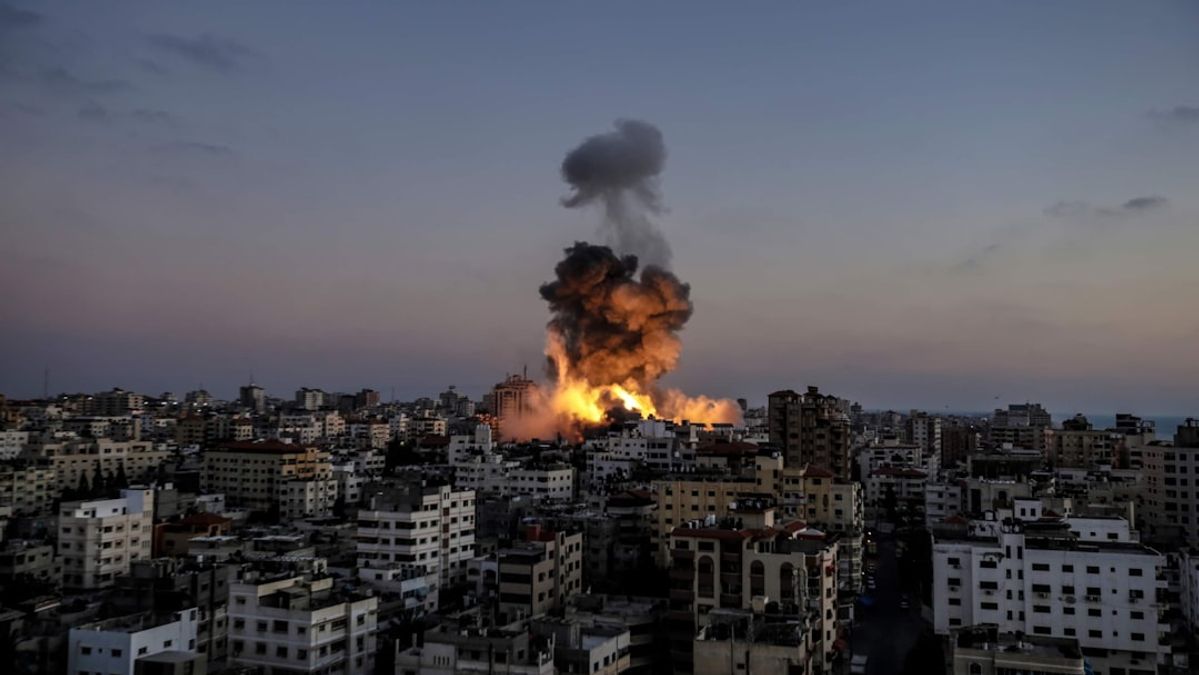
Israel conducted a 'targeted strike' in Beirut, the capital of Lebanon, on a recent afternoon, marking only the second such incident since a ceasefire was initiated last month. The Israel Defense Forces (IDF) confirmed the operation, stating it was carried out in a 'targeted manner' but withheld specific details. Israeli media, citing unnamed sources, reported that the objective of the strike was Ali al-Husni, identified as the head of the missile force within the Imam Hossein Division, an Iranian militia closely allied with Hezbollah.
This strike occurred in Dahieh, a densely populated Shia suburb recognized as a Hezbollah stronghold in Beirut. Thick smoke was observed billowing over residential buildings following the attack, prompting residents to check on the safety of their neighbors and relatives as rescue teams converged on the scene. The decision to strike Beirut represents a significant escalation, particularly as the city had largely been spared from the intermittent attacks that have characterized the conflict, reportedly at the request of the United States.
This latest action unfolds against a backdrop of a highly volatile and frequently violated ceasefire, which has been extended twice since its inception last month. Both Israel and Hezbollah, the powerful Shia group backed by Iran, have consistently accused each other of breaching the terms of this temporary agreement. The IDF asserts that the Beirut strike and preceding waves of attacks on Hezbollah infrastructure in southern Lebanon are responses to Hezbollah's drone attacks targeting Israeli troops occupying parts of southern Lebanon and civilians in northern Israel.
Conversely, Lebanese officials and Hezbollah point to Israeli strikes as direct violations of the ceasefire. The broader conflict, into which Lebanon was drawn on March 2nd, is framed by the article as a proxy struggle between the US and Israel on one side, and Iran on the other. According to the article, the war commenced when Hezbollah launched rockets into Israel in retaliation for an Israeli strike that killed Iran's supreme leader, an event that triggered an Israeli air campaign across Lebanon and a subsequent ground invasion.
Beyond the Beirut strike, Israel has significantly intensified its military operations in southern Lebanon. Prime Minister Benjamin Netanyahu announced an expansion of ground operations following Hezbollah's drone attacks. Concurrently, the IDF issued a large-scale evacuation order, urging residents to move north of the Zahrani River, approximately 40 kilometers from the Israeli border. This order encompassed about 300 towns and villages, covering roughly 14% of Lebanese territory, signaling a potential for further extensive military engagements.
The humanitarian consequences of this escalation are severe and rapidly worsening. Recent Israeli strikes in Tyre and an area east of the city resulted in at least 11 fatalities, according to the Lebanese health ministry. Social media videos depicted scenes of devastation in Tyre, with streets engulfed in flames and a massive fireball erupting near residential buildings. In Saida, a coastal city north of the Zahrani River, an apartment building was struck, killing five people and injuring 21, highlighting the indiscriminate impact on civilians, including those not affiliated with combatant groups. Many residents, already displaced from other parts of southern Lebanon, face an increasingly dire situation with shelters exceeding capacity and humanitarian workers directing them further north.
The targeting of a high-ranking Iranian militia leader in Beirut underscores Israel's strategic motivation to degrade the command and control capabilities of Iran-backed groups operating within Lebanon. This move, breaking a previous understanding to spare Beirut, suggests a heightened perceived threat or a strategic decision to escalate despite potential diplomatic repercussions. The ongoing conflict in Lebanon is a critical front in the wider regional power struggle, where Iran leverages Hezbollah to project influence and challenge Israeli security interests.
The escalation poses a significant threat to ongoing diplomatic efforts aimed at de-escalating the broader conflict between the US/Israel and Iran. Iran's insistence that any peace deal must encompass Lebanon highlights its deep strategic interest in the country and its proxy forces. The mutual accusations of ceasefire violations by both Israeli and Lebanese officials reflect a profound lack of trust and a challenging environment for any sustainable political resolution. The current trajectory risks pushing the region closer to a full-scale war, with profound implications for regional stability, international relations, and the humanitarian situation in Lebanon.
As military operations intensify and diplomatic channels remain gridlocked, the outlook for Lebanon and the wider region appears increasingly precarious. The risk of a full-scale conflict between Israel and Hezbollah, potentially drawing in Iran more directly, remains high. The humanitarian crisis, marked by widespread displacement, casualties, and destruction of infrastructure, is expected to deepen. The international community faces an urgent challenge to de-escalate a conflict fueled by deep-seated geopolitical rivalries and proxy warfare, which carries significant implications for global security and stability.
Source referenced: BBC
This brief was synthesized by our Editorial Engine and reviewed by The Ground Narrative team.