TRENDING

Sunday, 4 October 2026
----------------------
23 Rabi' Al-Thani 1448 AH
Iran's appointment of Mohsen Rezaei as head of the Supreme National Security Council signals a shift towards a more assertive stance on regional security, particularly in the Strait of Hormuz. This move has significant implications for the ongoing conflict between Iran and the United States.
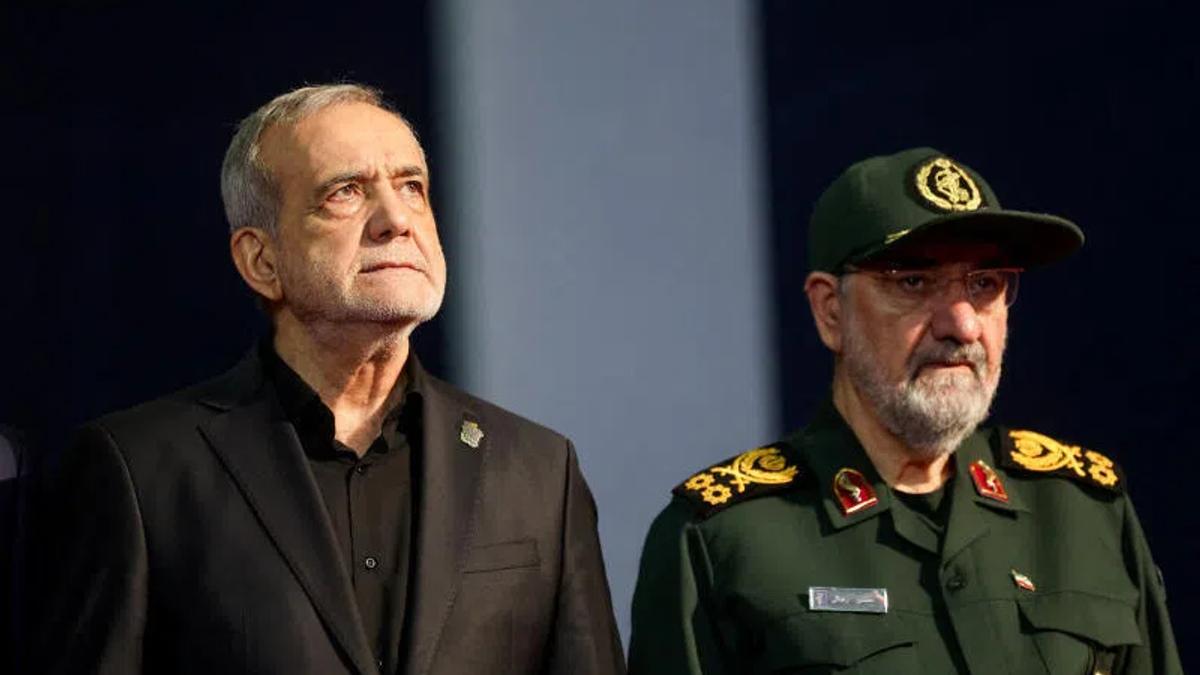
Iran has named Mohsen Rezaei, the former commander-in-chief of the Revolutionary Guards, as the head of the country's highest national security body, the Supreme National Security Council. This appointment comes after the resignation of Mohammad Bagher Zolghadr, who will now serve as a political adviser to Supreme Leader Ayatollah Mojtaba Khamenei.
Rezaei's appointment is a strategic move by the Iranian government to consolidate power and assert its influence in the region. As a hardliner with a strong military background, Rezaei is likely to take a more aggressive stance on issues such as the Strait of Hormuz, which has been a point of contention between Iran and the United States. His statement in July that control of the Strait is 'more important than dozens of atomic bombs' suggests that he will prioritize Iran's regional security interests over diplomatic engagement.
The impact of Rezaei's appointment will be felt by the people of Iran, who are already struggling under the weight of economic sanctions and regional conflict. A more assertive stance on security issues may lead to increased tensions with the United States and its allies, potentially resulting in further economic hardship and instability for the Iranian people. Additionally, the appointment of a hardliner like Rezaei may also have implications for the human rights situation in Iran, as his tenure as commander-in-chief of the Revolutionary Guards was marked by repression and violence against opposition groups.
What is being downplayed in the official statements is the potential for increased conflict and instability in the region. The appointment of Rezaei as head of the Supreme National Security Council is a clear signal that Iran is preparing to take a more assertive stance on regional security issues, which may lead to a escalation of tensions with the United States and its allies. Furthermore, the fact that Rezaei's predecessor, Zolghadr, has been appointed as a political adviser to the Supreme Leader suggests that there may be a power struggle within the Iranian government, with hardliners like Rezaei gaining the upper hand.
Readers should watch for signs of increased tensions between Iran and the United States, particularly in the Strait of Hormuz. The appointment of Rezaei as head of the Supreme National Security Council is a significant development that may lead to a more aggressive Iranian stance on regional security issues. Additionally, the impact of Rezaei's appointment on the human rights situation in Iran and the potential for increased conflict and instability in the region should be closely monitored.
Editor's Note: The analysis is based on publicly available information and may not reflect the full complexity of the situation.
Source referenced: STRAITSTIMES
This brief was synthesized by our Editorial Engine and reviewed by The Ground Narrative team.