TRENDING

Friday, 16 October 2026
----------------------
5 Jumada Al-Awwal 1448 AH
Iran has partially reinstated internet access three months after a near-total shutdown initiated during its war with the United States and Israel, yet severe restrictions persist for most citizens. This move highlights the regime's strategic use of information control to manage internal dissent and external conflict narratives, while simultaneously fueling public frustration and economic hardship.
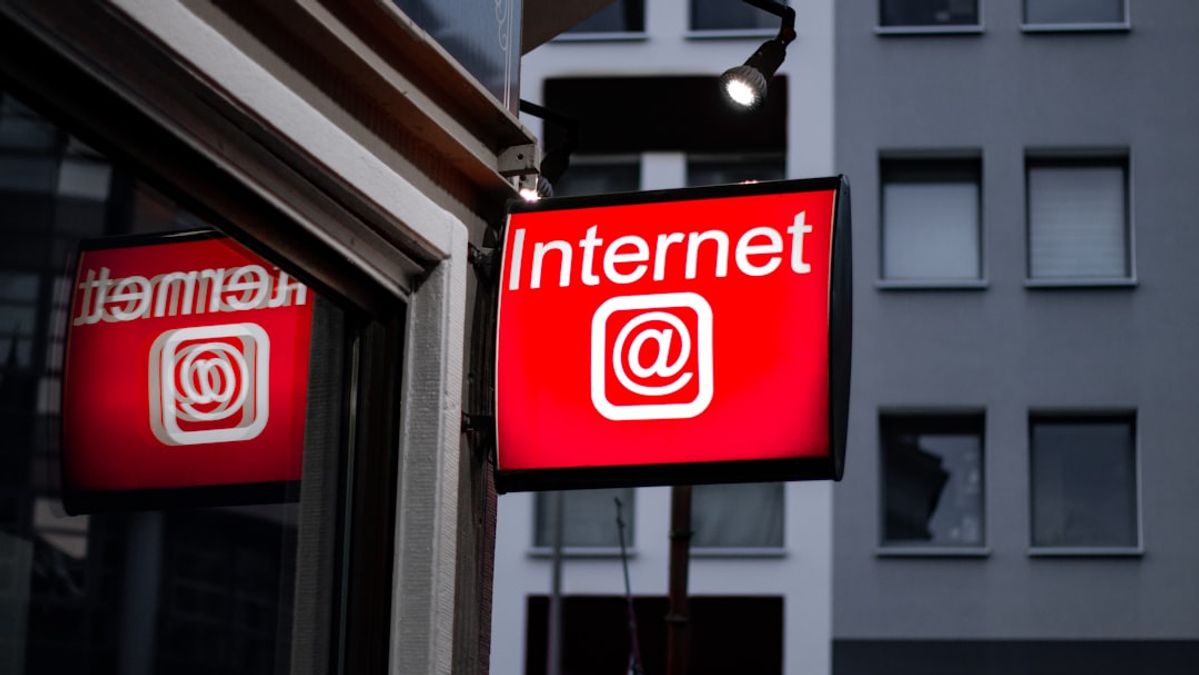
Authorities in Iran have initiated a limited restoration of internet access, three months after imposing a near-total nationwide shutdown at the onset of the conflict with the United States and Israel. This move, which ended over 2,000 hours of the world's longest-ever internet blackout, is not a return to open global connectivity but rather a carefully managed, tiered system designed to maintain state control over information flow. The decision to partially lift restrictions comes amidst ongoing geopolitical tensions and significant internal pressure, underscoring the Iranian government's strategic approach to digital sovereignty and information warfare.
The initial shutdown in February 2026 was a direct response to the escalating conflict with the US and Israel, following an earlier 20-day blackout in January during deadly nationwide protests. This pattern reveals a consistent strategy by Tehran to sever or severely restrict internet access during periods of heightened internal unrest or external military engagement. The objective is multifaceted: to prevent the coordination of dissent, control the narrative surrounding conflicts, limit the spread of potentially destabilizing information, and potentially hinder adversary intelligence gathering.
Despite the government's announcement of a return to pre-war internet levels, the reality for most Iranians is far from a full restoration of global access. User reports, local media, and expert analyses confirm that millions of web pages remain blocked, and popular global services and applications such as YouTube, Instagram, Telegram, WhatsApp, Facebook, and Waze are still inaccessible. Connectivity is described as slow, patchy, and unreliable across mobile, wireless, and landline connections, with many local applications frequently malfunctioning.
This limited access is a result of what experts describe as a sophisticated "architecture of filtering." Iranian authorities continue to employ multiple layers of restrictions, including blocking specific internet protocols like IPv6 and HTTP/3, actively disrupting others like UDP, and placing many foreign IP addresses in a restricted "grey" state. While connections may initiate, the volume of data packets permitted is severely limited, leading to poor connectivity. Full, unrestricted access has effectively become a privilege reserved for a select few authorized by the state, often through a "whitelisting" process.
Furthermore, the government has expanded a tiered-access internet system, exemplified by the "Internet Pro" scheme. This system offers varying degrees of access based on profession and other state classifications, often at significantly higher costs. While the state-run Mobile Communications of Iran (MCI) quietly removed its advertisement for "Internet Pro," the system's existence highlights a long-term strategy to create a controlled national intranet, often referred to as a "halal internet" or "national information network," distinct from the global internet.
The prolonged internet disruptions have inflicted significant damage on Iran's already struggling economy. Businesses and workers have been severely impacted, exacerbating an economic downturn. This economic strain, coupled with the pervasive frustration over limited connectivity, has fueled public anger, evident in the comment sections of state news sites. The black market for Virtual Private Networks (VPNs) and other circumvention methods has predictably boomed, with reports suggesting some affiliations with state entities, creating a lucrative, albeit risky, parallel economy for internet access.
Internally, the partial reopening has exposed deep divisions within Iran's political establishment. President Masoud Pezeshkian, who campaigned partly on promises of greater internet openness, faces criticism from reformist factions for the "belated opening" and the continued restrictions. Simultaneously, hardliners, who advocate for maintaining the near-total shutdown, have actively tried to impede the reopening process. Reports indicate attempts by hardline members of the Supreme National Cybersecurity Council to secure a court order suspending the government entity responsible for the internet restoration, highlighting a significant power struggle over digital policy.
The Iranian government's approach to internet control is a critical component of its national security and geopolitical strategy. By tightly managing information, Tehran aims to project an image of stability, control internal narratives, and mitigate the impact of external pressures, particularly during conflicts. The ability to implement and sustain such a sophisticated "architecture of filtering" demonstrates the state's significant capacity to control its digital infrastructure, a capability that has evolved over years of dealing with internal protests and international sanctions.
This episode underscores a broader global trend where authoritarian states increasingly view internet access not as a fundamental right but as a strategic asset to be controlled. For Iran, the partial reopening is not a concession to global norms but a calculated adjustment, balancing the need to alleviate some economic pressure and public frustration with the imperative of maintaining political and informational control. The future trajectory suggests a continued evolution towards a more segmented and state-controlled internet environment, further isolating Iranian citizens from the global digital commons while solidifying the regime's grip on information. The ongoing internal political struggle over internet policy will likely shape the pace and nature of these developments, but the strategic intent to maintain digital sovereignty remains clear.
Source referenced: ALJAZEERA
This brief was synthesized by our Editorial Engine and reviewed by The Ground Narrative team.