TRENDING

Monday, 19 October 2026
----------------------
8 Jumada Al-Awwal 1448 AH
The recent student protests in India, sparked by exam paper leaks and a government crackdown, have exposed deep-seated frustrations among the country's youth. As the movement gains momentum, we analyze the strategic motivations and regional implications of this growing unrest.
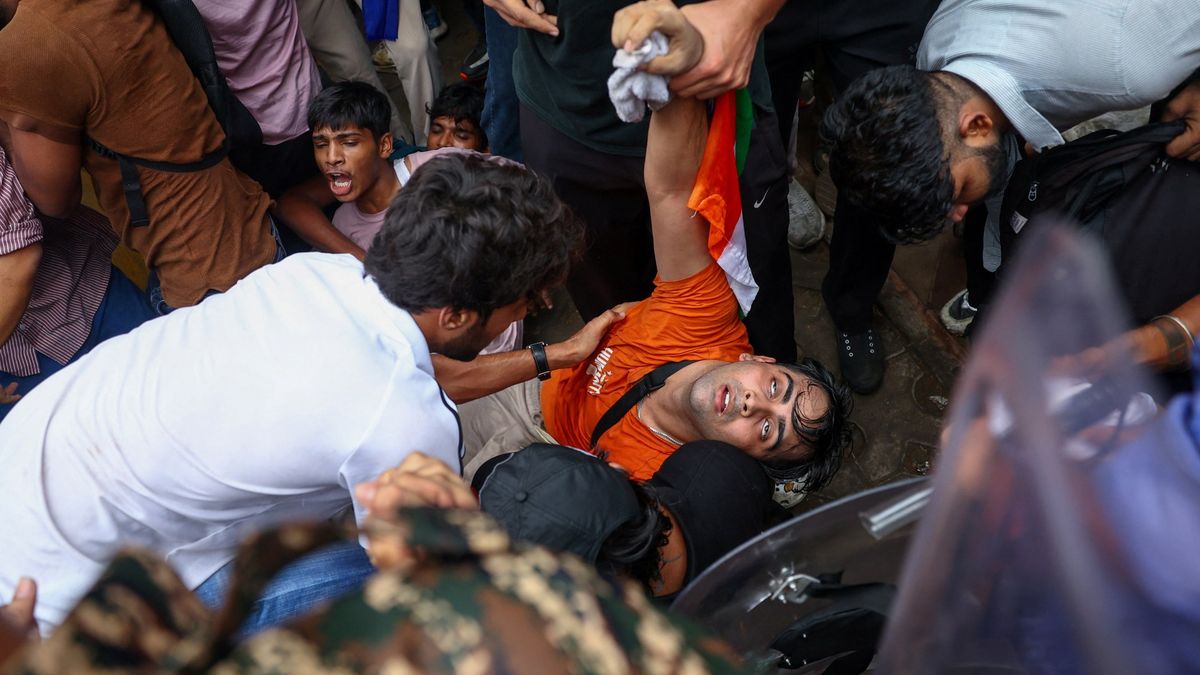
The recent student protests in India, sparked by exam paper leaks and a government crackdown, have exposed deep-seated frustrations among the country's youth. As the movement gains momentum, we analyze the strategic motivations and regional implications of this growing unrest.
The protests began in response to a series of compromised entrance exams that affected millions of students. In some cases, exam papers were leaked; in others, students who sought copies of their answer scripts found that they had been wrongly graded. More than 20 students died by suicide, many citing the paper leaks. The government's inaction in the face of this crisis has only fueled the anger among India's youth.
The government's response to the protests has been heavy-handed, with police using tear gas and batons to disperse the crowds. Over 100 students were injured, and several were arrested. The government's refusal to hold any of its own accountable has only added to the sense of outrage among the protesters.
The Cockroach Janta Party (CJP), a political pressure group that called the march, has become a symbol of resistance against the government's authoritarian tendencies. The party's leader, Abhijeet Dipke, has vowed to continue the protests until the Education Minister Dharmendra Pradhan resigns.
The protests in India are part of a larger trend of growing unrest in South Asia. In recent months, protests have erupted in Nepal, Sri Lanka, and Bangladesh, all of which have been sparked by similar issues of corruption, inequality, and government inaction. The region is witnessing a growing sense of disillusionment with the existing power structures, and the protests in India are a manifestation of this trend.
The protests in India are a direct challenge to Prime Minister Narendra Modi's authoritarian tendencies. Modi has been in power since 2014 and has been accused of using brute force to crush dissent. The protests are a test of his resolve, and the government's response will be crucial in determining the outcome of this crisis.
The protests in India are a complex and multifaceted issue, driven by a combination of factors including exam paper leaks, government inaction, and authoritarianism. As the movement gains momentum, it is essential to analyze the strategic motivations and regional implications of this growing unrest. The outcome of this crisis will have far-reaching consequences for India and the region as a whole.
Source referenced: ALJAZEERA
This brief was synthesized by our Editorial Engine and reviewed by The Ground Narrative team.