TRENDING

Monday, 21 September 2026
----------------------
10 Rabi' Al-Thani 1448 AH
An ICE officer shot a man during a foot chase in Austin, sparking calls for an independent probe. The incident highlights the clash between federal immigration enforcement and local communities.
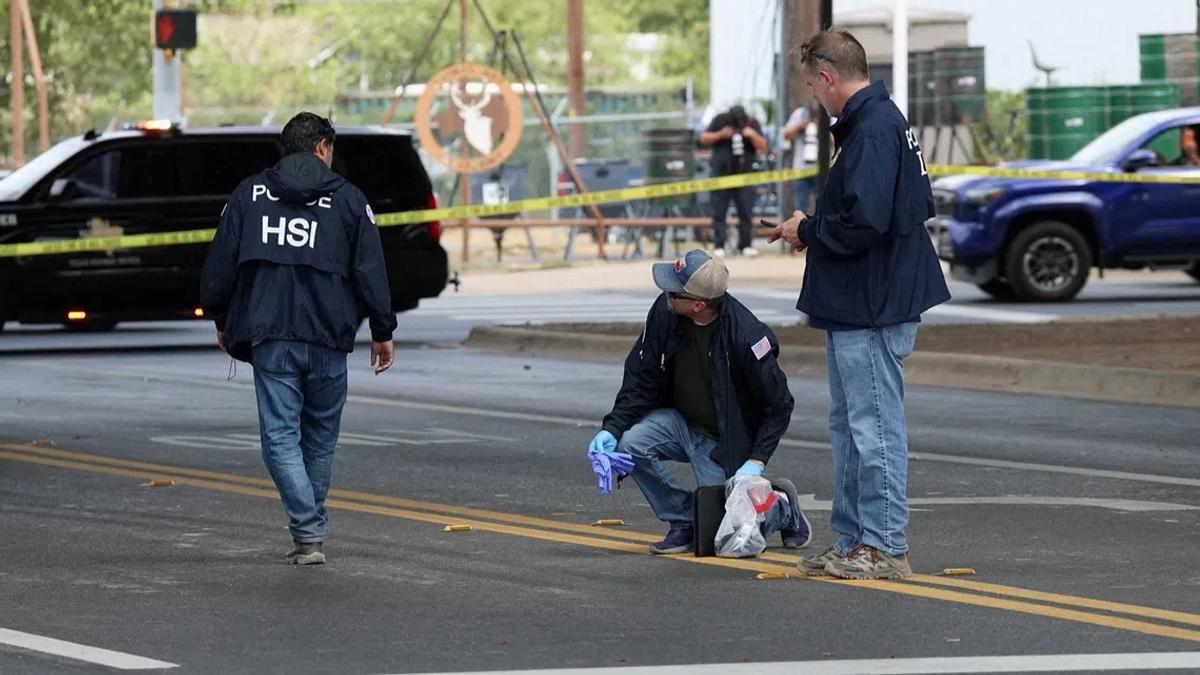
On September 20, 2026, an Immigration and Customs Enforcement (ICE) officer shot a man in the torso during a brief foot pursuit in Austin, Texas. The victim was taken to a hospital in serious but stable condition, while city officials have not released his identity or the name of the agent involved.
The shooting sits at the intersection of three overlapping power structures. First, ICE, a component of the Department of Homeland Security, has been tasked with an aggressive enforcement agenda revived under President Donald Trump in 2025. That agenda translates into expanded detention quotas, increased field operations, and a culture that rewards rapid apprehensions.
Second, the federal‑state dynamic in Texas adds a layer of political calculus. Texas Governor Greg Abbott’s administration has positioned itself as a frontline defender of the Trump‑era immigration policy, funneling state resources to support ICE’s presence. This alignment offers ICE logistical backing—local police cooperation, access to state‑run detention facilities, and political cover that shields it from immediate federal oversight.
Third, local politics in Austin create a counter‑force. Mayor Kirk Watson and Representative Greg Casar, both Democrats, have publicly demanded a joint investigation involving city police and the Texas Rangers, signaling a bid to reassert municipal authority and protect their constituencies. Their stance also serves electoral interests, as the city’s increasingly progressive electorate watches closely for any perceived overreach by federal agents.
Together, these incentives generate a feedback loop: federal directives push ICE agents onto the streets, state officials provide the operational environment, and local leaders either cooperate or push back based on political survival. The result is a fragmented accountability chain where each actor can deflect blame onto the others.
The wounded man—whose name remains undisclosed—embodies the human cost of this power tug‑of‑war. Whether he was a recent migrant, a long‑time resident, or someone caught in the wrong place at the wrong time, his injury underscores how immigrant communities bear the brunt of enforcement policies they have little say over. Families face medical bills, lost wages, and the trauma of seeing a loved one injured by an agency meant to protect national security.
Beyond the individual, the broader Austin neighborhoods experience heightened anxiety. Residents report a chilling effect on public gatherings, fearing that any interaction with ICE could turn violent. Local businesses near the incident site saw a dip in foot traffic as protests and police presence disrupted daily commerce. The psychological toll—constant vigilance, mistrust of law‑enforcement, and the specter of detention—feeds into a cycle of marginalization that extends far beyond the single shooting.
Official statements have been sparse, and both ICE and the Department of Homeland Security have yet to comment. This silence is not accidental. Past incidents, such as the 2026 killing of U.S. citizen Renee Good in Minnesota, reveal a pattern of information suppression: delayed releases, incomplete witness accounts, and contradictory narratives that erode public trust.
Moreover, the budgetary incentives tied to ICE’s performance metrics are rarely discussed. Federal funding allocations increase with higher apprehension numbers, creating a fiscal motive to prioritize arrests over procedural safeguards. Texas’s own immigration‑related contracts with private detention operators further entrench a profit‑driven ecosystem that benefits contractors more than the people they detain.
Finally, the political framing downplays the systemic nature of these shootings. By treating each incident as an isolated “bad apple” case, officials sidestep broader questions about policy design, training standards, and the legal thresholds that permit agents to use lethal force during non‑violent pursuits.
Watch for three developments that will shape the fallout. First, the joint investigation promised by Mayor Watson and the Texas Rangers will test whether local authorities can exert real oversight or become another layer of bureaucratic shielding. The composition of the investigative team, access to body‑camera footage, and the timeline for releasing findings will be critical indicators.
Second, legislative responses at the state level are likely. Texas lawmakers may introduce bills to formalize cooperation protocols with ICE or, conversely, to limit federal agents’ authority on state soil—moves that will reflect the balance of power between the governor’s office and the increasingly vocal city council.
Third, national attention could amplify as advocacy groups mobilize around the incident. If the wounded man’s identity and story become public, it may galvanize broader immigration‑rights campaigns, potentially influencing the 2028 mid‑term elections where immigration policy will be a key battleground.
The Austin shooting is more than a single use‑of‑force episode; it is a flashpoint exposing how federal enforcement, state politics, and local communities intersect—and where accountability often evaporates.
Editor's Note: All facts are drawn from the provided source; no additional proprietary data were used.
Source referenced: STRAITSTIMES
This brief was synthesized by our Editorial Engine and reviewed by The Ground Narrative team.