TRENDING

Monday, 5 October 2026
----------------------
24 Rabi' Al-Thani 1448 AH
A tragic bus crash in Hungary highlights the hidden human costs and systemic pressures within Europe's long-distance travel network. Beyond individual error, the incident points to broader questions of regulatory oversight and economic incentives that shape passenger safety.
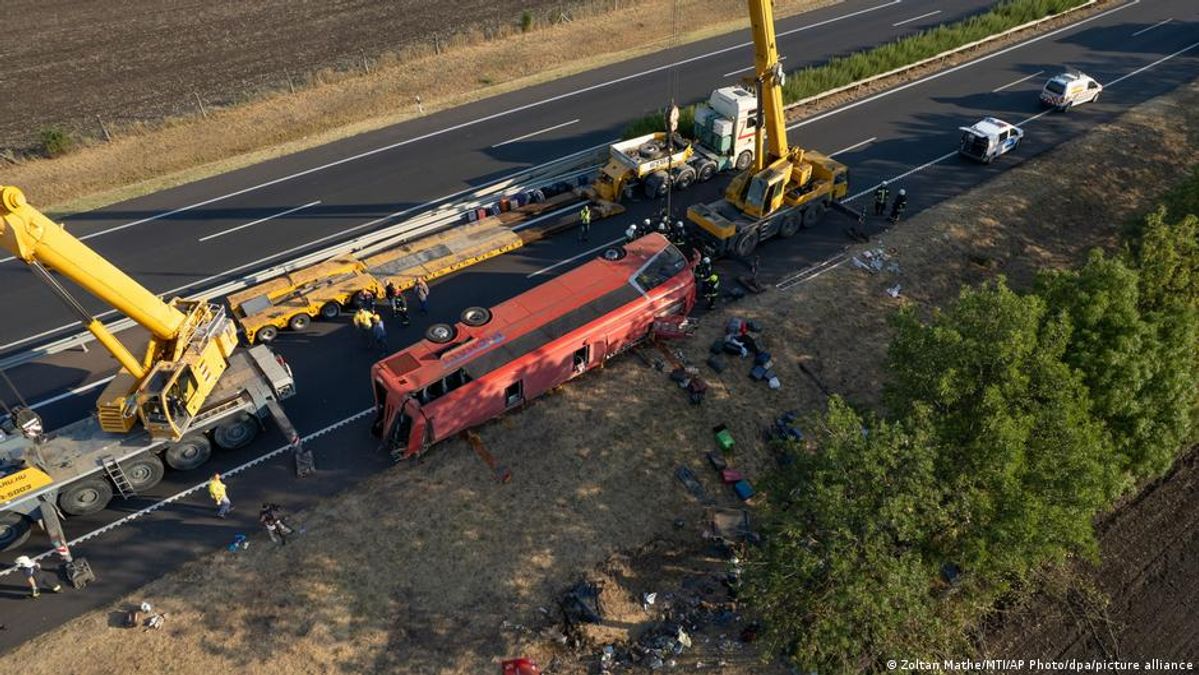
A Polish coach carrying 59 pilgrims, returning from Bosnia-Herzegovina, crashed into a ditch and overturned on Hungary's M3 motorway near Mezokeresztes. The devastating incident resulted in the deaths of at least 12 people and left 47 injured, 10 of whom are in serious condition. Hungarian authorities have arrested the driver, suspecting fatigue as the primary cause of the overnight crash.
The immediate aftermath of such a tragedy often focuses on individual culpability, but the underlying power dynamics reveal a more complex system at play. At its core, this incident exposes the tension between economic efficiency and public safety in cross-border transport. Transport companies, operating within a competitive European market, face constant pressure to optimize routes, minimize costs, and maximize passenger loads. This economic imperative can subtly, or overtly, influence decisions regarding driver scheduling, vehicle maintenance, and the overall pace of long-haul journeys.
Governments, both national (Poland, Hungary) and supranational (EU), hold the regulatory power to set standards for driver hours, rest periods, and vehicle safety. However, the practical enforcement of these regulations across multiple borders, especially when a journey spans both EU and non-EU territories like Bosnia-Herzegovina, introduces significant complexities. While leaders offer condolences – a standard political function designed to reassure and show solidarity – the structural forces of market competition and fragmented regulatory oversight continue to operate largely unchecked in the background. The power to truly safeguard passengers lies not just in writing laws, but in rigorously enforcing them against powerful economic interests.
The most profound human cost is borne by the victims and their families. Twelve lives abruptly ended, and dozens more face long roads to recovery, both physical and psychological. For the community in Poland's Podkarpackie province, this tragedy represents a collective wound, as a group of their own, on a spiritual journey, met with a devastating end far from home. Pilgrimages often involve close-knit groups, amplifying the grief and trauma felt across the community. Beyond the immediate casualties, the driver, now facing arrest and severe legal consequences, also bears a heavy human cost. His individual failure, if proven, is a stark reminder of the immense responsibility placed on those who transport lives, often under conditions that may push human limits.
This incident also impacts the emergency services and medical personnel in Hungary who responded to the horrific scene, shouldering the emotional burden of dealing with mass casualties. Their swift action, while commendable, cannot erase the images or the profound human suffering they witnessed.
While driver fatigue is the readily cited cause, the deeper, often unaddressed narrative is the systemic vulnerability of long-distance passenger transport in Europe. Official statements and media reports tend to localize blame to the individual driver, effectively sidestepping the broader questions about the conditions that contribute to such fatigue. What are the actual working hours and rest provisions for drivers on these international routes? Are companies adhering to regulations, and if not, why? The economic pressures on transport operators can create an environment where cutting corners on driver rest or vehicle checks becomes an unspoken norm, especially for more affordable travel options like pilgrim tours.
Furthermore, the complexity of cross-border regulatory oversight is rarely scrutinized. A journey originating in Poland, passing through Hungary, and visiting Bosnia-Herzegovina involves different legal frameworks and enforcement capacities. Who is ultimately responsible for ensuring the safety standards for the *entire* journey? This fragmented accountability can create loopholes that powerful actors, whether states or corporations, are incentivized to overlook. The vulnerability of specific demographics, such as older pilgrims who may be more susceptible to severe injuries in a crash, is also often omitted from the public discourse, as is the unspoken trade-off between the desire for affordable group travel and the investment required for optimal safety measures.
Moving forward, the focus will be on the official investigation's findings. Will it delve beyond individual error to examine the operating practices of the bus company, the adequacy of driver rest protocols, and the enforcement mechanisms across the involved countries? Watch for any calls from either the Polish or Hungarian governments, or even the EU, for a review of cross-border road safety regulations, particularly concerning driver working hours and the oversight of international passenger transport operators. The long-term support provided to the injured and the families of the deceased, and the efficiency of cross-border mechanisms to facilitate this, will also be a critical indicator of how seriously this tragedy is addressed beyond initial condolences. The real test will be whether this incident prompts systemic changes or merely results in isolated legal action against an individual driver.
Source referenced: DW
This brief was synthesized by our Editorial Engine and reviewed by The Ground Narrative team.