TRENDING

Wednesday, 28 October 2026
----------------------
17 Jumada Al-Awwal 1448 AH
Gunmen on motorcycles stormed Binnari village after Friday prayers, leaving at least 20 dead and dozens missing. The assault reveals deep‑seated security gaps, criminal profiteering, and a human toll that ordinary Nigerians bear.
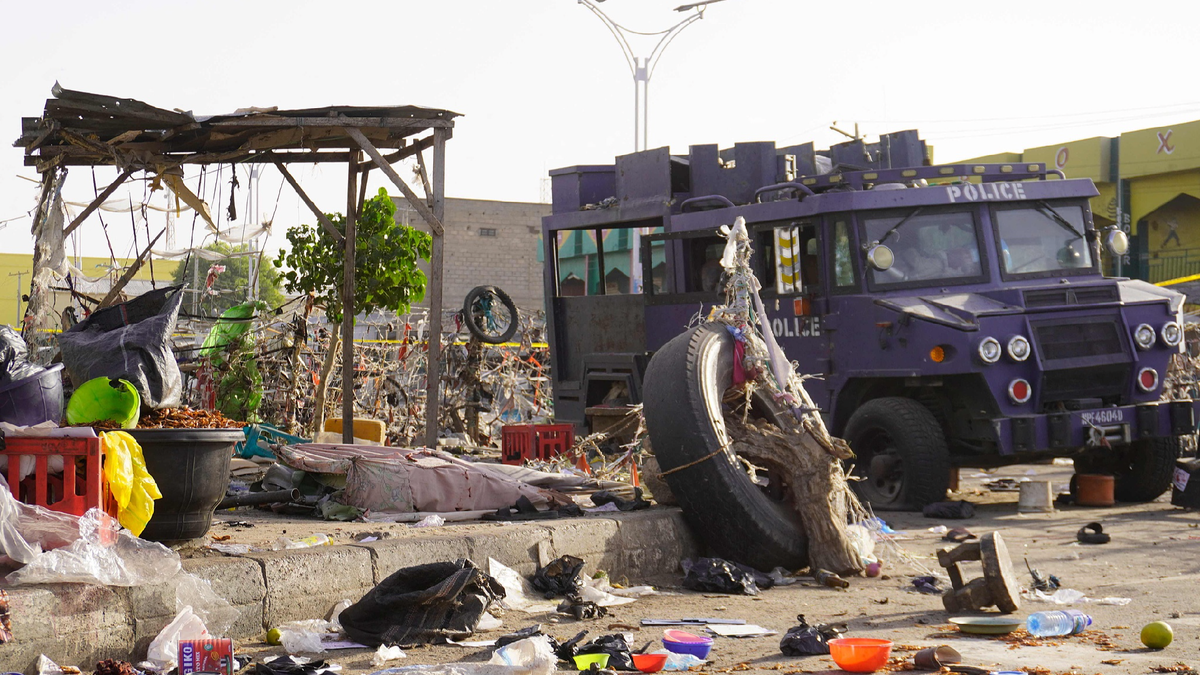
At least twenty people were found dead in Binnari, a small village in Taraba state, Nigeria, after gunmen on motorcycles opened fire following Friday prayers. Survivors said the attackers looted shops, seized food, cash and abandoned motorcycles before fleeing into the surrounding bush, leaving several residents still missing. Police later confirmed ten bodies recovered, while locals reported a higher death toll and ongoing fear of further raids.
The northeast of Nigeria has long been a corridor for illicit trade—arms, drugs, and human trafficking—fuelled by weak state presence and porous borders with Cameroon and Chad. Armed gangs, often loosely organized but financially motivated, exploit this vacuum, using cheap motorcycles to strike quickly and disappear before security forces can respond. Their raids generate loot that funds further operations, creating a self‑reinforcing cycle of violence.
State officials in Taraba face a dilemma: allocating scarce security resources to a region that is politically peripheral compared to the more visible insurgencies in Borno and Adamawa. Local politicians, eager to maintain electoral support, sometimes downplay rural attacks to avoid admitting governance failures. This calculus pushes the federal government to prioritize high‑profile counter‑terrorism missions over protecting remote farming communities.
Nigeria’s military doctrine focuses on large‑scale operations against Boko Haram and ISWAP, deploying heavy armor and air assets to urban strongholds. This leaves rural outposts under‑equipped, making villages like Binnari soft targets for fast‑moving gunmen. The doctrine’s emphasis on conventional warfare inadvertently neglects the low‑intensity, criminal‑driven violence that now dominates many parts of the northeast.
The immediate victims are the families who lost breadwinners, children, and elders in a single afternoon. With the attackers stealing food and cash, households now face hunger and an inability to pay school fees or medical expenses. In a region where agriculture is the mainstay, the loss of labor and supplies threatens seasonal harvests, pushing communities toward deeper poverty.
Survivors fled into the bush, joining already‑overstretched internally displaced persons (IDP) camps across Nigeria. The trauma of witnessing mass killings after a sacred prayer session compounds existing PTSD rates among residents who have lived through years of insurgent attacks. Mental‑health services are virtually absent in these rural zones, leaving scars that may persist for generations.
Local markets, already fragile, suffer when shops are looted and traders abandon their stalls out of fear. The loss of motorcycles—critical for transporting goods to market—disrupts supply chains, inflating food prices not only in Binnari but in neighboring towns that rely on its produce. This micro‑economic shock can ripple into regional price instability.
Official statements from the Federal Ministry of Interior have emphasized that the incident is an isolated criminal act, avoiding any admission of systemic security failures. Police reports list only ten bodies recovered, contradicting eyewitness accounts of a higher death toll. This discrepancy suggests a deliberate minimization to preserve a narrative of control.
While Amnesty International and other NGOs have condemned the lack of accountability, donor fatigue in the wake of prolonged humanitarian crises in the Sahel means fewer resources are earmarked for rural security reforms. International actors often focus aid on large‑scale refugee camps, leaving villages like Binnari under‑served and invisible to global donors.
Western and regional media frequently label violence in the northeast as “terrorism,” conflating insurgent attacks with criminal gang raids. This framing obscures the profit‑driven motives of the gunmen and allows the state to justify military responses that are ill‑suited for low‑tech raids, while sidestepping the need for community policing and development.
The next weeks will reveal whether Nigeria’s security apparatus will adjust its tactics to address the rise of motorcycle‑armed gangs. Watch for any deployment of rapid‑response units to Taraba, changes in budget allocations toward rural policing, and statements from local leaders demanding accountability. International NGOs may increase pressure if the death toll rises or if missing persons remain unaccounted for, potentially prompting a broader dialogue on rural security reforms across the Sahel.
The attackers are typically loosely organized criminal gangs that profit from looting and trafficking. They use motorcycles for speed and often operate across porous borders with neighboring countries.
Officials often label such incidents as isolated crimes to avoid admitting broader security failures and to keep political focus on high‑profile insurgencies. Downplaying also helps preserve a narrative of state control.
Improving community policing, allocating resources for rapid‑response units, and addressing the underlying criminal economies are essential. International aid that targets rural security infrastructure can also reduce vulnerability.
Editor's Note: Analysis based on available reports and historical patterns of criminal violence in northeast Nigeria.
Source referenced: CGTN
This brief was synthesized by our Editorial Engine and reviewed by The Ground Narrative team.


