TRENDING

Wednesday, 28 October 2026
----------------------
17 Jumada Al-Awwal 1448 AH
President Lula denounced Flavio Bolsonaro’s flight to the United States, calling it a shameful act that exposes Brazil’s deep political fissures and the stakes for ordinary citizens.
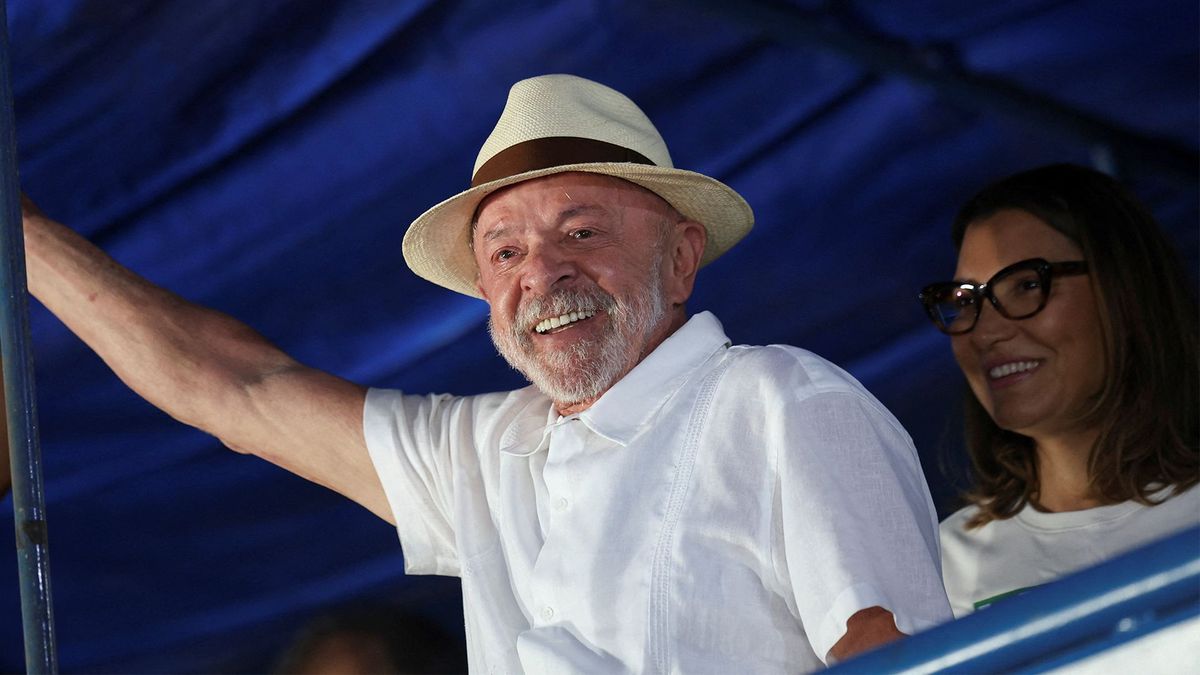
President Luiz Inácio Lula da Silva publicly rebuked former President Jair Bolsonaro’s son, Flavio Bolsonaro, after the younger Bolsonaro left Brazil for the United States on 26 October 2026. The departure came just days after a Supreme Court order demanding the surrender of Flavio’s passports amid a sprawling money‑laundering investigation linked to the former president’s family. Lula labeled the exit “shameful” on social media, framing it as an abandonment of Brazil’s democratic institutions.
The Supreme Court’s move to confiscate Flavio’s travel documents is part of a broader anti‑corruption drive that intensified after the 2022 elections. By targeting the Bolsonaro clan, the judiciary aims to signal that even the most powerful political families are not immune. For Lula, a former union leader turned president, the case offers a chance to consolidate his own legitimacy: he can portray his administration as the guardian of rule of law while his opponents are painted as fugitives.
Lula’s Workers’ Party (PT) faces a precarious mid‑term landscape. While the economy has shown modest recovery, inflation and public security remain contentious issues. By seizing on Bolsonaro’s flight, Lula forces the opposition to spend political capital on damage control rather than on policy critique. The move also rallies PT supporters who view the Bolsonaro family as emblematic of the “old guard” that corrupted Brazil’s democratic transition.
The United States, long a key ally and trade partner, watches Brazil’s internal turbulence closely. Washington’s diplomatic corps has historically balanced support for democratic norms with pragmatic economic interests, especially in the agribusiness sector. Bolsonaro’s alleged flight to the U.S. raises questions about possible asylum negotiations, intelligence sharing, and the extent to which the United States might tacitly accommodate a former head of state under investigation.
Brazil’s armed forces have historically been a political arbiter, intervening overtly in 1964 and influencing politics behind the scenes ever since. Bolsonaro, a former army captain, cultivated strong ties with senior officers, many of whom remain sympathetic to his hard‑right agenda. Lula’s criticism of the exile is also a signal to the military establishment that any attempt to shield the Bolsonaro network will meet institutional resistance.
Ordinary Brazilians, especially those in the Amazon basin and the impoverished Northeast, feel the ripple effects of elite infighting. Corruption scandals divert attention and resources away from pressing issues like deforestation control, drought relief, and infrastructure development. When high‑profile figures flee, public trust erodes, making it harder for local governments to mobilize community support for essential projects.
During Bolsonaro’s tenure, environmental deregulation and aggressive security policies led to increased violence against indigenous communities and land defenders. The exile of a key family member does little to address the unresolved grievances of those who suffered under those policies. Their demands for justice and reparations remain sidelined as the political elite focus on courtroom drama.
The uncertainty surrounding the Bolsonaro investigation has unsettled both domestic and foreign investors. Stock market volatility spiked after the news of the passport seizure, and agribusiness firms fear that prolonged legal battles could trigger stricter compliance checks. Small‑scale farmers, already squeezed by fluctuating commodity prices, risk losing market access if Brazil’s political climate appears unstable.
Official statements from the United States have been muted, emphasizing “respect for Brazil’s judicial process.” Yet behind the scenes, senior diplomats are reportedly assessing whether offering a limited form of safe‑conduct could serve broader strategic interests, such as securing cooperation on Amazon surveillance or counter‑narcotics operations. This nuance is omitted from public briefings, which instead frame the episode as a purely Brazilian affair.
Investigators have traced a web of offshore accounts linked to the Bolsonaro family, many of which are registered in jurisdictions with lax oversight. While the Supreme Court order targets passport control, the deeper financial structures remain largely hidden from public scrutiny. Media coverage focuses on the dramatic flight, leaving the systemic nature of the laundering scheme under‑reported.
State‑aligned outlets have amplified Lula’s condemnation, portraying the exile as a moral failure of the right. Conversely, right‑leaning broadcasters downplay the legal significance, casting the passport seizure as a politically motivated witch hunt. The middle ground—objective analysis of the judicial merits—is scarce, leaving citizens with a binary narrative that obscures the complexities of Brazil’s institutional checks and balances.
- Court proceedings: The Supreme Court will decide whether to issue an arrest warrant for Flavio Bolsonaro. A conviction could set a precedent for holding high‑level politicians accountable, while a dismissal might embolden other elites.
- U.S. diplomatic signals: Any official comment from the U.S. State Department regarding Bolsonaro’s status in America will reveal the extent of American involvement and could affect bilateral trade talks.
- Military posture: Watch for statements from the Ministry of Defense and senior generals. A shift toward a more neutral stance could reassure investors; a vocal defense of the Bolsonaro camp would signal lingering factionalism.
- Public opinion polls: Surveys in the coming weeks will measure whether Lula’s criticism translates into increased support for his administration or fuels backlash among Bolsonaro’s base.
- Legislative agenda: The PT‑led Congress may push forward anti‑corruption reforms, using the Bolsonaro case as a catalyst. The speed and scope of those reforms will indicate how deeply the current power structure is willing to change.
By tracking these variables, ordinary Brazilians and international observers can gauge whether Brazil’s political crisis will deepen or resolve, and who ultimately bears the cost of the power struggle.
Flavio Bolsonaro fled after a Supreme Court order to surrender his passports amid a money‑laundering probe. The move is seen as an attempt to avoid detention and to seek a more favorable legal environment abroad.
If the judiciary proceeds with charges, it could reinforce the rule of law and deter future abuses of power. Conversely, a perceived leniency or foreign protection might embolden other elites to sidestep accountability, weakening democratic norms.
Editor's Note: Analysis based on publicly available reports and historical patterns; ongoing legal developments may shift dynamics.
Source referenced: ALJAZEERA
This brief was synthesized by our Editorial Engine and reviewed by The Ground Narrative team.