TRENDING

Wednesday, 28 October 2026
----------------------
17 Jumada Al-Awwal 1448 AH
Nepal is intensifying efforts to mitigate the devastating impact of climate change, launching new flood early warning systems and actively lowering water levels in high-risk glacial lakes. These measures follow recent catastrophic floods that claimed thousands of lives and caused extensive damage.
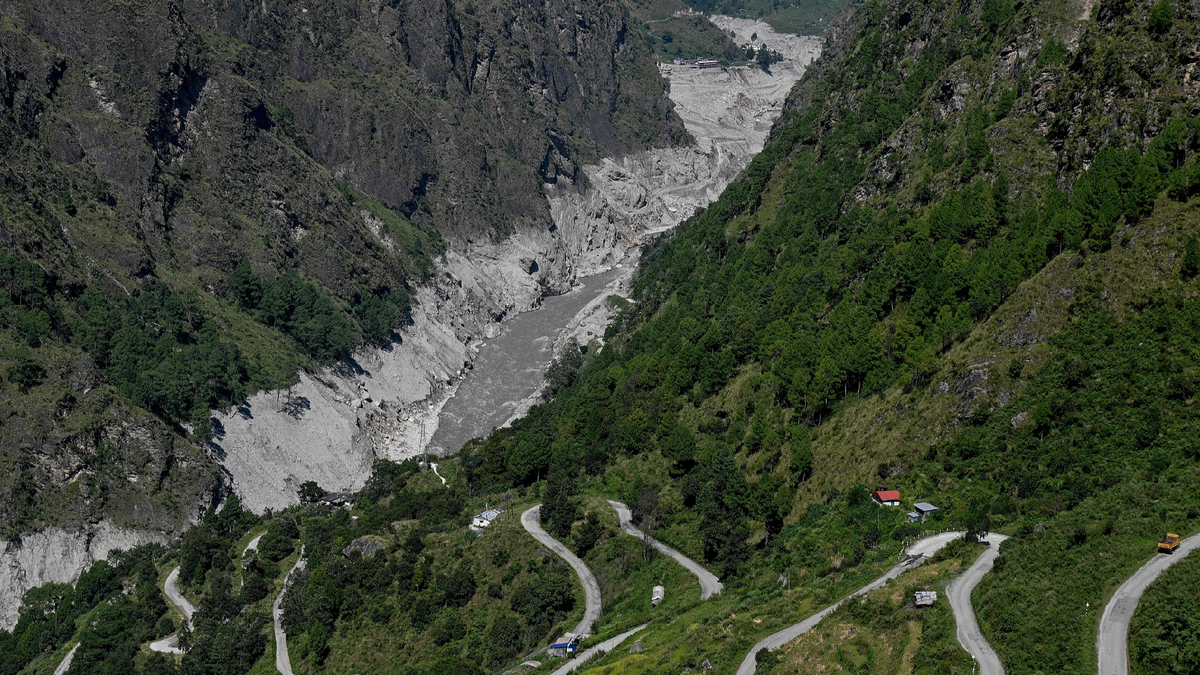
Nepal has announced a significant expansion of its disaster preparedness, focusing on installing flood early warning systems across six major river basins and undertaking critical risk reduction measures in four high-risk glacial lakes. This urgent initiative comes in the wake of devastating floods on August 26, 2026, which resulted in approximately 1,500 fatalities, left over 5,000 people missing, and caused an estimated $1.81 billion in physical damage. The government's plan, which includes the Glacial Lake Outburst Flood (GLOF) Sanjeevani Project and the Priority River Basins Flood Risk Management Project, aims to modernize weather forecasting and improve response capabilities as Himalayan glaciers continue to melt at an accelerated rate, increasing the threat of catastrophic glacial lake outburst floods.
Nepal's position as a landlocked, mountainous nation at the heart of the Himalayas places it at a unique and precarious intersection of global climate dynamics and regional geopolitics. The power mechanics at play are multi-layered, reflecting both the country's inherent vulnerabilities and the broader forces shaping its response.
First, there is the overwhelming power of climate change itself. While Nepal contributes negligibly to global greenhouse gas emissions, it disproportionately bears the consequences of rising global temperatures. The accelerated melting of Himalayan glaciers, driven by industrial activities far beyond its borders, is not a local phenomenon but a global one. This creates a fundamental power imbalance: the nations with the greatest capacity to mitigate climate change often face the least immediate and severe impacts, while vulnerable nations like Nepal are forced into a reactive, defensive posture, dedicating precious resources to adaptation and disaster response rather than proactive development.
Second, the implementation of sophisticated early warning systems and GLOF risk reduction projects requires significant financial and technological capital. The proposed GLOF Sanjeevani Project alone carries an estimated budget of $49.9 million, with the flood risk management project adding another $7.54 million. For a developing economy like Nepal, these are substantial investments. The sourcing of this funding, whether through internal allocation, bilateral aid, or multilateral development banks, dictates the degree of external influence and dependency. The mention of advanced technologies like artificial intelligence, machine learning, and high-performance computing for weather forecasting points to a reliance on external expertise and hardware, potentially from countries like China, which has a growing technological footprint in the region and is the source of the news report. This technological dependency can create new power dynamics, where assistance comes with implicit or explicit strategic considerations.
Third, the Nepali government's political survival is intrinsically linked to its ability to protect its citizens from natural disasters. The devastating August 26 floods serve as a stark reminder of the human and economic toll, placing immense pressure on the administration to demonstrate competence and foresight. Investing in disaster preparedness is not merely a humanitarian act but a political imperative, aimed at maintaining public trust and stability. This creates an incentive for rapid implementation, but also a potential for short-term, visible solutions that may not address the deeper, systemic issues of climate vulnerability or long-term resource management.
Finally, the transboundary nature of Himalayan rivers introduces a complex geopolitical dimension. Rivers originating in Nepal flow downstream into India, affecting millions of people and vast agricultural lands. While Nepal's efforts are localized, the benefits of effective flood control and early warnings could extend beyond its borders, potentially fostering regional cooperation or highlighting existing gaps in shared water resource management. The absence of explicit mention of cooperation with India in the reported plans suggests either a primary focus on internal measures or a complex negotiation landscape that remains outside the public narrative.
The human cost of Nepal's escalating climate crisis is immediate, profound, and disproportionately borne by its most vulnerable citizens. The statistics from the August 26 floods—1,500 lives lost, 5,000 missing, and $1.81 billion in damage—only begin to tell the story of shattered lives and communities.
For the vast majority of Nepalis, particularly those in rural and mountainous regions, livelihoods are inextricably linked to the land and its resources. Agriculture, small-scale farming, and daily wage labor are the backbone of many families' economic survival. When floods sweep through river basins or GLOFs inundate valleys, entire seasons of crops can be destroyed, livestock lost, and homes rendered uninhabitable. The $1.81 billion in physical damage translates directly into lost income, prolonged displacement, and a desperate struggle for survival for thousands of families. Rebuilding homes, replanting fields, and re-establishing businesses can take years, pushing already impoverished communities deeper into poverty. The psychological toll of losing everything, often repeatedly, creates a cycle of trauma and uncertainty that undermines social cohesion and individual well-being.
The impact is harshest on remote mountain communities and indigenous populations who often live in close proximity to glacial lakes and river systems. These groups, frequently marginalized and with limited access to resources, infrastructure, or government support, are the first to be hit and the last to recover. Their traditional knowledge systems, while valuable, are often overwhelmed by the unprecedented scale and frequency of climate-induced disasters. The lack of robust infrastructure, such as resilient housing, safe evacuation routes, and accessible healthcare, exacerbates their vulnerability, turning natural hazards into humanitarian catastrophes. Children's education is disrupted, healthcare services become inaccessible, and the elderly and infirm face heightened risks during evacuations and in temporary shelters.
Each major flood or GLOF event sets back Nepal's development progress by years, if not decades. Funds earmarked for education, healthcare, infrastructure development, or poverty reduction are diverted to emergency relief and reconstruction. This constant cycle of destruction and rebuilding prevents sustained growth and perpetuates a state of vulnerability. The damage to critical infrastructure, such as roads, bridges, and hydropower projects (which Nepal relies on for energy and revenue), has ripple effects across the entire economy, hindering trade, tourism, and access to essential services. The long-term implications for national debt and economic stability are significant, as the nation struggles to finance both development and disaster resilience simultaneously.
While Nepal's proactive steps to implement early warning systems and reduce glacial lake risks are commendable, the official narrative often downplays or omits several critical dimensions of this unfolding crisis. These omissions reveal deeper power dynamics and the uncomfortable truths that powerful actors, both domestic and international, prefer to keep out of the spotlight.
The most significant untold story is the profound imbalance between Nepal's minimal contribution to global greenhouse gas emissions and the catastrophic consequences it endures. Nepal is a victim of a climate crisis largely driven by industrialized nations. While the Nepali government focuses on adaptation, there is little public emphasis on the moral and financial responsibility of major emitters to compensate countries like Nepal for
Source referenced: CGTN
This brief was synthesized by our Editorial Engine and reviewed by The Ground Narrative team.