TRENDING

Tuesday, 27 October 2026
----------------------
16 Jumada Al-Awwal 1448 AH
Iranian President Masoud Pezeshkian and Qatari Emir Sheikh Tamim met in Moscow, signaling a new energy partnership under Russia's watch. The deal could shift regional balances while ordinary citizens face hidden costs.
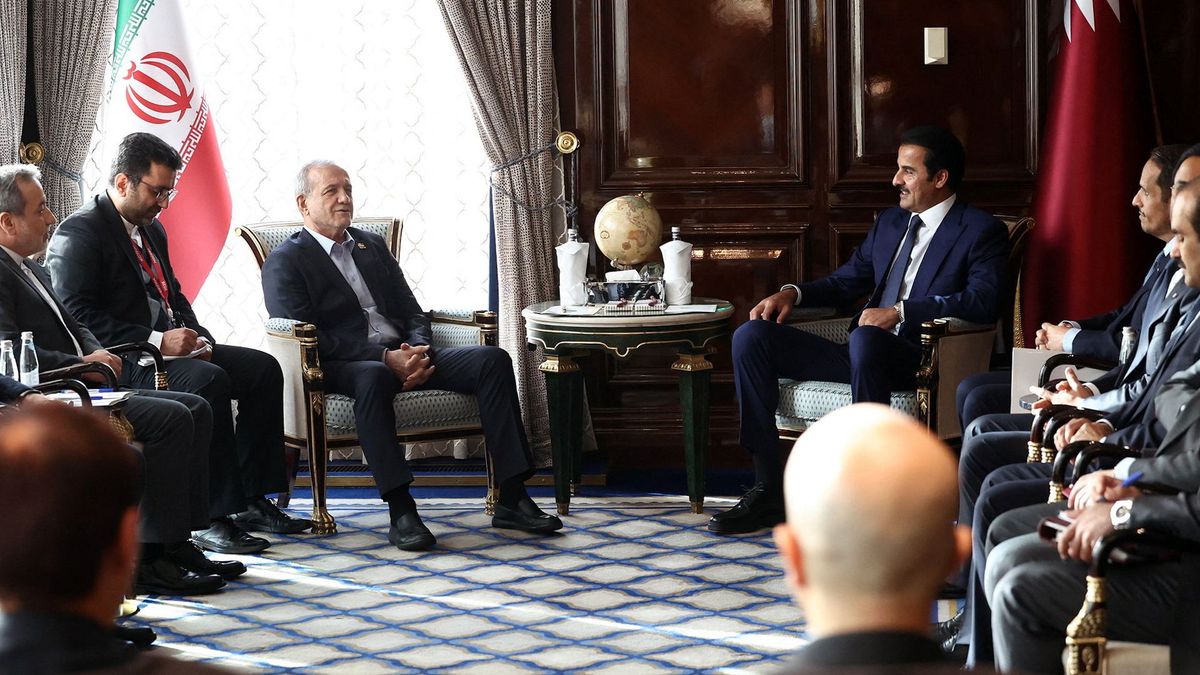
Iranian President Masoud Pezeshkian and Qatari Emir Sheikh Tamim bin Hamad al Thani met on the sidelines of the Gas Exporting Countries Forum (GECF) in Moscow on 27 October 2026. The two leaders exchanged remarks about deepening energy cooperation and strengthening bilateral ties, according to Iranian state media. The meeting was brief but highly publicized, underscoring Moscow’s role as a neutral ground for sanctioned and non‑aligned actors.
The encounter sits at the crossroads of three overlapping incentive structures.
Iran has been under layered U.S. and EU sanctions since 2018, limiting its ability to export oil and attract foreign investment. Energy remains the lifeline of its economy, and Tehran is desperate for partners who can provide technology, financing, and market access without demanding political concessions. By engaging Qatar, a country with a robust liquefied natural gas (LNG) sector and a reputation for navigating U.S. sanctions, Iran hopes to bypass traditional Western gatekeepers.
Qatar sits atop the world’s third‑largest proven natural gas reserves and has built a sovereign wealth fund that fuels its global ambitions. Yet Doha also relies heavily on security guarantees from the United States and maintains a delicate relationship with Saudi Arabia. Partnering with Iran offers Qatar a foothold in the Persian Gulf’s energy network, potentially lowering transportation costs for its LNG and expanding its influence beyond the Gulf Cooperation Council (GCC).
Since the invasion of Ukraine, Russia has been expelled from many Western financial systems, prompting it to seek new markets in Asia, the Middle East, and Africa. Hosting the GECF and facilitating high‑level meetings allows Moscow to portray itself as an indispensable hub for energy cooperation, thereby softening its diplomatic isolation. The forum also offers Russia a chance to sell its own gas surplus and to negotiate joint ventures that can offset lost European revenue.
While leaders trade diplomatic niceties, ordinary people feel the ripple effects.
Iran’s domestic energy grid suffers from chronic under‑investment, leading to frequent blackouts, especially in rural provinces. Any delay in securing foreign gas or technology prolongs these shortages, affecting schools, hospitals, and small businesses. The promised cooperation with Qatar could, in theory, bring modern LNG infrastructure, but the timeline is uncertain and contingent on sanction‑evasion mechanisms that may be fragile.
Qatar’s rapid infrastructure expansion relies on a labor force composed largely of South Asian migrants living in crowded camps. New joint projects with Iran could spur additional construction, intensifying existing labor‑rights concerns such as low wages, limited mobility, and inadequate health safeguards. The benefits of higher national revenue rarely trickle down to these workers.
Moscow’s push to become an energy broker brings increased traffic through its transport corridors, raising environmental and health risks for communities near pipelines and processing plants. Moreover, the Russian economy’s growing dependence on energy exports makes its citizens vulnerable to price volatility and potential retaliatory sanctions.
Official statements highlight mutual benefit, yet several layers remain obscured.
The Kremlin frames the GECF as a platform for “energy security,” but it also uses the forum to legitimize its own gas exports to Europe via the TurkStream and to Asian markets via the Power of Siberia pipelines. By positioning itself as a neutral facilitator, Russia downplays the fact that any Iran‑Qatar deal will likely involve Russian financing, technology transfer, or transit routes that deepen Moscow’s leverage over both partners.
Doha publicly emphasizes its commitment to a “balanced foreign policy,” yet it quietly reassures the United States that its engagement with Iran will not undermine the Gulf‑wide security architecture. The Emir’s remarks omitted any reference to the ongoing maritime disputes in the Strait of Hormuz, where Iranian naval activity could threaten Qatari shipping.
Iranian state media portrayed the meeting as a triumph of “resistance against sanctions,” but it omitted discussion of internal dissent over economic hardship. Protestors in Tehran have repeatedly demanded better electricity supply and job creation; the government’s focus on external partnerships serves to divert attention from these domestic pressures.
The next months will reveal whether the diplomatic choreography translates into concrete projects.
- Pipeline and LNG contracts: Look for announcements of joint feasibility studies, especially concerning a potential Iran‑Qatar pipeline that could route Iranian gas to Qatari LNG plants.
- Sanctions response: Monitor U.S. Treasury statements for any new secondary sanctions targeting entities that facilitate Iran‑Qatar energy deals.
- Russian financing: Track Russian state banks’ involvement in any financing agreements, as this will indicate how deep Moscow’s financial exposure becomes.
- Regional security postures: Observe any shifts in GCC military drills or U.S. naval deployments in the Gulf, which could signal reactions to a perceived Iran‑Qatar alignment.
- Domestic unrest: Watch Iranian public protests and Qatari labor‑rights reports for early signs that the promised economic benefits are not reaching the ground level.
By keeping an eye on these indicators, readers can gauge whether the high‑level handshake in Moscow will reshape energy markets—or remain a symbolic gesture that leaves ordinary citizens bearing the real costs.
The leaders aim to explore joint gas projects, secure financing, and strengthen political ties while using Russia as a neutral platform to bypass Western sanctions.
In Iran, delayed energy investments could prolong power outages; in Qatar, new projects may increase demand for migrant labor, often under poor working conditions.
Russia provides a diplomatic venue, potential financing, and transit routes, seeking to re‑anchor its energy export market after Western isolation.
Source referenced: ALJAZEERA
This brief was synthesized by our Editorial Engine and reviewed by The Ground Narrative team.