TRENDING

Tuesday, 27 October 2026
----------------------
16 Jumada Al-Awwal 1448 AH
China is strategically establishing electric vehicle manufacturing hubs in Morocco, leveraging the North African nation's proximity and trade agreements to bypass European Union tariffs. This move highlights a sophisticated evolution in China's industrial policy, blending state-backed infrastructure with private sector investment.
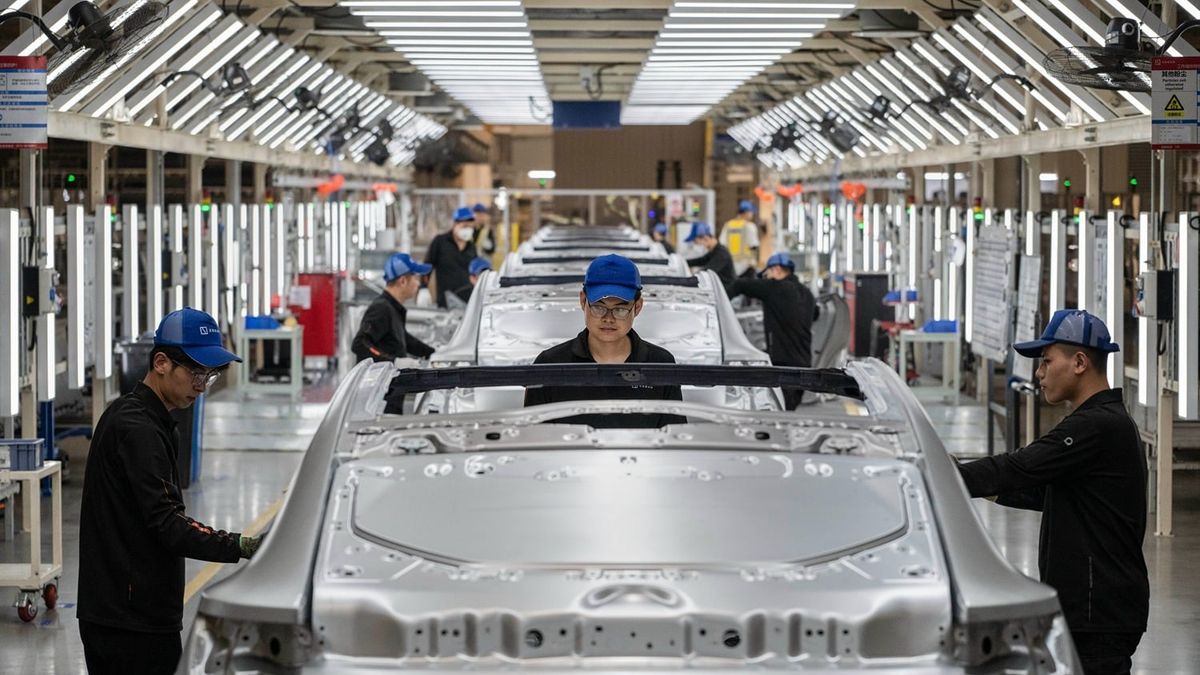
China is systematically developing a significant electric vehicle (EV) manufacturing and supply chain presence in Morocco. This strategic pivot is designed to circumvent the European Union's escalating tariffs on Chinese-made EVs, which aim to protect Europe's domestic auto industry. By establishing production facilities in Morocco, Chinese companies can leverage the country's trade agreements with the EU, allowing their products to enter the European market duty-free, provided they meet specific rules of origin. This initiative is not merely about relocating assembly lines; it involves substantial Chinese state-backed investment in Moroccan infrastructure and critical resources, creating an integrated ecosystem for EV component and eventually full vehicle production.
This development is a clear demonstration of China's evolving and highly coordinated overseas industrial policy, moving beyond simple subsidies to a more comprehensive, long-term strategy. At its core, this approach involves a sophisticated interplay between state-owned enterprises (SOEs) and private companies, underpinned by diplomatic maneuvering.
For years, Chinese SOEs have been instrumental in laying the foundational infrastructure in Morocco. This includes massive projects like bridges, highways, and smart cities, often initiated under the umbrella of the Belt and Road Initiative (BRI), which Morocco officially joined in 2017. Crucially, these investments extend to securing access to vital natural resources. For instance, Morocco holds some of the world's largest reserves of phosphate, a critical component for EV battery production. Chinese SOEs have collaborated on chemical processing units, directly linking resource extraction to the burgeoning EV supply chain. This state-led groundwork de-risks initial investments for private companies, providing them with reliable infrastructure and access to raw materials.
Once the strategic environment is established by SOEs and diplomatic ties, private Chinese companies move in, bringing investment, production capacity, and industry-specific expertise. Examples include global battery giant BTR New Material Group, tire manufacturers Sentury Tire and Guizhou Tyre, and major battery producers like Gotion. These firms are setting up production bases in industrial zones such as Tanger Tech City, strategically located near Tanger Med, Africa's largest container port. This coordinated model allows China to build vertically integrated supply chains abroad, from raw materials to components, and eventually, potentially, to full vehicle assembly.
Rabat's enthusiastic embrace of Chinese investment is driven by its own national interests. Morocco seeks to expand its domestic manufacturing capabilities, diversify its economy, and position itself as a leading industrial hub in Africa. Chinese investment, exceeding $10 billion concentrated in the EV and energy sectors, promises to generate much-needed jobs in a country where unemployment, especially among urban youth, is alarmingly high. Beyond economic incentives, Morocco has also secured a significant diplomatic victory. Beijing has subtly but decisively shifted its stance on the contentious Western Sahara issue, moving from decades of neutrality or implicit support for self-determination to implicitly backing Rabat's claims for autonomy under Moroccan sovereignty. This diplomatic quid pro quo underscores the transactional nature of global power dynamics, where economic access is traded for political support.
The European Union's imposition of tariffs, up to 35 percent on Chinese-made EVs, was intended to shield its domestic auto industry from what it perceives as unfairly subsidized competition. However, this measure has inadvertently incentivized China to innovate its industrial strategy. By manufacturing in Morocco, Chinese firms can exploit the EU's rules of origin, which allow products assembled in Morocco to enter the European market duty-free if foreign parts constitute less than 45 percent of the finished vehicle's ex-works price. This loophole effectively transforms Morocco into a backdoor, allowing Chinese EVs, or their critical components, to bypass the very trade barriers designed to keep them out. This highlights a fundamental challenge for traditional trade protectionism in an era of globally integrated, yet strategically fluid, supply chains.
While this strategic maneuvering unfolds on the global stage, its consequences ripple down to ordinary citizens, impacting livelihoods, political aspirations, and regional stability.
The influx of lower-cost Chinese EVs, even if routed through Morocco, places immense pressure on Europe's established automotive industry. This competition threatens the jobs of hundreds of thousands of workers in traditional car manufacturing hubs across Germany, France, Italy, and other EU member states. Factories may face reduced production, layoffs, or even closures as they struggle to compete with a more cost-effective and agile supply chain. The human cost here is not just about job losses, but the erosion of industrial heritage and the economic stability of entire communities built around the auto sector.
For Morocco, the promise of Chinese investment is primarily framed around job creation. Officials claim a single factory could generate thousands of local jobs, including high-skilled positions. This is a crucial appeal in a country grappling with a decade-long unemployment rate hovering around 10 percent, and a staggering 47 percent youth unemployment in urban areas. However, the quality and sustainability of these jobs remain a question. Are they primarily assembly-line roles, or do they involve significant skills transfer and R&D? Furthermore, increased economic reliance on a single major power like China could create a different kind of dependency, potentially limiting Morocco's future policy options and economic autonomy. The long-term human cost could be a workforce tied to a foreign-controlled industrial base, vulnerable to global shifts in Chinese industrial policy.
Perhaps the most direct and profound human cost of China's diplomatic shift lies with the Sahrawi people of Western Sahara. For decades, their right to self-determination has been a central tenet of international law and UN resolutions. China's implicit backing of Morocco's autonomy plan, marked by its abstention on the latest UN resolution, directly undermines these aspirations. This geopolitical trade-off—economic investment for political support—comes at the expense of a population seeking to determine its own future. This move also exacerbates tensions between Morocco and its regional rival, Algeria, which has historically supported the Polisario Front and the Sahrawi cause. Increased regional instability, fueled by a major power's intervention, carries the risk of renewed conflict and further human suffering.
Behind the official statements and economic figures, several critical dimensions of this unfolding China-Morocco-Europe dynamic are often downplayed or omitted, revealing deeper strategic implications.
Western narratives frequently focus on Chinese state subsidies as the primary driver of its export competitiveness. While subsidies certainly play a role, this explanation is too narrow. The untold story is the sheer scale and coordination of Beijing's industrial policy. It's a multi-decade strategy that integrates state-owned enterprises for infrastructure and resource acquisition, diplomatic leverage for political alignment, and then private capital for production. This holistic approach creates an industrial ecosystem that is incredibly difficult for competitors to match, as it leverages national power in a way that goes far beyond traditional market mechanisms. It's a blueprint for global industrial dominance, not just a response to tariffs.
Morocco's embrace of China is not merely an economic decision; it is a calculated geopolitical gamble. Rabat is securing the backing of a rising global superpower on its most sensitive and critical national interest: the Western Sahara dispute. This represents a significant diplomatic victory for Morocco, providing it with leverage against Algeria and potentially solidifying its claims on the territory. The untold story is that Morocco is trading economic access and a role in global supply chains for crucial political support, fundamentally reshaping its foreign policy alignments and potentially its long-term relationship with traditional partners in Europe and the United States.
The EU's tariffs were intended as a protective measure, but this situation exposes the inherent limitations of such policies in a deeply interconnected global economy. Tariffs often do not stop trade; they merely redirect it, incentivizing companies to find new routes and production locations. The untold story is that protectionist measures, without a complementary industrial strategy to boost domestic competitiveness, can inadvertently accelerate the very global supply chain shifts they aim to prevent. This forces policymakers to confront a more complex reality: that economic sovereignty in the 21st century requires more than just border taxes.
While electric vehicles are championed as a solution to climate change, the untold story often ignores the environmental footprint of their entire supply chain. The extraction of raw materials like phosphate for batteries, the energy sources used in manufacturing (which may not be entirely renewable in Morocco), and the logistics of global shipping all contribute to environmental impact. While the end product is cleaner, the process of getting there is not without its own ecological costs, which are rarely highlighted by governments or corporations eager to promote the
Source referenced: FOREIGNPOLICY
This brief was synthesized by our Editorial Engine and reviewed by The Ground Narrative team.


