TRENDING

Tuesday, 27 October 2026
----------------------
16 Jumada Al-Awwal 1448 AH
China's recent condolences for former Japanese Prime Minister Yasuo Fukuda, highlighting his 'correct view of history,' serve as a potent diplomatic message. This rare praise underscores Beijing's ongoing leverage of historical memory in its complex relationship with Tokyo.
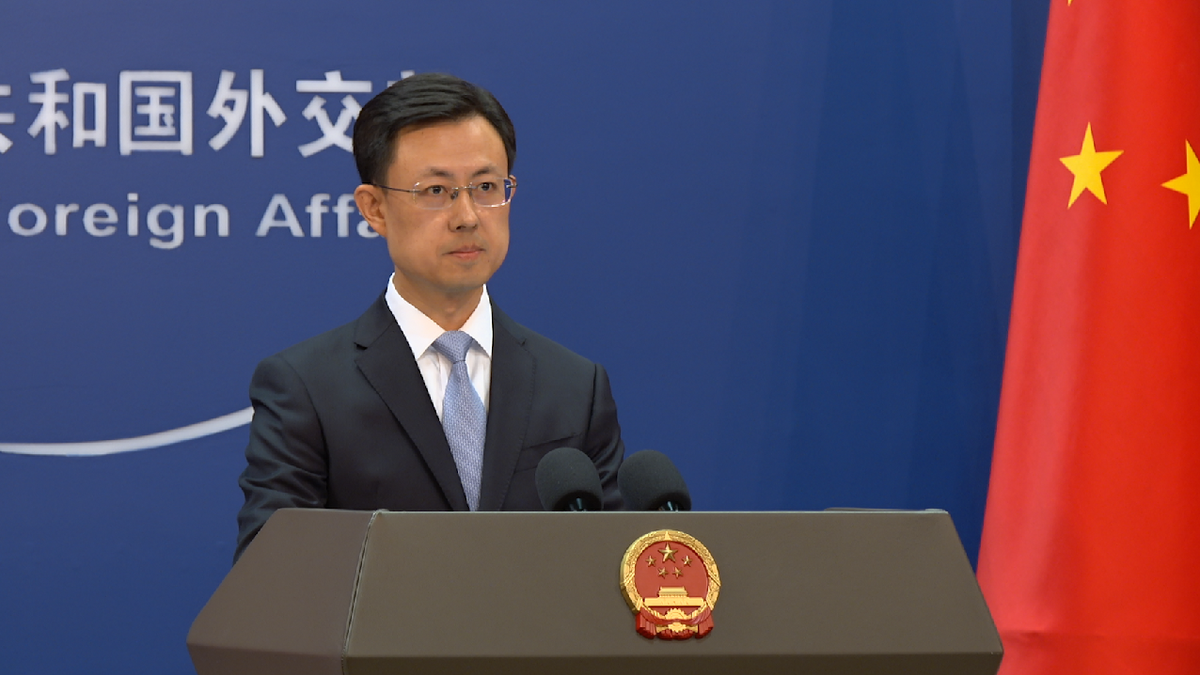
On October 26, 2026, the Chinese Foreign Ministry spokesperson Guo Jiakun extended deep condolences over the passing of former Japanese Prime Minister Yasuo Fukuda. In an official statement, Beijing notably praised Fukuda for his long-standing commitment to China-Japan friendship and, critically, for upholding a “correct view of history.” This diplomatic gesture, highlighting a specific aspect of a former leader's legacy, carries significant weight in the often-strained relationship between the two East Asian powers.
The seemingly simple act of mourning a foreign leader’s passing is, in the context of China-Japan relations, a carefully calibrated diplomatic maneuver. For Beijing, the phrase “correct view of history” is a powerful and frequently deployed tool of statecraft, directly referencing Japan’s wartime aggression during the Second Sino-Japanese War and World War II. This includes atrocities such as the Nanjing Massacre and the activities of Unit 731, events that remain deeply etched in the collective memory of the Chinese people.
Yasuo Fukuda, who served as Japan’s Prime Minister from 2007 to 2008, represented a more conciliatory approach to China than many of his contemporaries. Crucially, he avoided visits to the controversial Yasukuni Shrine, which honors Japan's war dead, including convicted war criminals, and emphasized the importance of historical understanding and reconciliation. His father, Takeo Fukuda, also played a pivotal role in normalizing relations by signing the Treaty of Peace and Friendship between Japan and China in 1978. This lineage and consistent stance on historical issues set Yasuo Fukuda apart from more nationalistic Japanese leaders.
China’s eulogy is therefore a strategic signal. By praising Fukuda, Beijing is implicitly drawing a stark contrast with other Japanese leaders, particularly those associated with historical revisionism or visits to Yasukuni Shrine. It serves as a public endorsement of a specific type of Japanese leadership – one that aligns with China’s historical narrative – and an indirect critique of those who do not. This leverages the moral high ground derived from historical grievances to exert diplomatic pressure on current and future Japanese governments.
The broader power dynamics involve Japan’s delicate balancing act between its security alliance with the United States and its deep economic interdependence with China. While Japan increasingly aligns with the US on security matters, particularly concerning Taiwan and the South China Sea, its economy remains heavily reliant on China as a trading partner. Beijing’s use of historical memory is a way to complicate Tokyo’s strategic choices, reminding Japan of the potential costs of perceived antagonism, both diplomatically and economically. The
Source referenced: CGTN
This brief was synthesized by our Editorial Engine and reviewed by The Ground Narrative team.


