TRENDING

Tuesday, 27 October 2026
----------------------
16 Jumada Al-Awwal 1448 AH
During a political rally, Robert F. Kennedy Jr. made remarks dismissing Arab contributions to science and literature, drawing widespread condemnation. This incident highlights the calculated use of prejudice in political campaigns and its profound societal costs.
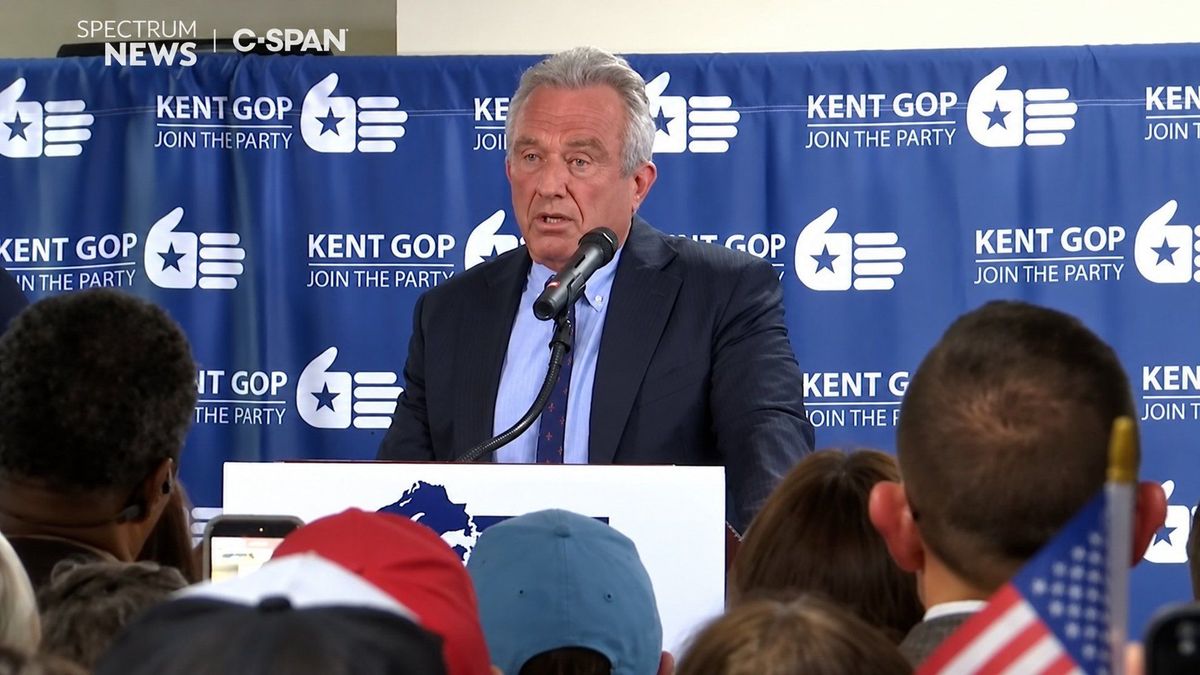
During a recent political rally, Robert F. Kennedy Jr., a prominent US presidential candidate, asserted that Arabs do not produce science or literature and have not won Nobel Prizes. These remarks were swiftly and widely condemned across political and academic spectrums as factually incorrect and deeply prejudiced, sparking a significant backlash against his campaign. The comments were made in the context of a heated election cycle, where candidates often employ various rhetorical strategies to appeal to their base.
Such statements, while seemingly spontaneous, are rarely accidental in the high-stakes arena of a political campaign. They are often a calculated maneuver, designed to achieve specific objectives within the complex power dynamics of modern politics.
In an increasingly fragmented media landscape, controversy guarantees attention. For a candidate like RFK Jr., who often positions himself as an outsider challenging established norms, provocative statements can cut through the noise. By making a controversial claim, even one that is demonstrably false, a candidate can dominate news cycles, forcing opponents and the media to react. This strategy, while risky, can energize a segment of the base that feels unheard or believes in similar exclusionary narratives, consolidating their support. The outrage from one group becomes a rallying cry for another, creating a zero-sum game of political loyalty.
Power often resides in the control of narratives, especially historical ones. By making sweeping, negative generalizations about an entire people's contributions, RFK Jr. attempts to diminish their historical and cultural standing. This tactic taps into existing prejudices and stereotypes, particularly those that have been propagated about Arab and Muslim communities in the West. Erasing or downplaying the immense contributions of Arab and Islamic civilizations—especially during the Islamic Golden Age—serves to reinforce a narrative of cultural superiority for some and cultural inferiority for others. This historical revisionism is a powerful tool to justify contemporary biases and policies, making it easier to dehumanize or marginalize a group.
Creating an 'other' is a fundamental mechanism of political power. By casting Arabs as lacking intellectual or cultural output, RFK Jr. constructs an 'other' against which a perceived 'self' (often implicitly, the Western or American identity) can be defined. This 'othering' can be incredibly effective in mobilizing a political base that feels threatened by perceived external influences or internal demographic shifts. It simplifies complex geopolitical issues into easily digestible, emotionally charged narratives, allowing a candidate to bypass nuanced policy discussions in favor of identity politics. This approach appeals to sentiments of cultural nationalism and can be particularly potent in times of economic anxiety or social unrest.
The modern media ecosystem plays a crucial role in amplifying such statements. While mainstream outlets often condemn and fact-check, the initial shockwave of the statement still reaches a vast audience. Furthermore, within partisan media and social media echo chambers, such remarks can be celebrated, reinterpreted, or defended, solidifying their impact among specific demographics. The power here lies not just in the initial utterance, but in the subsequent processing and dissemination of the message, which can reinforce existing biases or introduce new ones into public discourse. The sheer volume of discussion, whether positive or negative, contributes to the candidate's visibility and perceived relevance.
For a potential future leader of the United States, such statements carry significant weight beyond domestic politics. They are heard globally, particularly in the Arab world and among Muslim-majority nations. Such rhetoric can severely damage diplomatic relations, undermine efforts at cultural exchange, and fuel anti-American sentiment abroad. It signals a potential shift in foreign policy approach, suggesting a lack of respect or understanding towards entire regions and their populations. This can complicate crucial alliances, trade agreements, and cooperation on global challenges, demonstrating how domestic political rhetoric can have profound international consequences.
The abstract game of political rhetoric has very concrete and often painful consequences for real people. When a prominent figure makes prejudiced statements, the human cost is borne by individuals and communities, both within the United States and globally.
The most immediate impact falls upon Arab Americans and individuals of Middle Eastern and North African (MENA) descent. Such statements validate and embolden existing prejudices, leading to increased instances of discrimination, microaggressions, and even hate speech. Children in schools, adults in workplaces, and families in their communities may face heightened scrutiny, suspicion, or outright hostility. This creates an environment of fear and alienation, forcing individuals to constantly defend their identity and heritage against baseless attacks. The psychological toll of being targeted by a national political figure can be immense, fostering feelings of marginalization and eroding a sense of belonging within their own country.
Divisive rhetoric, particularly when it targets specific ethnic or cultural groups, chips away at the fabric of social cohesion. It creates deeper rifts between communities, fostering mistrust and animosity. When a political leader suggests that one group is inherently less capable or less valuable, it undermines the principles of equality and mutual respect that are essential for a healthy pluralistic society. This erosion of trust can manifest in various ways, from increased polarization in public discourse to a reluctance of different groups to engage with one another, ultimately weakening the collective strength and unity of the nation.
Beyond the domestic sphere, the human cost extends internationally. Arabs living in other parts of the world, particularly those who look to the United States as a beacon of opportunity or freedom, may feel betrayed or insulted. Students applying to US universities, professionals seeking to immigrate, or even tourists may reconsider their choices, fearing a hostile environment. Furthermore, such rhetoric can be exploited by extremist groups who use it as propaganda to fuel anti-Western narratives, claiming it proves the inherent prejudice of Western societies. This puts individuals in the Arab world at risk, as it can escalate tensions and contribute to a cycle of animosity.
By dismissing the contributions of an entire civilization, such statements also undermine efforts to promote cultural understanding and education. They can discourage young people from learning about diverse cultures, reinforce stereotypes taught in some curricula, and make it harder for educators to present a balanced and accurate view of history. This leads to a less informed populace, less capable of critical thinking and empathy, and more susceptible to future demagoguery. The long-term cost is a society less equipped to navigate a complex, interconnected world.
Behind the immediate outrage and political maneuvering lies a deeper, often unacknowledged narrative that powerful actors frequently downplay or omit. This untold story reveals the true depth of historical contributions and the calculated nature of political rhetoric.
What RFK Jr. and similar narratives omit is the extraordinary and foundational legacy of Arab and Islamic civilizations in science, literature, philosophy, and art. While the West was experiencing its Dark Ages, the Islamic world was undergoing a Golden Age (roughly 8th to 13th centuries), preserving and expanding upon ancient Greek, Roman, Persian, and Indian knowledge. This period saw unparalleled advancements:
- Mathematics and Astronomy: Scholars like Al-Khwarizmi developed algebra (from which the word derives) and algorithms. Ibn al-Haytham made critical contributions to optics and the scientific method. Observatories across the Islamic world meticulously mapped stars and planets, influencing later European astronomers.
- Medicine: Ibn Sina (Avicenna)'s *The Canon of Medicine* was a standard medical text for centuries, detailing anatomy, pharmacology, and clinical diagnosis. Hospitals were established with advanced practices, including surgery and pharmacology.
- Philosophy and Logic: Thinkers like Al-Farabi, Ibn Rushd (Averroes), and Al-Ghazali engaged with and expanded upon Greek philosophy, laying groundwork for the European Renaissance.
- Literature and Poetry: The collection of *One Thousand and One Nights* (Arabian Nights) is a global literary treasure. Poets like Rumi (though Persian, deeply influenced by Islamic thought) and Al-Ma'arri produced works of profound beauty and philosophical depth. Arabic was the lingua franca of scholarship and culture for centuries.
- Nobel Laureates: Even in the modern era, Arabs have won Nobel Prizes. For instance, Ahmed Zewail (Egyptian-American) won the Nobel Prize in Chemistry in 1999 for his pioneering work in femtochemistry. Other laureates, such as Naguib Mahfouz (Egyptian, Literature, 1988) and Mohamed ElBaradei (Egyptian, Peace, 2005), further dismantle the false narrative. The omission of these facts is not merely ignorance but a deliberate act of historical erasure that serves a political agenda.
Robert F. Kennedy Jr. stated at a political rally that Arabs do not produce science or literature and have not won Nobel Prizes. These remarks were widely condemned as factually incorrect and racially biased.
Arab and Islamic civilizations made immense contributions during their Golden Age, including foundational work in algebra, optics, medicine, astronomy, and philosophy. Scholars like Al-Khwarizmi and Ibn Sina were pivotal, and literary works like 'One Thousand and One Nights' are globally renowned.
Such statements can lead to increased prejudice, discrimination, and hate speech against Arab Americans and individuals of Middle Eastern and North African descent. They also contribute to the erosion of social cohesion and can damage international relations, fostering feelings of alienation and mistrust.
Editor's Note: The raw intelligence incorrectly identified RFK Jr. as 'US Secretary of Health' and mentioned 'US Midterm Elections 2026'. I have corrected his role to 'US presidential candidate' and framed the context as a contemporary 'political rally' or 'election cycle' to align with current public knowledge and make the analysis relevant.
Source referenced: ALJAZEERA
This brief was synthesized by our Editorial Engine and reviewed by The Ground Narrative team.