TRENDING

Tuesday, 27 October 2026
----------------------
16 Jumada Al-Awwal 1448 AH
China's recent call for India to work towards border peace comes amidst persistent allegations of incursions along their disputed Himalayan frontier. This analysis delves into the underlying power struggles and the profound human impact of the protracted standoff.
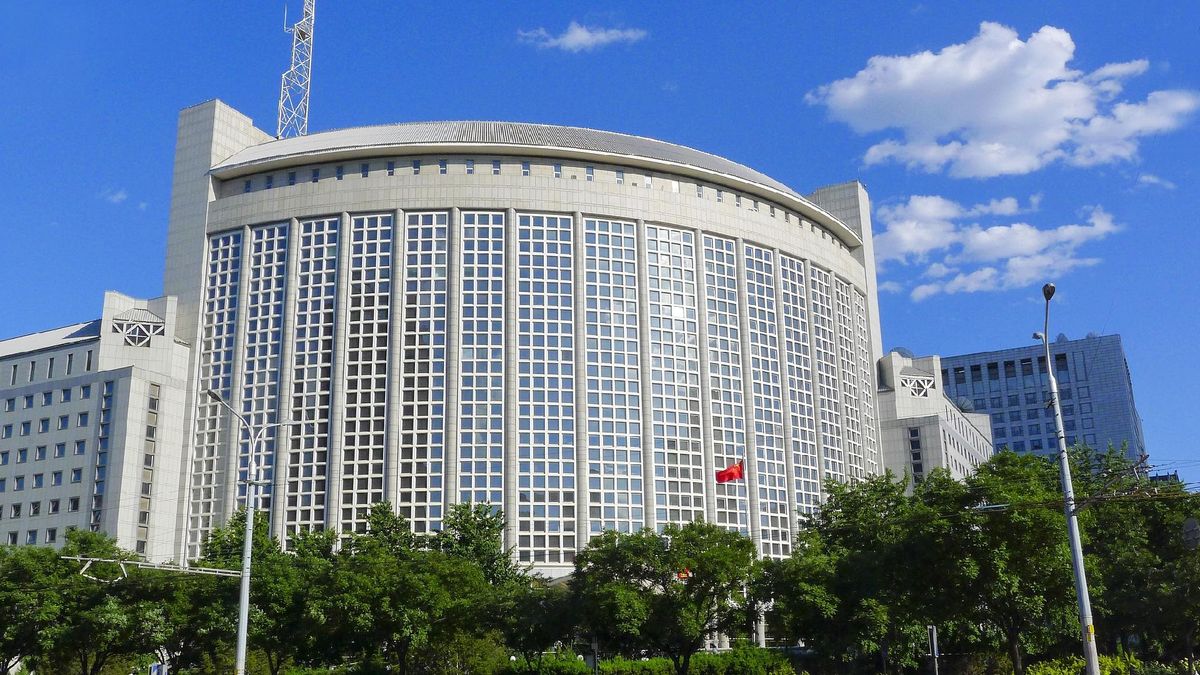
China's Foreign Ministry spokesperson, Guo Jiakun, recently stated that Beijing strictly adheres to existing agreements with India and conducts routine border patrols to safeguard its territorial sovereignty and maintain stability. These remarks were made in response to Indian allegations that Chinese forces had disturbed peace along the shared border. Guo expressed China's hope that India would work in the same direction to jointly implement common understandings and ensure tranquility in the disputed Himalayan regions through concrete actions.
The India-China border dispute is not merely a disagreement over lines on a map; it is a complex interplay of historical grievances, strategic imperatives, and domestic political pressures. Both nuclear-armed giants perceive the Himalayan frontier as vital to their national security and regional influence, leading to a perpetual state of low-intensity confrontation and an arms race in some of the world's most inhospitable terrain.
For China, securing its western flank, particularly the Tibet Autonomous Region, is paramount. The disputed Aksai Chin region, claimed by India but controlled by China, provides a critical overland link between Tibet and Xinjiang, two strategically sensitive regions. China's extensive infrastructure development along the Line of Actual Control (LAC)—its de facto border with India—including roads, railways, and airfields, is designed to enhance its logistical capabilities and military readiness. This build-up is often viewed by India as an attempt to alter the status quo, pushing the LAC further into Indian-claimed territory through what some analysts call 'salami-slicing' tactics. Domestically, the Chinese Communist Party leverages nationalistic sentiment around territorial integrity to bolster its legitimacy, making any perceived concession on the border politically costly.
India, on the other hand, views the LAC as its sovereign territory and any Chinese incursion as a direct challenge to its national pride and security. The Himalayan frontier, particularly regions like Ladakh and Arunachal Pradesh, holds deep cultural and historical significance for India. From a strategic perspective, India sees China's assertiveness as an attempt to encircle it and limit its rise as a regional power. New Delhi has responded with its own accelerated infrastructure development, troop deployments, and strategic partnerships, notably with the United States and other Quad members. For Prime Minister Narendra Modi's government, defending India's territorial claims is a cornerstone of its nationalist platform, making any perceived weakness on the border a significant political liability. The memory of the 1962 Sino-Indian War, which India lost, continues to shape strategic thinking and public sentiment, fueling a determination to prevent any repeat.
This dynamic creates a feedback loop: China's infrastructure build-up and patrols are seen by India as aggressive, prompting India to respond in kind, which China then interprets as provocative. Both sides claim to be acting defensively, adhering to agreements, and seeking peace, yet their actions on the ground often contradict these diplomatic assurances. The lack of a clearly demarcated border, coupled with differing perceptions of the LAC, provides fertile ground for frequent standoffs, minor skirmishes, and a constant state of tension that can quickly escalate, as seen in the Galwan Valley clash of 2020. The power struggle is not just about land; it is about regional hegemony, national narratives, and the domestic political survival of powerful leaders.
While diplomatic statements focus on national sovereignty and strategic stability, the real burden of the India-China border dispute falls on ordinary people. From soldiers enduring extreme conditions to remote communities living under constant threat, the human cost is profound and often overlooked.
Thousands of Indian and Chinese soldiers are deployed year-round in some of the world's highest and coldest regions, including the Himalayan peaks reaching over 15,000 feet. These soldiers face not only the threat of direct confrontation but also extreme weather conditions, including blizzards, avalanches, and temperatures plummeting to -40 degrees Celsius. Frostbite, altitude sickness, and mental health challenges are common. The Galwan Valley incident, where soldiers died not from bullets but from hand-to-hand combat and exposure, starkly illustrated the brutal reality of this high-altitude standoff. Families on both sides live with the constant anxiety of losing loved ones in a conflict that rarely makes headlines outside of specific incidents.
Beyond the military, communities living near the LAC are directly impacted. Villages in Ladakh and Arunachal Pradesh on the Indian side, and those in Tibet on the Chinese side, often find their traditional grazing lands or access routes cut off by military infrastructure or restricted zones. Their livelihoods, often dependent on pastoralism or small-scale agriculture, are disrupted. The militarization of these regions also impacts their cultural heritage and traditional ways of life, as ancient pilgrimage routes or trade paths become militarized zones. The constant presence of troops, heavy machinery, and the threat of escalation create an environment of fear and uncertainty, hindering development and forcing some to relocate.
The economic cost extends beyond military spending. The persistent tension casts a long shadow over bilateral trade relations, which, despite the disputes, remain substantial. While both countries are major trading partners, the border friction often leads to calls for boycotts of Chinese goods in India and increased scrutiny of Chinese investments. This creates uncertainty for businesses and investors, potentially limiting economic growth and job creation in both nations. Furthermore, the diversion of significant national resources towards military build-up in the Himalayas means fewer funds are available for critical social programs, healthcare, education, or sustainable development initiatives that could benefit millions of citizens in both populous countries. The opportunity cost of this military rivalry is immense, impacting the long-term prosperity and well-being of their respective populations.
Official statements from Beijing and New Delhi consistently emphasize peace, stability, and adherence to agreements, yet what remains largely unsaid reveals a more complex and concerning reality. Both governments often downplay the true extent of the friction, the domestic political motivations driving their actions, and the significant risks of miscalculation inherent in such a volatile standoff.
While China speaks of
Source referenced: CGTN
This brief was synthesized by our Editorial Engine and reviewed by The Ground Narrative team.


