TRENDING

Saturday, 14 November 2026
----------------------
4 Jumada Al-Thani 1448 AH
Germany has doubled its defense budget in five years, positioning itself as the continent’s biggest military spender. The shift promises greater deterrence but also stirs anxiety across Europe and beyond.
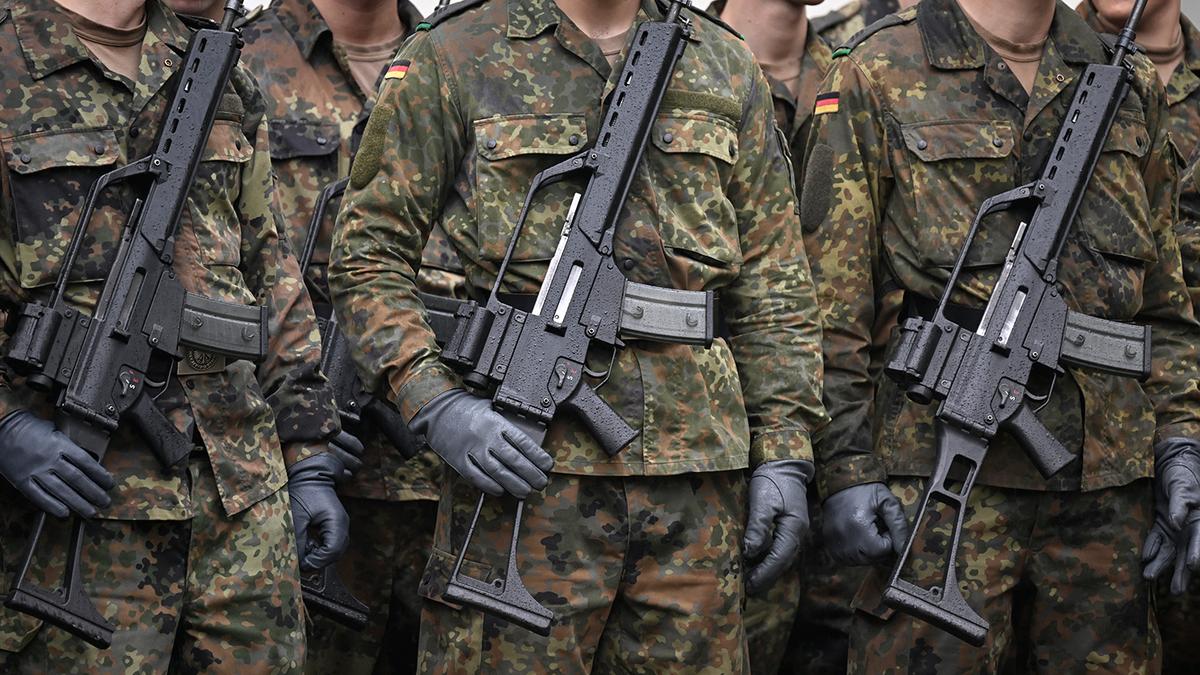
Germany announced a historic boost to its defense budget, pledging to spend 3.5% of GDP on military needs by 2035. The plan, outlined in Chancellor Friedrich Merz’s 2025 defence white paper, earmarks 649 billion euros for new equipment, personnel, and a European‑wide arms‑industry hub. By 2029, German annual defence outlays will eclipse the current combined spending of France and the United Kingdom. The move follows a sharp rise in public support—polls in late 2024 showed 73% of Germans favor higher security spending—and a perception that the United States will scale back its permanent troop presence in Europe.
For decades, the U.S. has shouldered the bulk of NATO’s forward defence, maintaining roughly 80,000 troops on the continent. Washington’s pivot toward the Indo‑Pacific, amplified by domestic political cycles, forces Europe to internalise the cost of deterrence. German rearmament is therefore less a unilateral ambition than a strategic response to a perceived vacuum.
Merz’s coalition leans heavily on the AfD’s threat to siphon votes unless the government appears tough on security. The defence surge satisfies a growing voter base that links national pride with a modernised Bundeswehr. At the same time, the government hopes to lock in a legacy of “Europeanising” the military effort, tying procurement to joint EU projects to dilute any single‑state dominance.
Germany’s defence industry, long dependent on export contracts, now receives a massive domestic order book. The plan calls for a Europe‑wide defence industrial base, promising jobs in Bavaria, Saxony, and the Ruhr while nudging smaller EU members toward deeper integration. The fiscal commitment also serves as a hedge against future U.S. budget cuts, ensuring that German firms retain a captive market for high‑tech weaponry.
A stronger German military reshapes NATO’s internal balance. France, historically the continent’s military counterweight, worries about a new “lead‑nation” that could dictate joint strategy. Eastern European states, still haunted by Russian aggression, see German firepower as a needed shield but fear that Berlin’s historical baggage may limit decisive action. The rearmament thus operates within a delicate web of alliance math, where each partner recalibrates its own posture.
The rapid expansion demands a surge in recruitment, training, and deployment. Young men and women from rural Brandenburg to industrial Cologne are being called to serve longer terms, often away from home. Families face increased uncertainty, with higher rates of relocation and the psychological strain of a more combat‑ready force.
Regions that host new bases—such as Münster and Leipzig—experience a construction boom, but also rising housing prices that push out long‑time residents. Small businesses that once catered to civilian needs must adapt to a military clientele, altering local economic ecosystems.
Anti‑militarist groups, notably the Peaceful Europe coalition, report a surge in police monitoring and legal challenges after protests against the defence bill. Journalists covering the Bundeswehr’s procurement contracts face heightened scrutiny, limiting public debate.
Poland and the Baltic states welcome a stronger German deterrent against Russia, yet they also worry about the potential for German forces to be stationed on their soil under NATO’s “enhanced forward presence.” Such deployments could make them targets in any future escalation, raising the stakes for civilian safety.
Official statements celebrate a “Europeanised” procurement process, but the fine print shows German firms gaining preferential access to EU funds. Smaller arms manufacturers in Czechia and Hungary risk marginalisation, potentially concentrating market power in a handful of German conglomerates.
While the government publicly distances itself from the far‑right, internal memos reveal that senior defence officials are monitoring AfD parliamentary moves to ensure the party does not capture key procurement committees. The risk is that a future coalition could place extremist sympathisers in charge of a powerful military apparatus.
The United States touts German rearmament as a relief, yet NATO’s collective financing formula still ties each member’s contribution to its GDP share. Germany’s jump to 3.5% will raise the alliance’s baseline, forcing other members—especially those with weaker economies—to stretch their own defence budgets, a fact rarely highlighted in diplomatic briefings.
Large‑scale weapons production carries hidden ecological costs: increased energy consumption, hazardous waste, and land use changes. Environmental NGOs note that the defence sector’s carbon footprint is often excluded from national climate reports, masking a growing source of emissions.
- Parliamentary oversight: Track the progress of the 2026 defence bill through the Bundestag, especially amendments that address joint EU procurement and AfD influence.
- U.S. troop levels: Monitor official statements from the Pentagon regarding the drawdown of American forces in Germany and the broader NATO posture.
- Neighbouring deployments: Watch for NATO decisions on forward‑stationing German units in Poland, the Baltic states, or Romania, which could signal a new front line.
- Industrial contracts: Follow award announcements for major projects like the Eurofighter‑type next‑generation fighter and the land‑system modernization, noting which firms secure the deals.
- Civil society response: Keep an eye on protests, legal challenges, and media coverage that may reveal growing domestic resistance or support.
By connecting budget numbers to the lived realities of soldiers, families, and neighboring states, the unfolding German rearmament story offers a clear lens on how Europe is rebalancing power in a world where the United States is looking eastward. The next few years will determine whether Berlin’s new military might becomes a unifying shield for the continent or a source of fresh friction.
Germany’s boost reflects a mix of NATO pressure, U.S. strategic pivot to the Indo‑Pacific, domestic political demands for security, and a desire to secure a leading role in a European defence industry.
Neighbouring states see both a stronger deterrent against Russia and the risk of becoming hosting grounds for German forces, which could make them targets in any future conflict and shift regional power dynamics.
Source referenced: FOREIGNPOLICY
This brief was synthesized by our Editorial Engine and reviewed by The Ground Narrative team.