TRENDING

Saturday, 14 November 2026
----------------------
4 Jumada Al-Thani 1448 AH
At COP31, China released a think‑tank report touting its ecological civilization. The article unpacks the power play, the hidden costs, and the narratives that stay out of the spotlight.
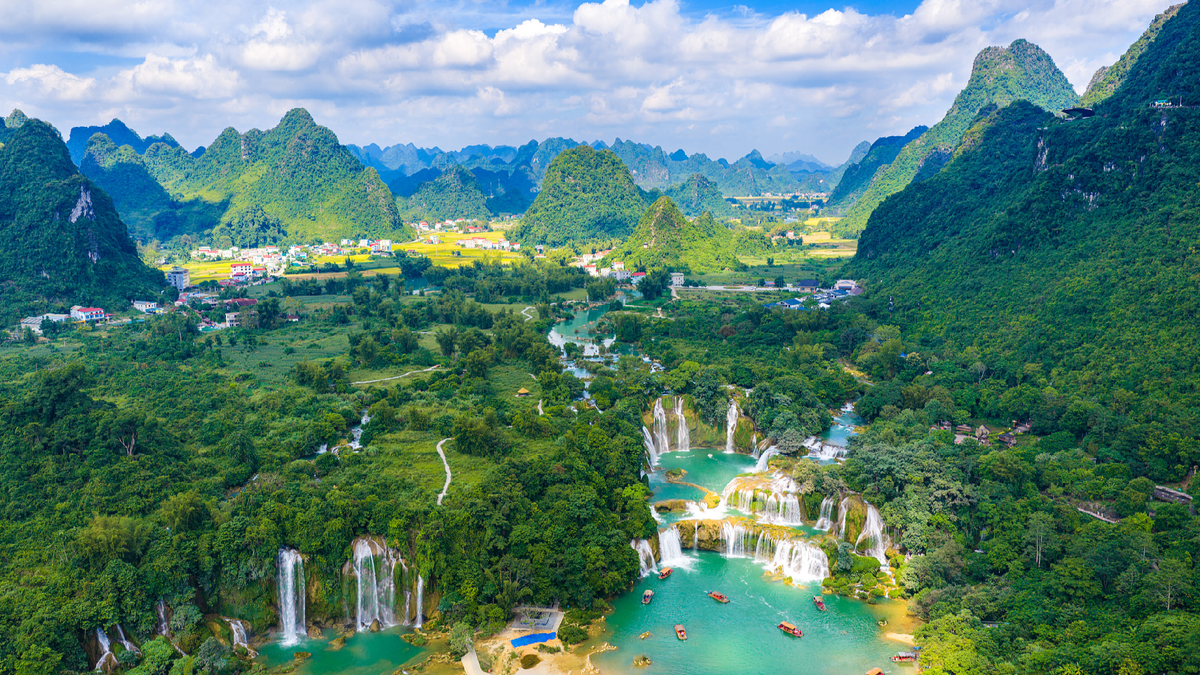
The English version of a think‑tank report titled *"Lucid Waters and Lush Mountains Are Invaluable Assets – China's Path to Green Development"* was launched at a side event in the China Pavilion during COP31 in Antalya. Compiled by the Research Center for Xi Jinping Thought on Ecological Civilization, Xinhua Institute and the Development Research Center of the National Forestry and Grassland Administration, the document presents China’s self‑portrait as a leader of the global green transition.
China’s green narrative serves several intertwined incentives. First, it reinforces domestic legitimacy for the Communist Party by linking economic growth to ecological stewardship, a shift from the polluting growth model that sparked public unrest in the 2010s. Second, the report positions Beijing as a standards‑setter in international climate negotiations, allowing it to shape rule‑making and capture technology markets. Third, by framing green development as a “global landscape,” China can justify overseas investments in renewable infrastructure, from solar farms in Africa to hydropower in Southeast Asia, under the banner of ecological cooperation. This creates a feedback loop: foreign capital flows into Chinese‑led projects, which in turn generate exportable expertise and patents, reinforcing China’s economic leverage while diluting Western influence in climate finance.
The push for reforestation and large‑scale ecological corridors often translates into land‑use restrictions for farmers in provinces such as Guangxi and Yunnan. While the report celebrates “lucid waters,” many households lose grazing land or face delayed harvests due to mandated tree planting quotas. Compensation schemes are uneven, and bureaucratic delays leave families without reliable income for months.
China’s transition away from coal and steel is accelerating, with plant closures announced in Hebei and Shanxi. Workers in these sectors, many of whom are nearing retirement, confront sudden unemployment. Retraining programs exist but are limited in scope, and the social safety net struggles to absorb the influx of displaced labor.
International firms that depend on Chinese rare‑earths or battery components must adapt to stricter environmental standards. While this may lower emissions, it also raises production costs, which are ultimately passed to consumers worldwide, especially in low‑income markets that cannot absorb higher prices for clean‑energy goods.
Official statements highlight “certainty” and “global leadership,” but they omit the friction between central directives and provincial implementation. Local officials, eager to meet quota targets, sometimes resort to illegal logging or forced relocations, a detail rarely mentioned in the polished English version.
Western green‑finance funds are attracted to Chinese projects touted as low‑risk and climate‑aligned. However, the report downplays the geopolitical leverage that accompanies capital flows: voting rights in joint ventures, technology transfer clauses, and the ability of Beijing to dictate project timelines in ways that serve broader Belt and Road objectives.
The report provides aggregate figures on forest cover and renewable capacity but lacks granular, independently verifiable data. International observers note discrepancies between satellite imagery and official numbers, suggesting that the narrative may be calibrated to project an image of rapid progress while masking slower, uneven implementation.
In the months ahead, monitor three key signals: (1) the rollout of pilot carbon‑trading schemes in the provinces highlighted in the report; (2) any revisions to the National Forestry and Grassland Administration’s compensation guidelines for displaced communities; and (3) the response of major climate finance institutions to China’s claim of “global certainty,” especially whether they demand third‑party audits of reported outcomes. These developments will reveal whether the green blueprint remains a diplomatic showcase or translates into tangible, equitable change on the ground.
The report says China is advancing an ecological civilization that balances economic growth with environmental protection, positioning the country as a global leader in the climate transition.
Rural farmers facing land‑use restrictions, workers in coal‑heavy regions confronting plant closures, and international firms adjusting to stricter supply‑chain standards all bear significant costs.
Independent satellite analyses have shown gaps between official forest‑cover figures and on‑the‑ground reality, suggesting the report may overstate progress to enhance diplomatic standing.
Editor's Note: Analysis based on publicly released report and secondary observations; on‑the‑ground verification remains limited.
Source referenced: CGTN
This brief was synthesized by our Editorial Engine and reviewed by The Ground Narrative team.


