TRENDING

Saturday, 14 November 2026
----------------------
4 Jumada Al-Thani 1448 AH
Afghanistan's Taliban government has completed a new road to the Chinese border through the remote Wakhan Corridor, hoping to unlock vital trade. However, China has kept its side of the border firmly closed, prioritizing security over economic connectivity.
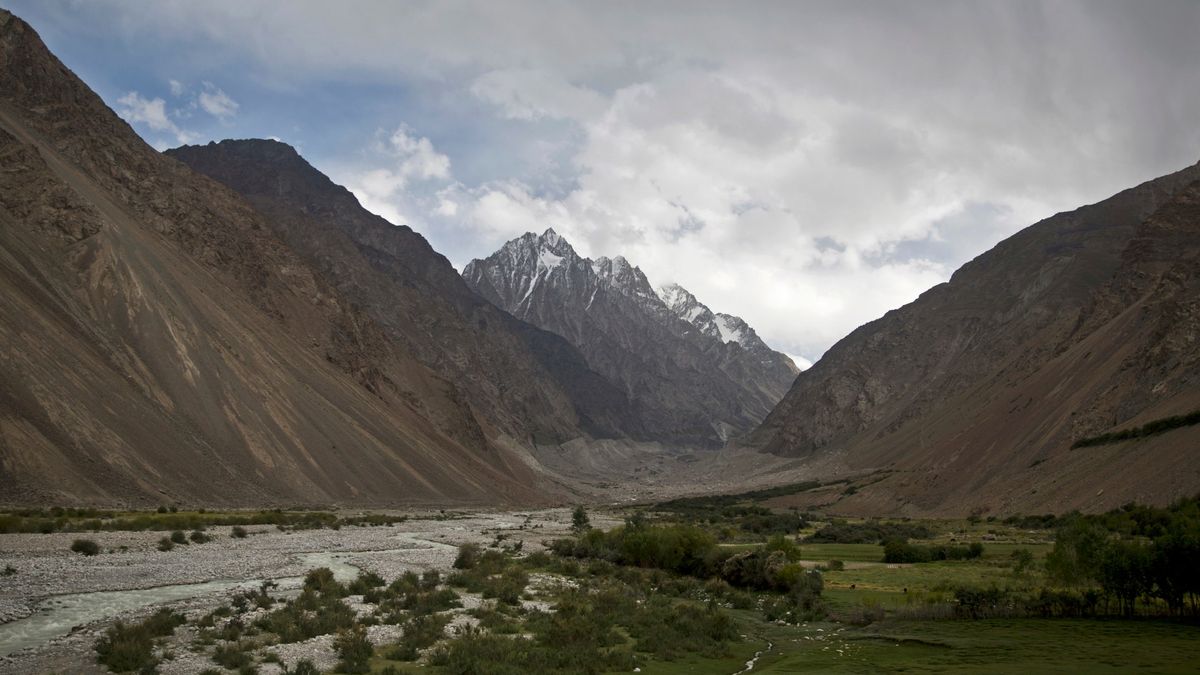
In early October, Afghanistan's Taliban-led government celebrated the completion of a gravel road extending through the remote Wakhan Corridor to the Chinese border at the Wakhjir Pass. This basic, unpaved track, built in two phases for an estimated $5.5 million from Afghan resources, represents a significant infrastructure effort by a government desperate for international connectivity. The road aims to link Afghanistan with China's vast markets and potentially integrate it into broader Central and East Asian trade networks. However, despite Kabul's ambitions, Beijing has not opened its side of the border, maintaining no customs facilities and offering no official comment on the road's opening. For now, this new Afghan trade route ends abruptly at a closed, snow-bound pass, highlighting a stark disconnect between Kabul's economic aspirations and Beijing's overriding security concerns.
The construction of the Wakhan Corridor road, and China's reticence to open its border, is a stark illustration of asymmetric power dynamics and competing national interests. Afghanistan, landlocked and economically crippled, wields little leverage. Its primary power lies in its geographic position, which, ironically, is also its greatest vulnerability. Dependent on often-volatile transit routes through Pakistan and Iran, Kabul views the Wakhan route as a lifeline—a way to diversify trade outlets, reduce dependence, and generate much-needed transit fees. For the Taliban, completing this road is also a crucial act of self-legitimation, demonstrating its capacity to govern and deliver on strategic projects, even if the ultimate goal remains elusive.
China, on the other hand, holds the decisive power. Its priorities in Afghanistan are overwhelmingly security-driven, centered on protecting its western border and preventing the infiltration of armed groups, particularly those it identifies as Uighur separatists, into its Xinjiang province. Beijing's cautious engagement with the Taliban government since 2021 reflects this calculus; while it seeks stability, it is unwilling to compromise its internal security for the sake of an unproven trade route. The Wakhan Corridor, historically a buffer zone created by the 19th-century Great Game between Britain and Russia, now serves a similar function for China, albeit one defined by modern security threats rather than colonial expansion. Beijing has consistently called for Kabul to crack down on the East Turkestan Islamic Movement (ETIM) and supports bilateral patrols to maintain border tranquility. This stance effectively subordinates Afghanistan's economic ambitions to China's internal security agenda.
Furthermore, China's broader regional strategy, embodied by the Belt and Road Initiative (BRI), is deeply intertwined with its security concerns. Major Chinese investments in Afghanistan, such as the Mes Aynak copper mine and oil exploration contracts, have stalled or faced difficulties, underscoring Beijing's reluctance to commit significant capital without robust security guarantees. While China advocates for extending the China-Pakistan Economic Corridor (CPEC) into Afghanistan, this preference for established, more secure routes through Pakistan further diminishes the immediate strategic value of the Wakhan road in Beijing's eyes. The former presence of US and foreign forces in Afghanistan also previously complicated the project, with Beijing viewing those circumstances as limiting development prospects. Now, with the US gone, China's direct engagement is possible, but its fundamental security concerns remain unchanged, demonstrating that the mechanics of power are less about who is present and more about who controls access and sets conditions.
The immediate human cost of this geopolitical stalemate falls squarely on the ordinary citizens of Afghanistan. For a nation grappling with severe economic hardship, international isolation, and a humanitarian crisis, the promise of a direct trade route to China represents a glimmer of hope for livelihoods, market access, and economic diversification. The continued closure of the Wakhjir Pass means that Afghan traders and communities, particularly those in the remote Badakhshan province, remain reliant on often-disrupted and expensive routes through Pakistan and Iran. These routes are vulnerable to political tensions and border closures, as seen in recent skirmishes between Afghan and Pakistani forces, and the broader regional instability affecting Iran's trade. The vision of Wakhan as a gateway to Chinese and Central Asian markets, and the potential for transit fees to boost the national economy, remains an unfulfilled dream, directly impacting the ability of Afghan families to feed themselves and rebuild their lives.
The people living within the Wakhan Corridor itself face unique challenges. This narrow, mountainous strip of land is one of the most isolated regions in Afghanistan, with communities living at altitudes of nearly 4,900 meters. For them, the new road, however basic, was supposed to be a tangible link to the outside world, potentially bringing goods, services, and opportunities. Instead, it ends at a physical barrier, reinforcing their isolation. The harsh climate, with the pass closed by snow for at least five months of the year, further underscores the difficulty of life here, where even sporadic crossings are rare. The lack of commercial traffic means that any potential economic uplift for these communities remains theoretical, perpetuating cycles of poverty and marginalization.
On the other side of the border, the human cost is borne by the Uighur population in China's Xinjiang province. Beijing's primary justification for keeping the Wakhan border closed is its concern over Uighur separatist groups. This security narrative, however, is deeply intertwined with China's broader policies in Xinjiang, which have been widely condemned by international bodies for arbitrary detention, surveillance, and cultural repression. While China frames these actions as counter-terrorism measures, human rights organizations and a 2022 UN report highlight the severe human rights violations against Uighurs and other Muslim minorities. Thus, the closed border at Wakhjir Pass is not merely a logistical decision; it is a physical manifestation of Beijing's internal security doctrine, which prioritizes control over its Uighur population, effectively using the instability in Afghanistan as a pretext to maintain a tight grip on Xinjiang and prevent any perceived external influences.
Governments and powerful actors often craft narratives that serve their immediate interests, downplaying inconvenient truths or omitting critical context. In the case of the Wakhan Corridor road, several such omissions and reframings are evident.
Beijing's official stance consistently emphasizes security concerns, particularly regarding Uighur groups, as the sole reason for not opening the Wakhan border. While genuine security concerns exist, this narrative downplays the immense economic potential that a direct overland route could offer, not just to Afghanistan but also to China's own western regions and its broader Belt and Road Initiative. By framing the issue almost exclusively through a security lens, Beijing avoids discussing the economic benefits it might forgo, or the strategic advantages of having a more stable, economically integrated neighbor. It also conveniently deflects from the international scrutiny of its policies in Xinjiang, using the
Afghanistan's Taliban government built the road to diversify its trade routes, reduce dependence on Pakistan and Iran, and connect to China's markets. It represents a strategic effort to boost the country's isolated economy and gain legitimacy.
China's primary concern is security, particularly preventing Uighur separatist groups from entering its Xinjiang province. Beijing demands effective security guarantees from the Taliban before considering opening the border to commercial traffic.
The Wakhan Corridor was established in the 19th century as a buffer zone between the Russian and British empires during the 'Great Game.' Its unusual shape was a result of an agreement to prevent direct contact between their territories.
Editor's Note: Analysis is based on interpreting the provided raw intelligence within a geopolitical framework, focusing on power dynamics and human impact as per TGN doctrine. Extrapolations are based on common geopolitical patterns.
Source referenced: ALJAZEERA
This brief was synthesized by our Editorial Engine and reviewed by The Ground Narrative team.