TRENDING

Saturday, 14 November 2026
----------------------
4 Jumada Al-Thani 1448 AH
Paraguay’s former president faces a new criminal charge tied to the collapse of the digital lender Ueno, a scandal that has left millions of citizens without access to their savings. The episode reveals how state‑linked finance, political survival and elite networks intersect, while ordinary Paraguayans bear the brunt.
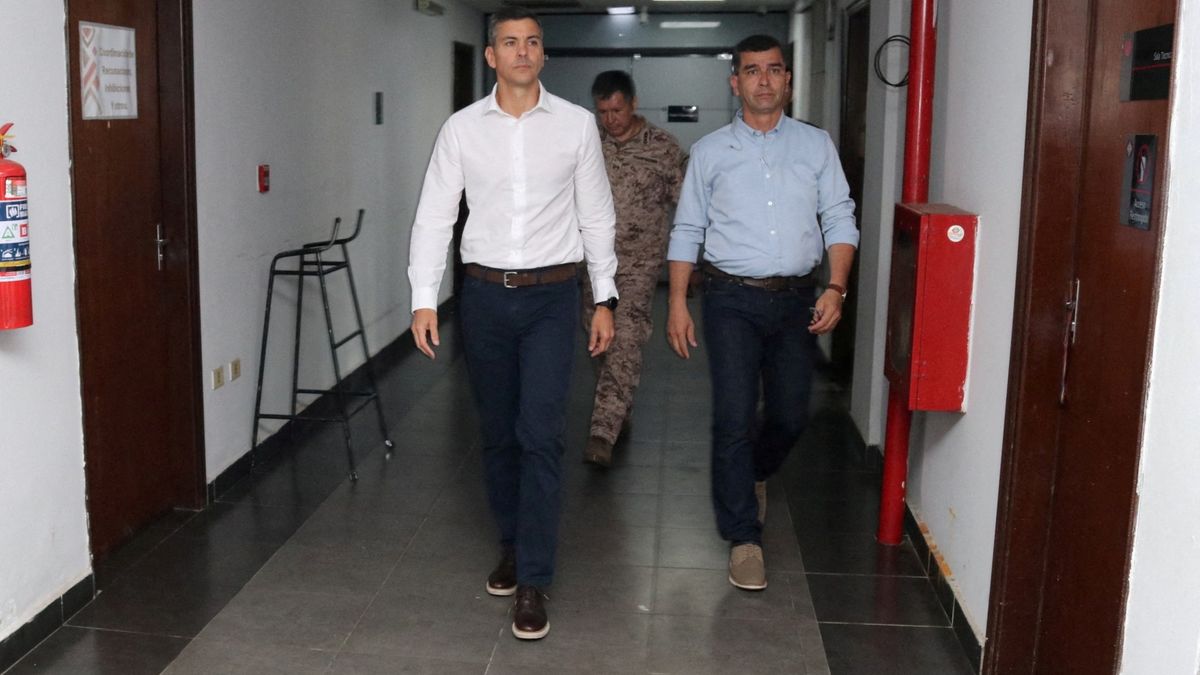
Paraguayan prosecutors announced on 13 November 2026 that former president Santiago Peña is now charged with criminal association for his alleged role in the collapse of Ueno, a digital bank that held more than $800 million in public funds. The charge follows earlier accusations of breach of trust and self‑dealing, and comes a week after Congress impeached Peña and placed him under house arrest. Investigators raided his Asunción residence, seized data, and said assets tied to the scandal have been located abroad, though the exact jurisdictions remain undisclosed. Three former central‑bank officials were also detained for allegedly ignoring warning signs. While the Central Bank has begun returning savings to 1.8 million depositors, many remain locked out, and protests continue across the country.
Peña’s ascent to the presidency in 2023 coincided with a wave of fintech enthusiasm in Paraguay. By positioning himself as a modernizer, he cultivated a network of technocratic allies and private‑sector investors eager to tap state resources. The rapid transformation of Ueno from a startup into a state‑linked lender created a feedback loop: government deposits boosted the bank’s balance sheet, while the bank’s growth reinforced Peña’s narrative of economic progress. When early warnings about risky lending practices surfaced, the political calculus shifted. Removing a high‑profile, growth‑driven project could have been framed as a failure of Peña’s reform agenda, jeopardizing his fragile coalition.
Ueno’s holding company included a stake owned by Peña until 2025, blurring the line between public duty and private profit. Directing millions of government funds into the bank allowed a small circle of insiders to reap fees, interest spreads, and potential equity gains. The arrangement also provided a conduit for laundering or moving capital across borders, a point prosecutors hinted at by seeking cooperation from the United States, Luxembourg and Argentina. For the elite, the payoff outweighed the systemic risk, especially in a country where formal financial inclusion remains low and informal networks dominate.
The scandal exposed deep weaknesses in Paraguay’s regulatory architecture. The central bank’s delayed response and the fact that three senior officials were later arrested suggest either complicity or a lack of independent oversight. International rating agency Fitch placed the sovereign rating on watch, signaling that external lenders view the crisis as a credit‑risk catalyst. This external pressure adds another layer: foreign investors and multilateral lenders may now demand stricter governance reforms, which could threaten the patronage networks that have long underpinned Paraguayan politics.
More than 1.8 million Paraguayans deposited savings, pension contributions, and government‑disbursed funds in Ueno, attracted by the promise of higher digital returns. When the platform froze, many found themselves unable to pay rent, school fees, or medical bills. Rural communities, which rely heavily on remittances and lack alternative banking options, faced the sharpest shock. The protests that erupted in Asunción’s Plaza de los Héroes reflected not only anger at corruption but also desperation for basic financial stability.
State employees whose salaries were routed through Ueno experienced delayed payments, forcing some to take unpaid leave or seek informal loans at exorbitant rates. Retirees, many of whom depend on fixed pensions, saw their modest incomes evaporate, raising the risk of increased poverty among the elderly. The social safety net, already thin, was further strained as the government scrambled to allocate emergency funds.
The crisis eroded trust in digital financial services, a sector the government had championed as a pathway to modernize the economy. Small businesses that had begun accepting Ueno‑based payments now face transaction backlogs, threatening cash flow and employment. Moreover, the political turmoil—impeachment, house arrest, and mass protests—has heightened societal polarization, with supporters of Peña accusing the opposition of a politically motivated witch hunt, while critics demand accountability.
While Paraguayan officials publicly emphasize domestic responsibility, the involvement of the United States, Luxembourg and Argentina in tracing assets hints at a broader international interest. These jurisdictions are known hubs for offshore finance, and their cooperation could uncover a web of cross‑border capital flows that implicates foreign investors or even state‑linked entities seeking to diversify risk through Paraguayan fintech.
State‑aligned media have largely highlighted Peña’s alleged personal enrichment, framing the scandal as a singular moral failing. Independent outlets, however, have begun reporting on systemic issues: lax regulatory standards, the concentration of public funds in a single private entity, and the role of political patronage in shaping financial policy. The dominant narrative downplays how the crisis could reshape Paraguay’s fiscal autonomy and its susceptibility to external debt pressures.
The immediate fallout is visible, but a less discussed consequence is the chilling effect on future fintech innovation. Investors may now view Paraguay as a high‑risk environment, slowing the rollout of digital banking solutions that could have expanded financial inclusion. This slowdown benefits entrenched traditional banks and informal lenders, preserving the status quo that favors established power brokers.
- Legal proceedings: The outcome of Peña’s criminal association charge and the trials of the former central‑bank officials will signal whether Paraguay’s judiciary can act independently or will remain a tool for political retribution.
- Asset recovery: Tracking the frozen assets abroad will reveal the scale of cross‑border financial entanglement and test the effectiveness of international cooperation.
- Credit rating trajectory: Fitch’s final decision on Paraguay’s sovereign rating will affect borrowing costs, influencing the government’s ability to fund social programs and infrastructure.
- Public response: Continued protests or a shift toward civic disengagement will indicate how deeply the crisis has altered public trust in institutions.
- Policy reforms: Watch for legislative proposals aimed at tightening oversight of state‑linked financial institutions, as well as any attempts to revive digital banking under stricter safeguards.
By monitoring these threads, observers can gauge whether Paraguay will emerge with a more resilient financial architecture or retreat into a cycle of patronage and crisis.
Ueno grew rapidly by handling public funds and state pensions, but risky lending practices, inadequate regulatory oversight, and alleged self‑dealing by political elites led to a liquidity shortfall that froze the platform.
Prosecutors allege Peña directed government money to Ueno, concealed its financial troubles, and held a stake in the bank’s holding company, resulting in a new criminal association charge.
Paraguayan authorities have located assets abroad and are seeking cooperation from the United States, Luxembourg and Argentina to freeze and repatriate funds, though the exact amounts and jurisdictions remain unclear.
Editor's Note: Analysis based on publicly available reports and standard geopolitical assessment methods.
Source referenced: ALJAZEERA
This brief was synthesized by our Editorial Engine and reviewed by The Ground Narrative team.