TRENDING

Saturday, 14 November 2026
----------------------
4 Jumada Al-Thani 1448 AH
For decades, Lebanon has been a crucible where regional and global powers have clashed, leaving its citizens to bear the brunt of their ambitions. From the 1982 Israeli invasion to the 2006 war, the nation has served as a strategic stage for others' designs.
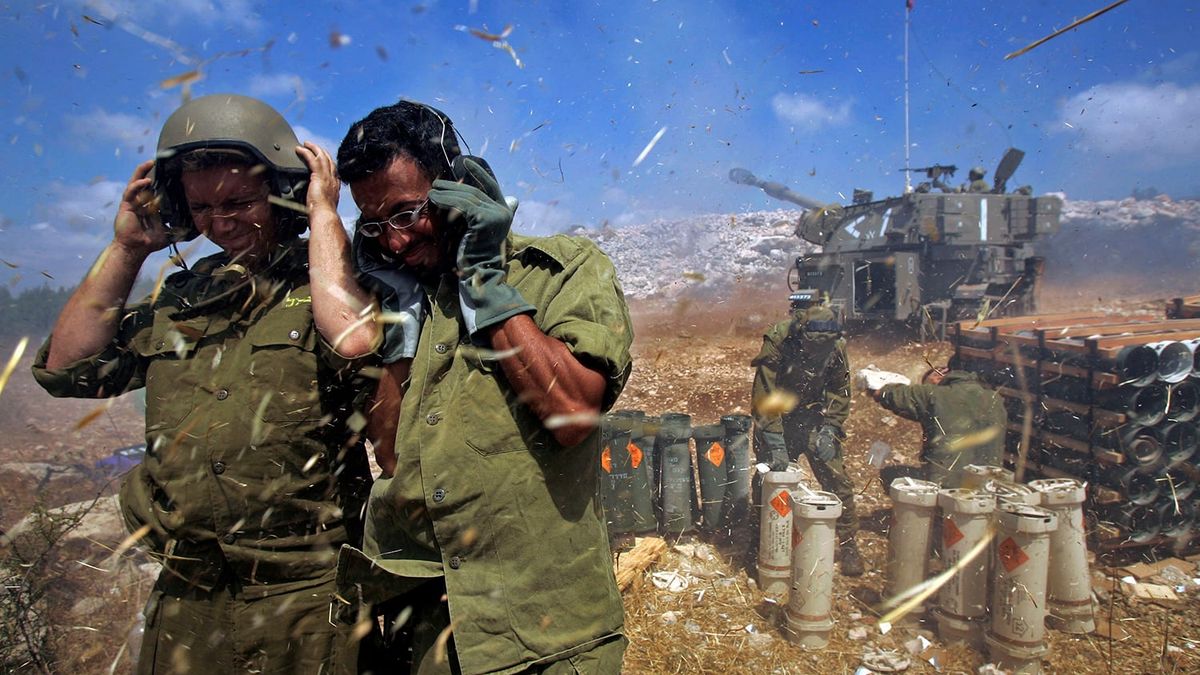
For over five decades, Lebanon has been a consistent flashpoint in the Middle East, caught in the crosshairs of competing regional and international powers. This enduring pattern was starkly evident in the 2006 war between Israel and Hezbollah, ignited by a cross-border attack that killed eight Israeli soldiers and captured two more. The conflict saw intense Israeli bombardment of Lebanese infrastructure and Hezbollah missile strikes on northern Israel, resulting in over 1,000 Lebanese deaths and 121 Israeli casualties. This event, like many others, underscored Lebanon's recurring role as a theater for broader power struggles, a dynamic deeply rooted in historical interventions such as the 1982 Israeli invasion, which inadvertently led to the emergence of Hezbollah.
Lebanon's geopolitical fate is a direct consequence of its strategic location and the intricate web of interests held by external actors. The country's internal sectarian divisions have long provided fertile ground for external manipulation, transforming it into a proxy battleground where regional and international powers vie for influence without direct confrontation on their own soil.
Israel's primary driver in Lebanon has consistently been its security. The 1982 invasion, initially framed as a limited operation to dislodge the Palestine Liberation Organization (PLO) from southern Lebanon, expanded into a full-scale incursion into Beirut. This move aimed to create a buffer zone and eliminate perceived threats emanating from Lebanese territory. Decades later, the 2006 war against Hezbollah was similarly motivated by a desire to neutralize a potent, Iran-backed non-state actor capable of launching attacks into northern Israel. For Israel, controlling the security landscape in southern Lebanon is a non-negotiable aspect of its national defense, often leading to interventions that reshape the Lebanese political and military landscape.
Iran's involvement in Lebanon is a cornerstone of its regional power projection strategy. Following the 1979 Iranian Revolution, Tehran dispatched fighters and clerics to Lebanon, fostering the creation of Hezbollah in the wake of the 1982 Israeli invasion. Hezbollah evolved from a local Shia militia into a sophisticated paramilitary force and political party, serving as Iran's most powerful proxy. This relationship allows Iran to extend its influence to the Mediterranean, challenge Israel's military dominance, and exert pressure on US interests in the region, all without direct military engagement. Hezbollah's existence and capabilities are crucial for Iran's strategic depth and its doctrine of deterrence.
For decades, Syria, under Hafez al-Assad and later Bashar al-Assad, maintained a brutal and extensive grip over Lebanon. This control was vital for Syria's regional standing, providing strategic depth against Israel and a conduit for its own political and economic interests. While initially cautious, Hafez al-Assad eventually embraced Hezbollah as a valuable asset, seeing it as a deterrent against Israel and a tool to consolidate Syrian influence. Syria's long occupation and interference in Lebanese internal affairs ensured that Lebanon's sovereignty remained compromised, making it susceptible to the broader geopolitical machinations of Damascus.
The United States' engagement in Lebanon has been characterized by a mix of strategic miscalculation, intervention, and rhetorical framing. The Reagan administration's acquiescence to the 1982 Israeli invasion, based on assurances of a limited operation that proved false, highlighted a fundamental misunderstanding of regional dynamics. Subsequent deployments of US Marines as peacekeepers often placed American forces directly into the crossfire of local factions, with tragic consequences. The 2006 declaration by Secretary of State Condoleezza Rice that the conflict represented the
Lebanon's strategic location and internal sectarian divisions have made it a proxy battleground for regional and international powers like Israel, Iran, Syria, and the United States, who pursue their interests through local factions.
Hezbollah emerged in the early 1980s, particularly after the 1982 Israeli invasion of Lebanon. It was fostered by Iran, which sent fighters and clerics to organize local Shia communities into a resistance movement against foreign occupation.
The 2006 war between Israel and Hezbollah resulted in over 1,000 Lebanese deaths and 121 Israeli military casualties. It also caused widespread destruction of Lebanese infrastructure, leading to significant displacement and long-term economic hardship.
Editor's Note: Analysis is based on the provided raw intelligence, focusing on the historical context and power dynamics described in the source material.
Source referenced: FOREIGNPOLICY
This brief was synthesized by our Editorial Engine and reviewed by The Ground Narrative team.