TRENDING

Thursday, 12 November 2026
----------------------
2 Jumada Al-Thani 1448 AH
A second international energy company has withdrawn from an Israeli-led natural gas project off the coast of Gaza, marking a significant win for the Boycott, Divestment, and Sanctions (BDS) movement. This move spotlights the contentious issue of resource control in a besieged territory.
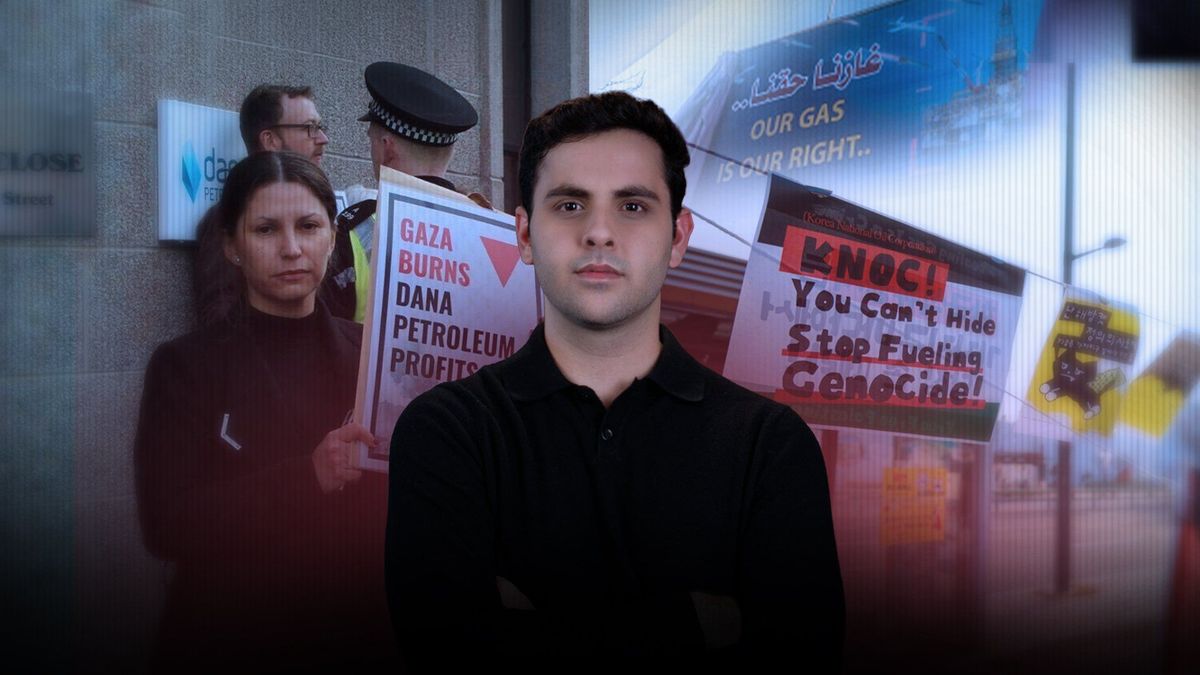
In a development signaling the growing influence of advocacy campaigns, a second major international energy company has announced its withdrawal from an Israeli-led natural gas exploration project in the waters off the Gaza Strip. This decision, which follows an earlier exit by another prominent firm, has been swiftly claimed as a victory by the Boycott, Divestment, and Sanctions (BDS) movement. The withdrawals cast a fresh spotlight on the long-disputed Gaza Marine gas field and the broader struggle for control over vital resources in the Eastern Mediterranean.
The heart of this story lies in the struggle for control over natural gas reserves in the Eastern Mediterranean, a region increasingly vital for global energy security. For Israel, the development of offshore gas fields like Tamar and Leviathan has been a cornerstone of its energy independence strategy, transforming it from an energy importer to a potential exporter. Extending this control to fields near Gaza aligns with a broader strategic vision of regional energy dominance and economic leverage. The Gaza Marine field, discovered in 1999, holds an estimated 1.1 trillion cubic feet of natural gas, a significant resource that could fundamentally alter the economic landscape of the besieged territory.
However, the Palestinian Authority (PA), and by extension the people of Gaza, assert sovereign rights over these offshore gas reserves. These claims are rooted in international law, specifically the United Nations Convention on the Law of the Sea (UNCLOS), which grants coastal states exclusive rights to explore and exploit resources within their Exclusive Economic Zones (EEZ). Despite international recognition of these rights, the practical reality is that Israel's comprehensive blockade and control over Gaza's maritime borders have consistently prevented Palestinians from developing their own resources. This creates a stark discrepancy between de jure international legal rights and de facto control exercised by a powerful occupying force.
The BDS movement's strategy leverages this discrepancy, targeting companies and institutions for their perceived complicity in the occupation. Their campaigns are designed to inflict reputational damage, trigger investor pressure, and ultimately make involvement in such projects economically and ethically untenable. The withdrawal of these energy giants underscores the effectiveness of sustained public pressure. For multinational corporations, operating in politically volatile regions always involves a complex risk assessment. When the potential profits are weighed against the growing risks of boycotts, protests, shareholder activism, and legal challenges, the calculus can shift. The decision to pull out is less a moral judgment and more a pragmatic business calculation: the cost of reputational damage and sustained activism now outweighs the projected returns from a contentious project.
For Israel, these withdrawals represent a setback to its plans for consolidating control over the region's energy resources and its ambition to become a major energy hub for Europe. It forces a re-evaluation of its approach to Gaza's offshore reserves and potentially complicates future partnerships. The incident highlights the delicate balance between hard power (military control, blockade) and soft power (economic pressure, international reputation) in shaping geopolitical outcomes.
The immediate and most profound cost of this ongoing dispute is borne by the 2.3 million Palestinians living in the Gaza Strip. For decades, Gaza has endured a crippling energy crisis, a direct consequence of the Israeli blockade and the inability to develop its own resources. Residents face chronic electricity shortages, with power available for only a few hours a day, leading to a cascade of humanitarian problems.
Imagine a life where electricity is a luxury, not a given. Hospitals struggle to power life-saving equipment, often relying on expensive and unreliable generators. Schools cannot provide consistent lighting or heating, impacting children's education. Homes are cold in winter and stifling in summer, with food spoilage a constant concern due to unreliable refrigeration. The lack of stable power cripples basic services, from water purification – leading to contaminated drinking water and public health crises – to sanitation systems, which frequently overflow.
Beyond basic services, the inability to access and develop the Gaza Marine field represents an immense lost economic opportunity. The revenue generated from selling natural gas could transform Gaza's devastated economy, which suffers from one of the world's highest unemployment rates, particularly among youth. These funds could be invested in critical infrastructure, build new industries, create tens of thousands of jobs, and fund essential public services like healthcare and education. Instead, Gaza remains heavily reliant on dwindling international aid, perpetuating a cycle of dependency and preventing any meaningful path towards self-sufficiency. The gas beneath Gaza's waters isn't just a commodity; it's a potential lifeline, a source of hope for a population living under extreme duress.
The denial of control over one's own natural resources, especially when surrounded by extreme poverty and hardship, exacts a heavy psychological toll. It reinforces the sense of occupation, disempowerment, and injustice among Palestinians. The knowledge that vast wealth lies just offshore, inaccessible, while daily life is a struggle for basic necessities, fuels deep resentment and despair. This constant state of precarity and the systematic denial of self-determination contribute to widespread mental health issues within the population, further exacerbating the humanitarian crisis.
Powerful actors, both governmental and corporate, consistently employ narratives that obscure the full scope of the Gaza Marine gas dispute. Their public statements often downplay the strategic implications, the ethical dimensions, and the long-term human cost.
Source referenced: ALJAZEERA
This brief was synthesized by our Editorial Engine and reviewed by The Ground Narrative team.