TRENDING

Thursday, 12 November 2026
----------------------
2 Jumada Al-Thani 1448 AH
China's President Xi Jinping has reiterated Beijing's commitment to 'peaceful reunification' with Taiwan, emphasizing the 'one country, two systems' framework. This statement underscores the enduring geopolitical fault line in the Indo-Pacific, with profound implications for regional stability and global economic order.
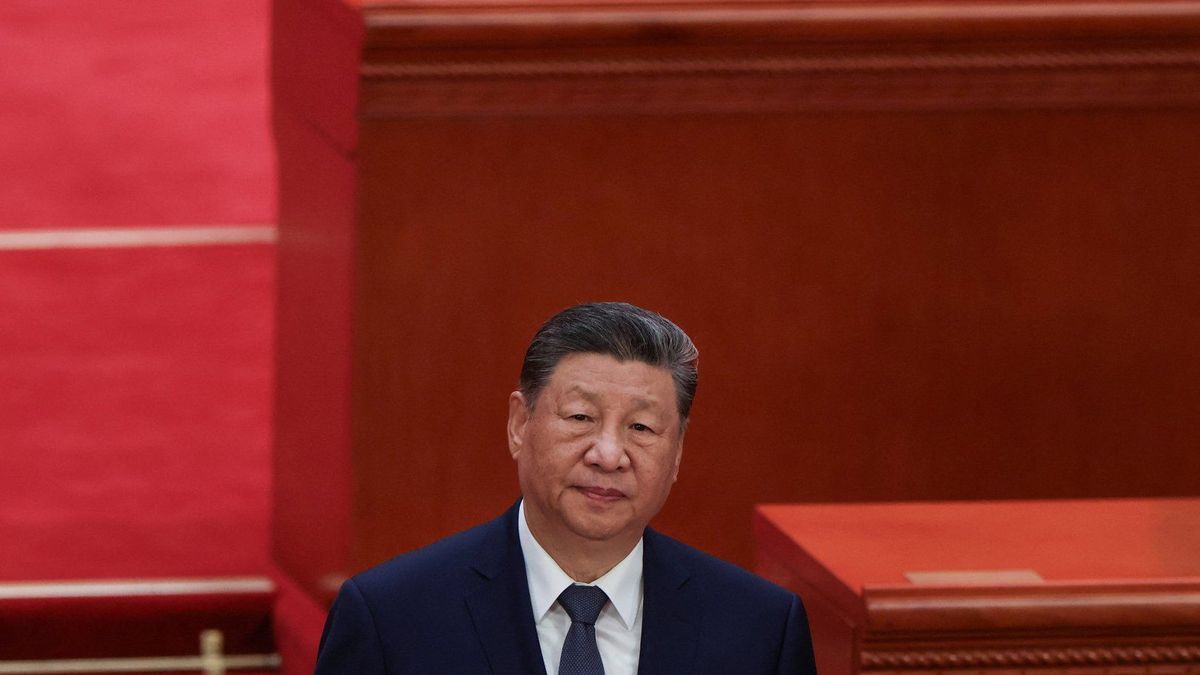
Chinese President Xi Jinping recently delivered a definitive statement from Beijing’s Great Hall of People, asserting that Taiwan's “reunification” with China “must happen” and “will be realised.” In his remarks, Xi reaffirmed Beijing's long-standing commitment to offering a “one country, two systems” policy to facilitate this integration. This declaration, while consistent with China's historical stance, serves as a potent reminder of the unresolved civil war legacy and the escalating tensions across the Taiwan Strait, signaling Beijing's unwavering resolve on an issue it considers core to its national sovereignty.
The declaration from President Xi Jinping is not merely a restatement of policy; it is a carefully calibrated assertion of power, reflecting deep-seated historical grievances, domestic political imperatives, and strategic calculations. At its core, the issue of Taiwan is inextricably linked to the legitimacy and survival of the Chinese Communist Party (CCP).
For Beijing, Taiwan represents the last unresolved piece of a civil war, a remnant of what the CCP terms the “century of humiliation” when China was carved up by foreign powers. Reclaiming Taiwan is presented as a historical imperative, essential for achieving national rejuvenation and territorial integrity. This narrative is crucial for the CCP's domestic legitimacy, especially under Xi Jinping, who has cultivated a strong nationalist image. Any perceived weakness on the Taiwan issue could undermine his authority and the party's control, making a forceful stance politically indispensable, particularly during periods of economic slowdown or internal challenges.
The “one country, two systems” framework, originally applied to Hong Kong and Macau, is Beijing's proposed solution for Taiwan. It theoretically offers a high degree of autonomy, allowing Taiwan to retain its capitalist system, democratic institutions, and even its own military. However, the experience of Hong Kong, where democratic freedoms and autonomy have been significantly curtailed since the imposition of the National Security Law, casts a long shadow over this promise. For Beijing, offering this framework is a way to present a “peaceful” path to reunification, ostensibly to avoid military conflict, while still asserting ultimate sovereignty. It is a diplomatic tool designed to appeal to international audiences who prioritize stability, even as its practical application raises significant concerns.
From Taiwan's perspective, the power dynamics are fundamentally different. Taiwan has evolved into a vibrant, multi-party democracy with a distinct national identity that has increasingly diverged from mainland China. Its economic prowess, particularly its critical role in the global semiconductor industry, gives it significant leverage and makes it indispensable to the world economy. The Taiwan Semiconductor Manufacturing Company (TSMC) alone accounts for a substantial portion of the world's advanced chip production, making any disruption to Taiwan's stability a global economic catastrophe.
The United States' role is central to this delicate balance. Through the Taiwan Relations Act, the US maintains a policy of “strategic ambiguity,” providing Taiwan with defensive capabilities while not explicitly committing to military intervention in the event of a Chinese attack. This ambiguity is designed to deter Beijing from invasion and Taipei from declaring formal independence, thus preserving the status quo. However, US arms sales to Taiwan and increasing political engagement signal a growing commitment to Taiwan's defense, which Beijing views as interference in its internal affairs and a challenge to its sovereignty. The US's motivation is multifaceted: upholding democratic values, maintaining regional stability, and securing vital supply chains, particularly in technology.
Regional players, such as Japan, South Korea, and the Philippines, also play a crucial role. They are deeply concerned about any conflict in the Taiwan Strait, which would inevitably disrupt vital shipping lanes, destabilize the regional economy, and potentially draw them into a wider conflict. Their increasing alignment with US security interests, while cautious, adds another layer of complexity to Beijing's calculations, making any military action a far more perilous undertaking.
The rhetoric surrounding China Taiwan reunification often focuses on geopolitical grand strategy, but at its heart lies the fate of 23 million people on Taiwan. Their lives, livelihoods, and fundamental freedoms hang in the balance, bearing the direct and indirect costs of this unresolved historical and political dispute.
The most profound human cost for the people of Taiwan is the potential loss of their hard-won democracy and self-determination. For decades, Taiwan has cultivated a vibrant, open society with free elections, a robust civil society, and protected human rights – a stark contrast to mainland China's authoritarian system. The prospect of being governed under Beijing's “one country, two systems” framework, especially after witnessing its implementation in Hong Kong, evokes deep apprehension. Hong Kong's experience has demonstrated that such a system can be unilaterally reinterpreted and curtailed, leading to the erosion of freedoms, suppression of dissent, and the imposition of a political system that prioritizes central control over individual liberties. For many Taiwanese, this represents an existential threat to their way of life and identity, forcing them to contemplate a future where their voices are silenced and their choices dictated by an external power.
Beyond political freedoms, the constant tension across the Taiwan Strait exacts a significant economic toll. Businesses in Taiwan operate under a cloud of geopolitical risk, which can deter foreign investment, impact trade relationships, and create an environment of uncertainty for local entrepreneurs. Any escalation, even short of outright conflict, could trigger capital flight, disrupt supply chains, and lead to a decline in tourism and international collaboration. For ordinary Taiwanese citizens, this translates into job insecurity, reduced economic opportunities, and a pervasive sense of anxiety about their financial future. The global reliance on Taiwan's semiconductor industry means that any disruption would not only devastate Taiwan's economy but also send shockwaves through the global technology sector, affecting countless industries and consumers worldwide.
The psychological impact of living under the shadow of potential invasion is immense. Generations of Taiwanese have grown up with the looming threat of military action from mainland China. This creates a pervasive sense of unease, influencing everything from career choices to family planning. Young people may question their long-term future on the island, potentially leading to a “brain drain” as talented individuals seek stability elsewhere. The constant need for military readiness, including conscription and civil defense drills, is a tangible reminder of the ever-present danger, fostering a collective anxiety that permeates daily life. This emotional burden, while often unquantifiable, is a significant human cost that impacts mental health and societal well-being.
In the event of actual military conflict, the human cost would be catastrophic. A full-scale invasion or even limited military action would inevitably lead to widespread casualties, both civilian and military. Cities and infrastructure would be devastated, triggering a massive humanitarian crisis. Millions of people would be displaced, creating an unprecedented refugee situation that would overwhelm regional and international aid efforts. The environmental damage from such a conflict, particularly to the marine ecosystems of the Taiwan Strait, would be severe and long-lasting. The human toll would extend beyond Taiwan's borders, impacting mainland Chinese families who would bear the burden of military service and potential losses, as well as the global community that would grapple with the economic, social, and political fallout of such a devastating event.
In the high-stakes geopolitical narrative surrounding China Taiwan reunification, powerful actors often craft specific narratives, downplaying or omitting crucial aspects that complicate their positions or reveal inconvenient truths. Understanding these omissions is key to grasping the full scope of the situation.
Beijing's public statements consistently frame Taiwan as an inseparable part of China, a historical inevitability, and an internal matter. What is consistently downplayed, if not entirely omitted, is the distinct and evolving identity of the Taiwanese people. For decades, Taiwan has developed its own unique cultural, social, and political trajectory, diverging significantly from the mainland. Surveys consistently show that a large and growing majority of Taiwanese identify primarily as Taiwanese, not Chinese, and have little desire to be governed by Beijing. This strong sense of self-determination, rooted in democratic values and a distinct way of life, is often dismissed by Beijing as the result of
Source referenced: ALJAZEERA
This brief was synthesized by our Editorial Engine and reviewed by The Ground Narrative team.