TRENDING

Thursday, 12 November 2026
----------------------
2 Jumada Al-Thani 1448 AH
The 2026 China International Intelligent Communication Forum in Wuxi showcased Beijing’s push to export AI‑driven media. The event reveals how state power, tech ambition, and human labor intersect on the global information stage.
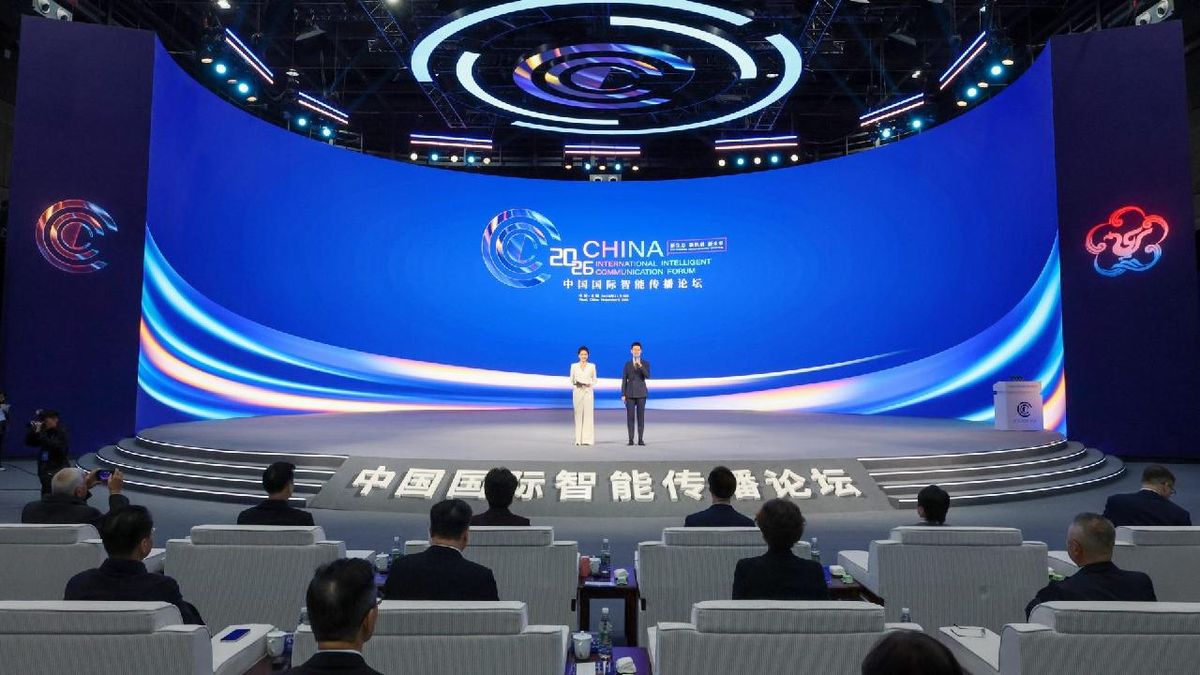
The China International Intelligent Communication Forum opened in Wuxi, Jiangsu, from November 8‑10, 2026, gathering officials, scholars, and industry leaders from China and abroad. Organised by China Media Group and the Jiangsu provincial government, the three‑day meeting placed artificial intelligence and its role in shaping the global media landscape at the centre of its agenda. Participants released the “Wuxi Initiative,” a pledge to build an open, inclusive ecosystem for intelligent communication, and unveiled a report on Chinese cities’ capacity to deploy AI in international outreach.
The forum is a calculated node in Beijing’s broader “AI Plus” strategy, which seeks to fuse artificial intelligence with every sector of the economy and the state’s narrative apparatus. By positioning AI as a diplomatic tool, China aims to offset Western dominance in tech standards and to embed its own content‑moderation norms into emerging global platforms. The involvement of the Shanghai Cooperation Organization signals a regional coalition that can collectively shape AI governance, offering member states a template that blends development goals with tighter information control. Economically, the event showcases domestic AI firms to foreign investors, promising market access in exchange for technology transfer agreements that often include clauses on data sharing and joint‑venture ownership. Politically, the forum reinforces the Chinese Communist Party’s narrative of “digital culture” as a soft‑power export, framing AI‑generated content (AIGC) as a neutral, creative force while subtly reinforcing state‑approved storylines.
While the forum celebrates “technology for good,” Chinese journalists and independent creators face intensified pressure to align with state‑approved AI tools. New platforms powered by AIGC are being rolled out with built‑in censorship algorithms, limiting the ability of reporters to cover sensitive topics without triggering automated takedowns. The promise of efficiency masks a growing dependency on surveillance‑grade software that tracks every edit and metadata field.
The rapid scaling of AI studios in cities like Wuxi creates a surge in low‑skill employment for data labelers, many of whom are migrant workers earning precarious wages. These workers are tasked with feeding massive datasets that train generative models, often under contracts that provide little protection against exploitation or health risks associated with long hours in poorly ventilated data centres.
International consumers of Chinese‑origin AI media may encounter subtly biased narratives that promote Beijing’s geopolitical viewpoints. The lack of transparent labeling for AI‑generated news can erode public trust in media worldwide, especially in regions where local outlets lack resources to fact‑check sophisticated synthetic content.
Official statements highlight openness and collaboration, yet the forum deliberately downplays the extent to which AI tools are being weaponised for real‑time content suppression. By integrating censorship modules at the model‑training stage, Beijing ensures that any dissenting narrative is filtered before it reaches the public sphere, a fact rarely acknowledged in the polished press releases.
The “global ecosystem” promised by the Wuxi Initiative includes licensing agreements that allow foreign partners to embed Chinese‑developed facial‑recognition and behavioural‑analysis modules into their own media platforms. These technologies, when combined with AI‑driven content curation, can turn ordinary news feeds into instruments of behavioural control, a dimension that remains largely invisible to the outside world.
Many participating foreign firms sign data‑sharing accords that grant Chinese research institutions access to user‑generated content from their home markets. This flow of raw data fuels the next generation of AIGC models, effectively turning the global audience into a laboratory for Beijing’s AI ambitions, while the originating countries lose control over their own digital footprints.
Observers should monitor three emerging fronts. First, the rollout of China‑backed AI standards in the SCO and among Global South partners will test the cohesion of existing Western‑led frameworks like the EU AI Act. Second, the domestic implementation of the Wuxi Initiative will reveal how quickly Chinese media organisations replace human editors with AI, reshaping labour markets and the nature of journalistic oversight. Finally, reactions from the United States, European Union, and Japan—particularly any coordinated export‑control measures or diplomatic push‑backs—will indicate whether Beijing’s AI‑driven soft power can expand without triggering a new technology‑policy confrontation.
The forum aims to showcase China’s AI advancements in media, promote international cooperation on digital communication, and position Beijing as a leader in setting global AI‑media standards.
AI tools embed censorship algorithms that limit reporting on sensitive topics, increasing pressure on journalists to conform to state narratives while reducing editorial independence.
Foreign partners may have to share user data, adopt Chinese surveillance technologies, and align with Beijing’s content‑moderation rules, which can compromise data sovereignty and raise ethical concerns.
Source referenced: CGTN
This brief was synthesized by our Editorial Engine and reviewed by The Ground Narrative team.