TRENDING

Thursday, 12 November 2026
----------------------
2 Jumada Al-Thani 1448 AH
Chinese Vice President Han Zheng delivered a four‑point climate agenda at COP31, framing Beijing as a leader of the Global South. Behind the rhetoric, domestic emissions and vulnerable communities bear the real price.
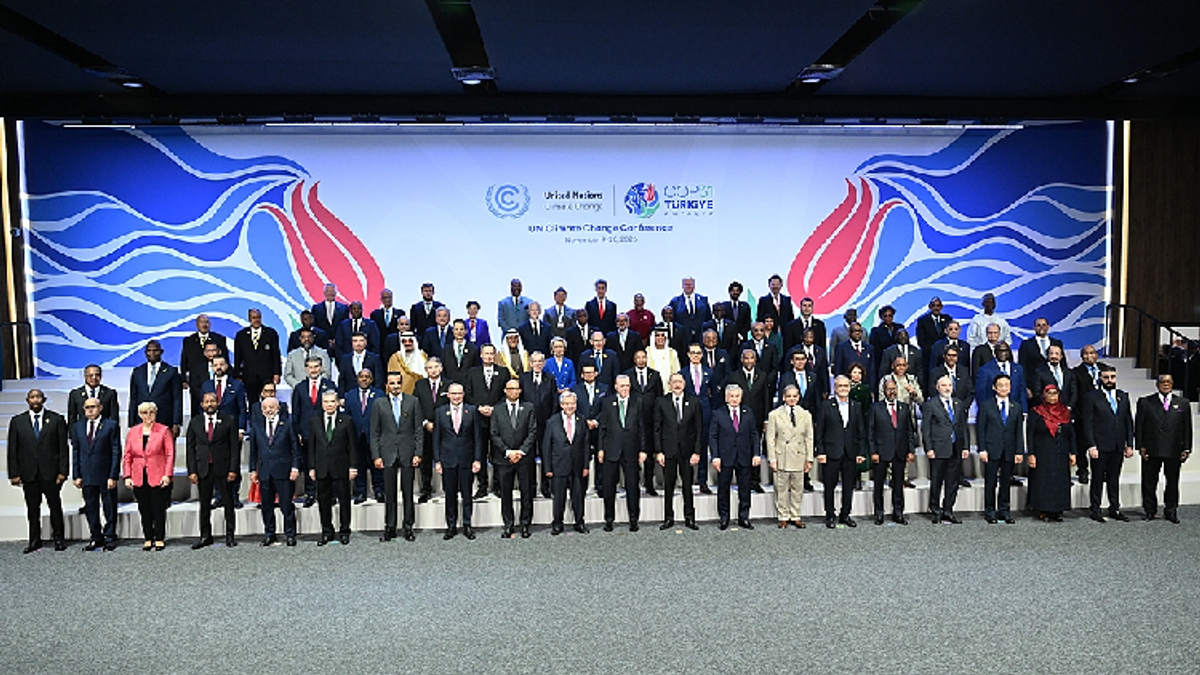
Chinese Vice President Han Zheng arrived in Antalya on November 11, 2026 as President Xi Jinping's special representative to the Leaders' Summit of the 31st UN Climate Change Conference (COP31). In a brief national statement he outlined a four‑point proposal that emphasized collective action, green transition, disaster resilience, and inclusive cooperation, while reiterating China's pledge to peak carbon emissions before 2030 and achieve neutrality by 2060.
The summit offered Beijing a stage to reshape its climate narrative at a time when its domestic energy mix remains heavily coal‑dependent. By positioning itself as a champion of the Global South, China seeks to extract diplomatic leverage that can offset criticism over its continued financing of overseas coal projects. The four‑point plan mirrors Beijing's broader strategy of coupling climate rhetoric with economic outreach: promoting South‑South cooperation, exporting green‑tech standards, and demanding that developed nations shoulder historic responsibility through climate finance.
China's leadership faces a dual pressure. On one hand, the Communist Party must deliver on the 2030 carbon‑peak promise to preserve social stability and avoid the health costs of air pollution. On the other, state‑owned enterprises and regional governments rely on cheap coal to sustain industrial output and employment. The vice‑president's call for “free flow of high‑quality green technologies” masks a policy shift that will likely prioritize export‑oriented clean‑energy firms while allowing domestic coal plants to operate under relaxed standards.
The language of “common but differentiated responsibilities” is a diplomatic tool to keep the burden of emission cuts on the West. By urging developed countries to fulfill climate‑finance commitments, Beijing hopes to secure funding for its overseas infrastructure belt, which often includes coal‑heavy projects in Africa and Southeast Asia. The mention of the “Africa Solar Belt” serves both as a showcase of green ambition and as a pre‑emptive defense against accusations of neo‑colonial resource extraction.
Within the broader climate architecture, China is balancing its partnership with the European Union on renewable standards against a growing rivalry with the United States over technology transfer. The invitation to showcase the “MAZU” early‑warning system illustrates an attempt to export Chinese digital infrastructure, a sector where Beijing has already leveraged geopolitical influence through 5G and satellite networks.
While the summit’s glossy speeches highlight high‑level agreements, the real impact lands on communities that generate the emissions and those that feel the climate fallout.
China still employs millions in coal mining and power generation. The push for a rapid green transition, without a clear plan for retraining or social safety nets, threatens livelihoods in provinces such as Shanxi and Inner Mongolia. Air‑quality improvements in major cities may mask rising unemployment and health risks in these mining regions.
Projects like the “Africa Solar Belt” promise clean electricity, yet many of the continent’s current power contracts are tied to Chinese‑financed coal plants. Rural households that could benefit from solar micro‑grids often remain dependent on expensive, polluting diesel generators, keeping energy costs high and limiting economic development.
The emphasis on disaster resilience and early‑warning systems is crucial for low‑lying states facing sea‑level rise. However, the deployment of Chinese technology frequently comes bundled with data‑sharing agreements that give Beijing access to critical infrastructure information, raising sovereignty concerns for nations already vulnerable to climate‑induced displacement.
Official statements highlight cooperation and ambition, but several key dimensions are downplayed or omitted.
Despite pledges to peak emissions, China approved new coal‑fired power capacity in 2025, citing energy security. The vice‑president’s speech makes no mention of these projects, sidestepping the contradiction between domestic policy and international climate rhetoric.
Developed nations have consistently missed their $100 billion annual climate‑finance target. Beijing’s call for them to “fulfill commitments” overlooks the fact that much of the promised money remains unfunded, while Chinese state banks continue to lend to fossil‑fuel projects abroad.
The promise of “free flow of high‑quality green technologies” is tempered by export controls on critical components such as advanced batteries and rare‑earth magnets. Western governments have already pressured Beijing to restrict these exports, limiting the actual availability of Chinese clean‑tech to developing partners.
The promotion of the MAZU early‑warning platform is framed as humanitarian aid, yet the system collects granular meteorological data that can be integrated with China’s broader surveillance network. Recipient countries receive valuable forecasting tools but at the cost of ceding a degree of digital sovereignty.
The next months will reveal whether China’s climate diplomacy translates into concrete policy shifts or remains symbolic.
- Domestic Emission Reporting: Watch China’s quarterly emissions data for any deviation from the 2030 peak trajectory, especially any new coal capacity announcements.
- Climate‑Finance Negotiations: Track the upcoming UN climate finance summit in 2027 to see if developed nations finally meet their pledges, and whether Beijing leverages any shortfall to extract concessions.
- Technology Export Controls: Monitor U.S. and EU restrictions on advanced clean‑energy components, which could curtail China’s ability to supply green tech to the Global South.
- Infrastructure Deals in Africa: Follow new energy contracts signed after COP31, noting whether they favor solar projects or continue the trend of coal‑linked financing.
- Early‑Warning Adoption: Observe which countries adopt the MAZU system and the terms attached, as this will indicate the balance between climate assistance and strategic data acquisition.
By keeping an eye on these indicators, readers can gauge whether the rhetoric at Antalya will reshape global climate governance or simply reinforce existing power asymmetries.
Han Zheng outlined a four‑point agenda: collective action under the Paris Agreement, accelerating green transition, enhancing climate resilience, and deepening inclusive cooperation, while urging developed countries to meet climate‑finance commitments.
China promises South‑South cooperation and technology sharing, but ongoing coal financing and data‑sharing conditions could limit real benefits for vulnerable nations, keeping them dependent on Chinese infrastructure.
Source referenced: CGTN
This brief was synthesized by our Editorial Engine and reviewed by The Ground Narrative team.


